
Home · World · Oct 5 archive
NATO Readies Eastern Flank Defense Against Russian Threats
Confirmed
In Short: Supreme Allied Commander Europe, U.S. General Alexus Grynkewich, will present a strategy to defend NATO's eastern flank against potential Russian attacks, integrating drones and AI with conventional forces, in Poland on Oct. 12.
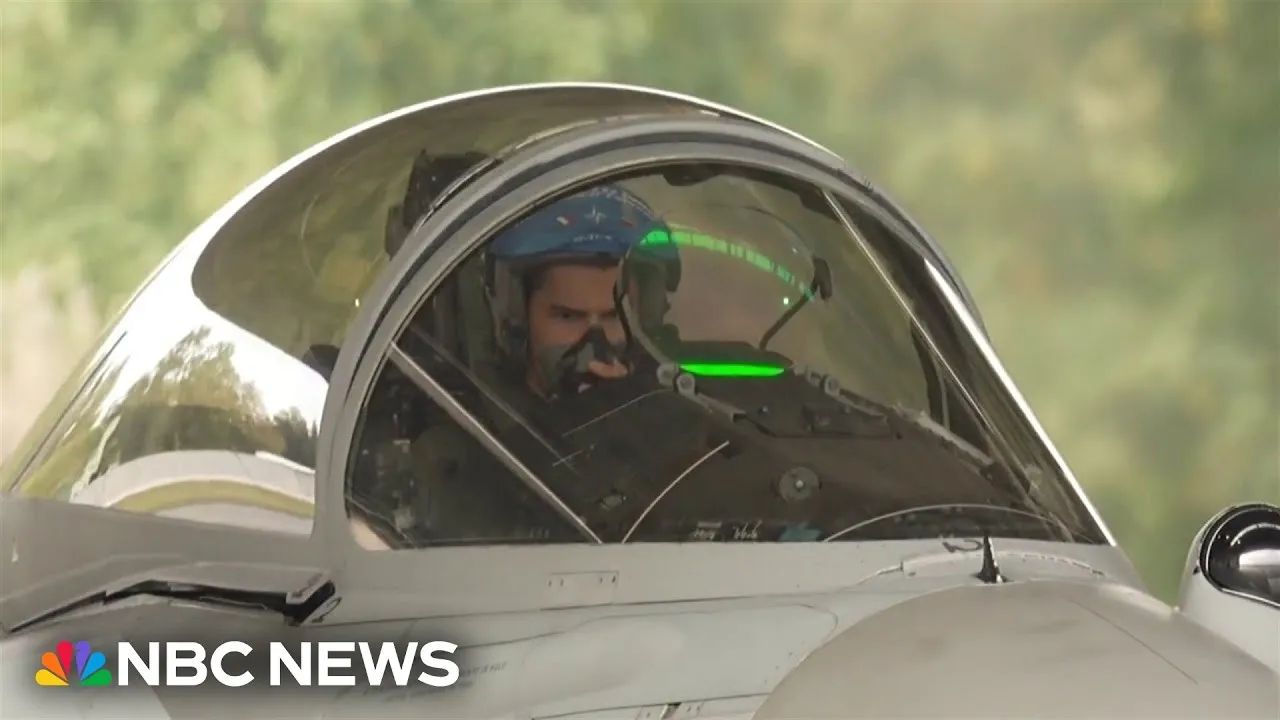
Supreme Allied Commander Europe, U.S. General Alexus Grynkewich, is set to present a new strategy, called Theory of Victory, in Poland on Oct. 12. The plan aims to clarify how NATO would respond to a potential incursion into its territory and reassure the public of the alliance's readiness.
While allied officials have stated that a conventional Russian attack against NATO is not imminent, they have warned that Moscow might attempt to test the alliance's eastern flank through hybrid attacks or drone incursions. NATO's top military commander is preparing a strategy to quickly defeat any Russian attack on the alliance’s eastern flank, using drones and artificial intelligence alongside conventional forces.
The Baltic Sea region is often cited as the most likely flashpoint in a Russia-NATO confrontation, but local governments have said they do not see signs of Moscow planning a conventional attack in the near future. NATO officials have been assessing repeated reports suggesting Russia could consider military action against NATO territory.
The strategy places particular emphasis on integrating emerging technologies, including drones and AI, with NATO’s existing conventional military capabilities. Rather than replacing traditional forces, the strategy seeks to integrate technological systems with established military power to accelerate decision-making on the battlefield and strengthen NATO’s ability to stop an attack before Russia can achieve its initial objectives.
The document comes amid heightened tensions between NATO and Russia and growing concern among allied governments about Moscow’s intentions toward the alliance’s eastern members. NATO's shift toward automated warfare has already begun taking shape along the alliance's eastern flank.
NATO’s top military commander is expected to present the strategy in Poland on October 12. The strategy reflects NATO’s broader effort to absorb lessons from Russia’s war against Ukraine, where drones, automated targeting, electronic warfare, and rapidly changing battlefield technologies have become central to combat operations.
France is preparing fresh defense assistance for Ukraine amid relentless Russian aerial attacks, with a new support package expected 'soon,' Zelensky revealed after his call with French President Emmanuel Macron. The EU's Enlargement Commissioner Marta Kos told journalists that the country is fighting for its survival.
Moldova has 'taken major strides towards membership,' the EU's top diplomat Kaja Kallas said at the end of the 10th EU-Moldova Association Council meeting in Brussels. Russia is conducting a 'shadow war,' head of Germany's foreign intelligence service (BND), Martin Jaeger, said.
Background
NATO's top military commander will present a strategy to defend against potential Russian attacks, integrating drones and AI with conventional forces, in Poland on Oct. 12.
While allied officials have stated that a conventional Russian attack against NATO is not imminent, they have warned that Moscow might attempt to test the alliance's eastern flank through hybrid attacks or drone incursions.
What's confirmed
- Supreme Allied Commander Europe, U.S. General Alexus Grynkewich, is set to present the strategy, called Theory of Victory, in Poland on Oct. 12.
- Grynkewich's plan is intended to clarify how NATO would respond to a potential incursion into its territory and reassure the public of the alliance's readiness.
- NATO’s top military commander is preparing a strategy to quickly defeat any Russian attack on the alliance’s eastern flank, using drones and artificial intelligence alongside conventional forces.
- The outlet noted that officials have been assessing repeated reports suggesting Russia could consider military action against NATO territory.
- He is expected to present the strategy in Poland on October 12.
- It places particular emphasis on integrating emerging technologies, including drones and AI, with NATO’s existing conventional military capabilities.
- Rather than replacing traditional forces, the strategy seeks to integrate technological systems with established military power to accelerate decision-making on the battlefield and strengthen NATO’s ability to stop an attack before Russia can achieve its initial objectives.
- The document comes amid heightened tensions between NATO and Russia and growing concern among allied governments about Moscow’s intentions toward the alliance’s eastern members.
- The strategy also reflects NATO’s broader effort to absorb lessons from Russia’s war against Ukraine, where drones, automated targeting, electronic warfare, and rapidly changing battlefield technologies have become central to combat operations.
- The alliance has increasingly focused on integrating such capabilities into its eastern defenses while retaining conventional forces as the foundation of deterrence.
- NATO's shift toward automated warfare has already begun taking shape along the alliance's eastern flank.
What's still developing
- Help rescue animals from the front line — shop our Companion Collection 🐾 NATO is preparing a plan to defend against a possible Russian attack on its eastern flank while integrating drones and AI into its defenses, Bloomberg reported on Oct.
- A NATO official confirmed the plan's existence to the Kyiv Independent.
- NATO has not publicly commented on the contents of the plan.
- Tensions between Russia and the alliance have surged since the outbreak of the full-scale war in Ukraine in 2022, with Moscow repeatedly issuing threats to NATO members and countries backing Kyiv.
- “Peace is more important than any kind of economy,” Zelenskyy said.
- Evidently, during September 2026, Russia sent multiple drones into the airspace of other countries, including NATO members, sometimes crashing, and President Zelenskyy said Russian drones attacked Moldova twice while he was in transit.
- “We saw documents and we know that they allow them to attack infrastructure, logistics, and especially to attack in the cities, in the villages, everywhere, roads, schools, hospitals,” Zelenskyy said.
- He said the aim was “to pressure people to leave the capital, leave different cities”.
- “We have to respond in any way we can. With their attacks on our energy, we have to respond on their energy. First of all, oil refineries, what gives money to them for this war,” Zelenskyy said.
Sources
- Kyivindependentlink
- UNITED24 Medialink
- Enlink
- Twzlink
- United24Medialink
- Kyivpostlink
- Enlink
- Newsweeklink
- Themoscowtimeslink
- Warpbeatlink
- Cerlink
- AFPlink
- WarpBeat — background on NATO Prepares Eastern Flank Defense Strategy link
- WarpBeat — background on NATO Drafts Strategy to Defend Eastern Flank Against Russian Attack link
- NBC News — video link