
Home · Business · Oct 5 archive
Eurozone Inflation Hits 3.8%, ECB Faces Complex Hike Dilemma
Confirmed
In Short: Eurozone inflation reached 3.8% in September, its highest level in three years, driven by energy prices.
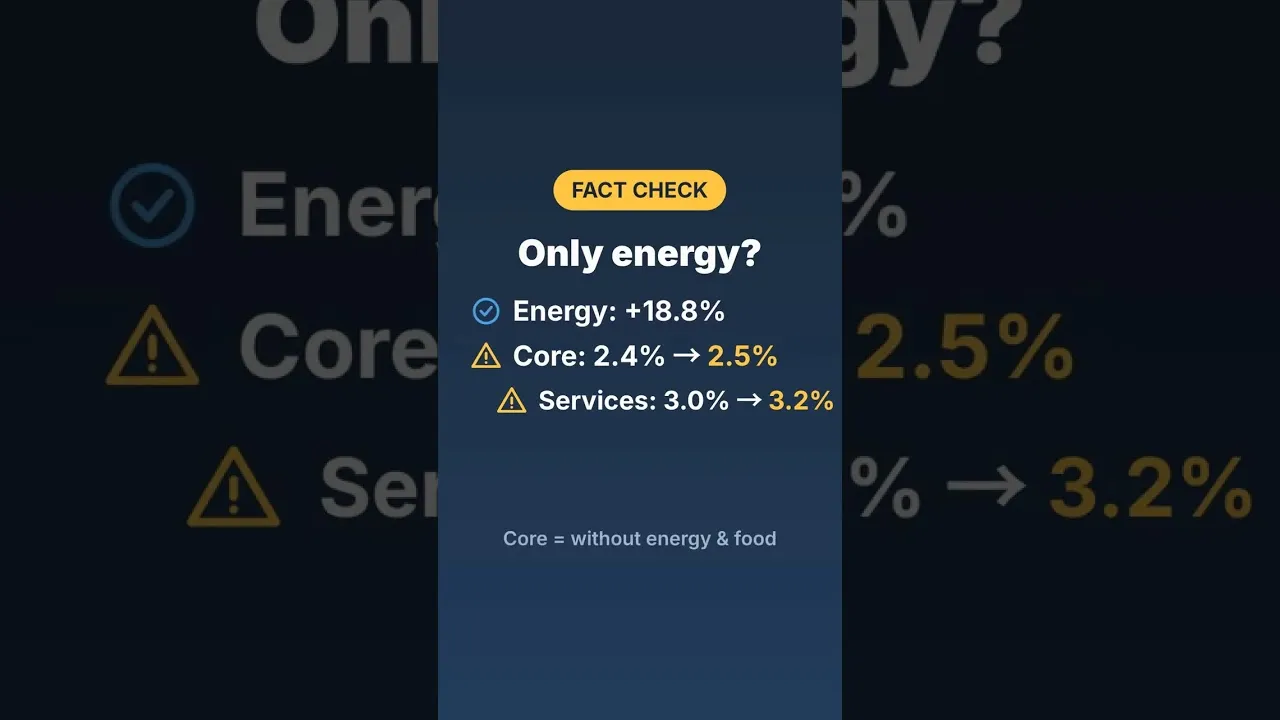
Eurozone inflation surged to 3.8% in September, surpassing the 3.6% forecast and marking its highest level since 2023. The rise was primarily driven by energy costs, with energy inflation reaching 18.8%, its highest since January 2023.
Deutsche Bank analysts argue that tighter financial conditions are creating doubt about the ECB's ability to hike rates aggressively. Governor Olli Rehn of the Bank of Finland noted that higher energy prices are pushing the Eurozone closer to the ECB's adverse inflation scenario.
Rehn added that the rise in long-term interest rates will slow growth and reduce the pass-through of the energy shock to other prices and wages. ECB President Christine Lagarde emphasized the absence of clear evidence that the latest inflation shock is becoming embedded.
Lagarde stated that a 'measured response' remains appropriate, as the economy could respond more strongly than expected to the surge in global yields, which would dampen price pressures. She also noted that 'demand destruction' caused by higher energy costs could limit the adjustment required from ECB interest rates.
The ECB's challenge is whether the energy shock remains concentrated in headline inflation or begins feeding more aggressively into wages, services, and other prices. The latest inflation data strengthens the argument that the ECB's inflation fight is not over.
Harry Woolman, global capital markets analyst at Validus Risk Management, said the latest figures indicate that inflation may be broadening beyond the initial energy shock. He noted that energy remains the main driver, but September’s jump suggests it is now 'more than an energy story.'
Woolman added that markets had pared back expectations of consecutive rate rises after Lagarde suggested that higher bond yields were doing some of the tightening for the ECB. Today’s inflation reading makes that argument harder to sustain.
If inflation is accelerating rapidly enough, policymakers may conclude that financial conditions are insufficiently restrictive, particularly if inflation expectations or wage demands begin to rise. A central bank mindful of the experience of 2022 will not want to wait for second-round effects to become entrenched before acting.
The ECB's October 29 meeting has become particularly important as the latest inflation data complicates the central bank's interest-rate outlook. The eurozone's core inflation, which excludes volatile energy and food components, remained elevated at 2.5%, suggesting that price pressures outside energy have not fully returned to levels consistent with the central bank’s target.
Background
The Eurozone's annual inflation rate surged to 3.8% in September, marking its highest level since 2023 and exceeding expectations. This increase was primarily driven by energy costs, which have risen significantly due to the ongoing Middle East conflict.
What's confirmed
- Eurozone inflation surged to 3.8% in September, surpassing the 3.6% forecast and marking its highest level since 2023. The rise was primarily driven by energy costs, with energy inflation reaching 18.8%, its highest since January 2023.
- Deutsche Bank analysts argue that tighter financial conditions are creating doubt about the ECB's ability to hike rates aggressively. Governor Olli Rehn of the Bank of Finland noted that higher energy prices are pushing the Eurozone closer to the ECB's adverse inflation scenario.
- Rehn added that the rise in long-term interest rates will slow growth and reduce the pass-through of the energy shock to other prices and wages. ECB President Christine Lagarde emphasized the absence of clear evidence that the latest inflation shock is becoming embedded.
- Lagarde stated that a 'measured response' remains appropriate, as the economy could respond more strongly than expected to the surge in global yields, which would dampen price pressures. She also noted that 'demand destruction' caused by higher energy costs could limit the adjustment required from ECB interest rates.
- The ECB's challenge is whether the energy shock remains concentrated in headline inflation or begins feeding more aggressively into wages, services, and other prices. The latest inflation data strengthens the argument that the ECB's inflation fight is not over.
- Woolman added that markets had pared back expectations of consecutive rate rises after Lagarde suggested that higher bond yields were doing some of the tightening for the ECB. Today’s inflation reading makes that argument harder to sustain.
- If inflation is accelerating rapidly enough, policymakers may conclude that financial conditions are insufficiently restrictive, particularly if inflation expectations or wage demands begin to rise. A central bank mindful of the experience of 2022 will not want to wait for second-round effects to become entrenched before acting.
- The ECB's October 29 meeting has become particularly important as the latest inflation data complicates the central bank's interest-rate outlook. The eurozone's core inflation, which excludes volatile energy and food components, remained elevated at 2.5%, suggesting that price pressures outside energy have not fully returned to levels consistent with the central bank’s target.
What's still developing
- The European Central Bank (ECB) would normally have a relatively straightforward answer to inflation running almost twice its target: raise interest rates.
- Germany's 10-year borrowing costs recently reached their highest level in 17 years, while France's 10-year yield approached 5%, its highest since 2002.
- BBH argues that above-target inflation and firmer growth still give the ECB room to tighten further.
- Annual inflation increased from 3.2% in August, exceeding the 3.6% consensus forecast and moving further away from the ECB’s 2% target.
- While the ECB is poised for a modest rate hike, the dollar’s safe-haven appeal amid geopolitical tensions and terms-of-trade challenges for Europe are weighing on the euro.
- On the other side of the Atlantic, Eurostat’s flash estimate revealed that Eurozone annual inflation accelerated to 3.3% in August 2026, up from 2.9% in July, reaching its highest level since September 2023.
- EUR/USD edged down to 1.1578 on September 2, 2026, pressured by hawkish signals from Federal Reserve officials and accelerating Eurozone inflation.