
Home · World · Oct 4 archive
Russia May Use Hidden Repeaters to Boost Drone Strikes in Ukraine
Confirmed
In Short: A weapons expert has warned that Russia may be using concealed signal repeaters in Ukrainian cities to help its long-range drones evade air defenses and strike with greater precision, according to Fox News Digital.
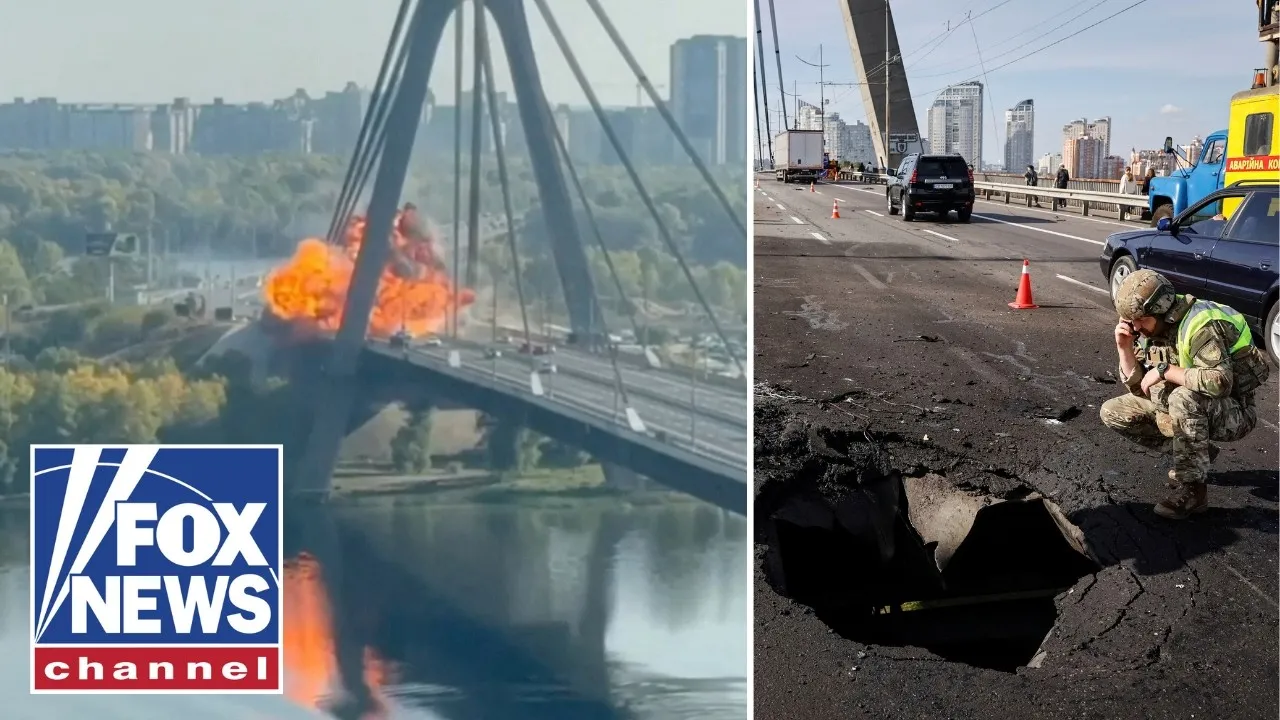
A weapons expert has warned that Russia may be using concealed signal repeaters in Ukrainian cities to help its long-range drones evade air defenses and strike with greater precision, according to Fox News Digital.
The Kyiv Post first reported the possible use of small ground devices, or repeaters, which form part of an expanding 'mesh' network that allows Russian drones to relay encrypted signals across multiple connections, making drones and drone swarms far harder for Ukraine to disrupt and bring down through standard electronic jamming.
Draganfly CEO and co-founder Cameron Chell explained that mesh networks allow drones and strategically placed ground-based repeaters to relay encrypted signals across multiple connections, making many Russian drone flights harder to disrupt.
Chell noted that the size of these repeaters is about the size of a large lunchbox, making them easy to conceal and hard to detect electronically.
Tracking data reportedly showed no relay drones airborne during the strike, fueling concerns that hidden ground-based repeaters may have been used to maintain communications with the attacking drone.
According to Serhii 'Flash' Beskrestnov, an adviser on the development of technological areas of defense, Russian Mesh repeaters may be operating in Kyiv, providing Shahed drones with a short-term communication channel for adjusting strikes against targets.
Beskrestnov stressed that such repeaters are difficult to find, but the Ukrainian side is carefully examining the wreckage of downed drones to identify any other 'secret' communication systems.
In June, Ukrainian President Volodymyr Zelenskyy called on Belarusian President Alexander Lukashenko to dismantle the repeaters, which Belarus periodically activates to boost the signal of Russian drones during attacks on Ukraine.
Chell warned that the use of mesh networking is now making it increasingly hard for a defensive position to bring down Russian drones in an effective manner.
He added that moving one or two or even three of these repeaters into a city the size of Kyiv can be hugely effective, as they exponentially increase the efficiency, resiliency, and capability of the network.
Zelenskyy said it is obvious that Russia is not preparing to stop the war, and Russia plans to spend US$12 billion next year just on producing jet-powered drones and loitering munitions.
The use of mesh networking is indeed present, and it is quite dangerous, as it allows Russian operators to actively pilot loitering munitions onto high-value targets with real-time precision.
What this adds
The sources have not established the exact locations or numbers of the concealed repeaters in Ukrainian cities.
Background
Ukrainian President Volodymyr Zelenskiy says Russia may have shared jet-drone technology with North Korea.
A weapons expert has warned that Russia may be using concealed signal repeaters in Ukrainian cities to help its long-range drones evade air defenses and strike with greater precision, according to Fox News Digital.
What's confirmed
- Russia may be concealing signal repeaters inside Ukrainian cities to help its long-range drones evade air defenses and strike with greater precision, a weapons expert told Fox News Digital.
- The Kyiv Post first reported the possible use of the small ground devices, or repeaters, which Draganfly CEO and co-founder Cameron Chell said form part of an expanding "mesh" network that allows Russian drones to relay encrypted signals across multiple connections, making drones and drone swarms far harder for Ukraine to disrupt and bring down through standard electronic jamming. Chell’s warning also came amid escalating diplomatic notices for the region, with Moscow urging foreign nationals and embassy staff to leave the capital Kyiv immediately on Oct. 3, highlighting "mortal danger" as Russian forces threatened further "massive retaliatory strikes."
- Mesh networks, Chell explained, allow drones and strategically placed ground-based repeaters to relay encrypted signals across multiple connections, making many Russian drone flights harder to disrupt.
- "The size of these repeaters is really about the size of a large lunchbox. They're very easy to conceal, and they don't have to be turned on all the time, so they're hard to detect electronically," Chell said.
- Tracking data reportedly showed no relay drones airborne during the strike, fueling concerns that hidden ground-based repeaters may have been used to maintain communications with the attacking drone.
- "Russia has come to the realization that innovation is going to have to win this war, to the point now where they are becoming the innovative leader in this war — not just in terms of tactics, strategy, and technology, but the entire mindset is shifting," Chell said.
- "The enemy is using high-quality materials in its UAVs and increasing camera resolution, allowing the enemy to view the situation on the ground in detail and use these UAVs for various targets. And the use of mesh networks is indeed present. Of course, this is quite dangerous," Ihnat said, according to Ukrainska Pravda.
- "They are using the principles of mesh networking to combat the counter-drone measures taken by Ukraine to ensure that drones can't get through or that those Russian communication links are broken," Chell said.
- "If Russia had multiple nodes that could communicate with a device and could use the device to communicate with other devices swarming the area, Ukraine would be faced with multiple, maybe even hundreds of connections to have to break simultaneously in order to bring that drone down," he said.
- "They will be doing everything they can to move as many of these things not just into Kyiv, but at any location in the country, even operational battlefields," Chell said.
- "It is obvious that the Russians are not preparing to stop the war – at least not at the moment," Zelenskyy said.
- "Next year Russia plans to spend US$12 billion just on producing jet-powered drones and loitering munitions. And that's only one category of weapons. Of course, this doesn't only relate to Ukraine," he added, according to Ukrainska Pravda.
What's still developing
- According to "Flash", the ability to control Shaheds online poses a threat not only to bridges but also to air defense systems. He also explained that to accurately hit a specific bridge support or cable, a stable drone control channel is needed right up to the moment of impact. Beskrestnov added that the Ukrainian side is carefully examining the wreckage of downed drones. According to him, no other "secret" communication systems that could explain the drones’ operation have been identified so far.
- Beskrestnov also drew attention to photos circulating in the Russian information space showing Ukrainian air defense systems deployed on bridges in the capital.
- Please upgrade your browser to improve your experience.