
Home · World · Oct 4 archive
Houthis Claim Attack on Aramco as Yemen Conflict Intensifies
Confirmed
In Short: In a statement on Saturday, the Houthis claimed responsibility for an attack on a Saudi Aramco facility in Riyadh.
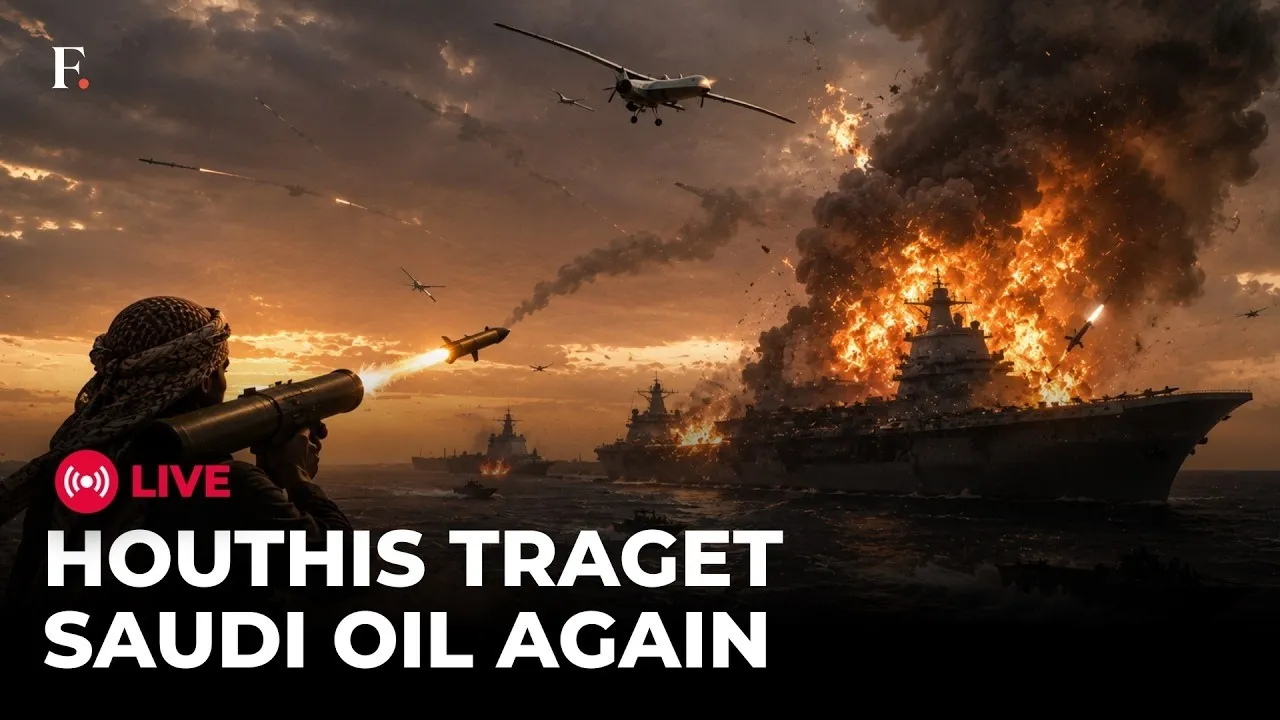
The Yemen-based Houthi movement announced through its military spokesperson, Yahya Saree, that the group conducted a 'military operation with ballistic missiles and drones' targeting the Aramco site.
Eyewitnesses reported seeing a large plume of smoke rising from the area around the facility.
In response, Colonel Majed Abdullah al-Nazili, a spokesperson for Yemeni government forces, reported that these operations targeted 'at least 260 Houthi fighters' and resulted in the destruction or immobilisation of 44 military vehicles.
The conflict between the Iran-aligned Houthis and the internationally recognised Yemeni government, backed by Saudi Arabia, has intensified recently.
In September, the Houthis captured the port city of Mocha and several strategic islands in the Bab al-Mandeb strait, an important passageway for global oil shipments.
Turki al-Maliki, spokesman for the Saudi-led coalition, dismissed the Houthi claims as 'misleading'.
The market is now braced for Brent crude to trade above $100/barrel on a sustained basis, as Saudi Arabia has halted operations at several southern energy facilities after attacks triggered fires and caused injuries.
The strikes follow repeated Houthi attacks on Saudi energy infrastructure, including the 400,000 barrel/day Jazan refinery, which had been offline since July.
The broader backdrop is also deteriorating, with Iran signaling a more aggressive military posture and the Houthis threatening to blockade Saudi oil flows, reinforcing upside risks to energy prices and global inflation.
The Houthis’ recent offensive has left hundreds dead and displaced more than 110,000 people, according to the UN.
The Riyadh-led coalition said Saturday evening that a ballistic missile launched by the Houthis towards the capital was “successfully intercepted and destroyed.”
The visit came days after Saudi Crown Prince Mohammed bin Salman was in Cairo, where he and Egyptian President Sisi urged safe and secure navigation through Bab el-Mandeb, after the Houthis seized the Yemeni coast.
What this adds
The conflict's escalation has drawn comparisons to previous tensions, such as those between the US and Iran, but the specific details of the current attacks remain under scrutiny.
What's confirmed
- The Yemen-based Houthi movement announced through its military spokesperson, Yahya Saree, that the group conducted a 'military operation with ballistic missiles and drones' targeting the Aramco site.
- Eyewitnesses reported seeing a large plume of smoke rising from the area around the facility.
- In response, Colonel Majed Abdullah al-Nazili, a spokesperson for Yemeni government forces, reported that these operations targeted 'at least 260 Houthi fighters' and resulted in the destruction or immobilisation of 44 military vehicles.
- The conflict between the Iran-aligned Houthis and the internationally recognised Yemeni government, backed by Saudi Arabia, has intensified recently.
- In September, the Houthis captured the port city of Mocha and several strategic islands in the Bab al-Mandeb strait, an important passageway for global oil shipments.
- Turki al-Maliki, spokesman for the Saudi-led coalition, dismissed the Houthi claims as 'misleading'.
- The market is now braced for Brent crude to trade above $100/barrel on a sustained basis, as Saudi Arabia has halted operations at several southern energy facilities after attacks triggered fires and caused injuries.
- The strikes follow repeated Houthi attacks on Saudi energy infrastructure, including the 400,000 barrel/day Jazan refinery, which had been offline since July.
- The broader backdrop is also deteriorating, with Iran signaling a more aggressive military posture and the Houthis threatening to blockade Saudi oil flows, reinforcing upside risks to energy prices and global inflation.
- The Houthis’ recent offensive has left hundreds dead and displaced more than 110,000 people, according to the UN.
- The visit came days after Saudi Crown Prince Mohammed bin Salman was in Cairo, where he and Egyptian President Sisi urged safe and secure navigation through Bab el-Mandeb, after the Houthis seized the Yemeni coast.
What's still developing
- Prior to this incident, the Houthis claimed to have struck Aramco facilities in Yanbu, located on Saudi Arabia's Red Sea coast.
- The war began in February 2022 and Trump campaigned on ending the conflict within 24 hours of returning to the White House.
- President Donald Trump said that Russia had "lost control" of its diesel industry due to the ongoing fighting with Ukraine and called for an end to the war.
- "Russia has unfortunately lost control of its Diesel Oil Industry due to its War with Ukraine," he posted on Truth Social.
- Trump, for his part, has insisted that the conflict was to blame for energy price volatility rather than his own conflict with Iran.
- "A large number of their Diesel refineries have been blown up and are, at least temporarily, out of commission. This ridiculous and never ending War with Ukraine must be ended. The whole World suffers as 25,000 people, mostly soldiers, are being killed each month."
- The statement said that any US attack would trigger sustained strikes on US bases and interests in the region, warning that regional countries supporting US aggression against Iran would be considered parties to the conflict.
- The White House did not offer an explanation for the change to his schedule, but it came after the Saudi-led coalition fighting Yemen’s Houthis said that the Iran-backed group had fired a ballistic missile at Riyadh, and a fire was reported near the Saudi capital’s international airport.
- Trump has yet to achieve the aims he set out when he launched “Operation Epic Fury” in February: to end Iran’s nuclear programme, halt its ability to attack its neighbours and create conditions for Iranians to topple their leadership.
- The US military said it had “permanently disabled” two Iran-linked oil tankers, including one near Kharg Island, and “destroyed” a third in the Gulf of Oman.
- Iran’s state media confirmed the strikes and said Tehran had attacked three US-affiliated vessels in response, as well as three oil tankers travelling through the Strait of Hormuz along an “unauthorised” route.