
Home · World · Oct 4 archive
Bosnia Votes Amid Ethnic Tensions and Pro-Russian Influence
Confirmed
In Short: Polls opened Sunday in Bosnia for a general election, with voters choosing the three members of the country’s multi-ethnic presidency, lawmakers for the national Parliament, and heads of institutions for the two entities, the Federation of Bosnia and Herzegovina and Republika Srpska.
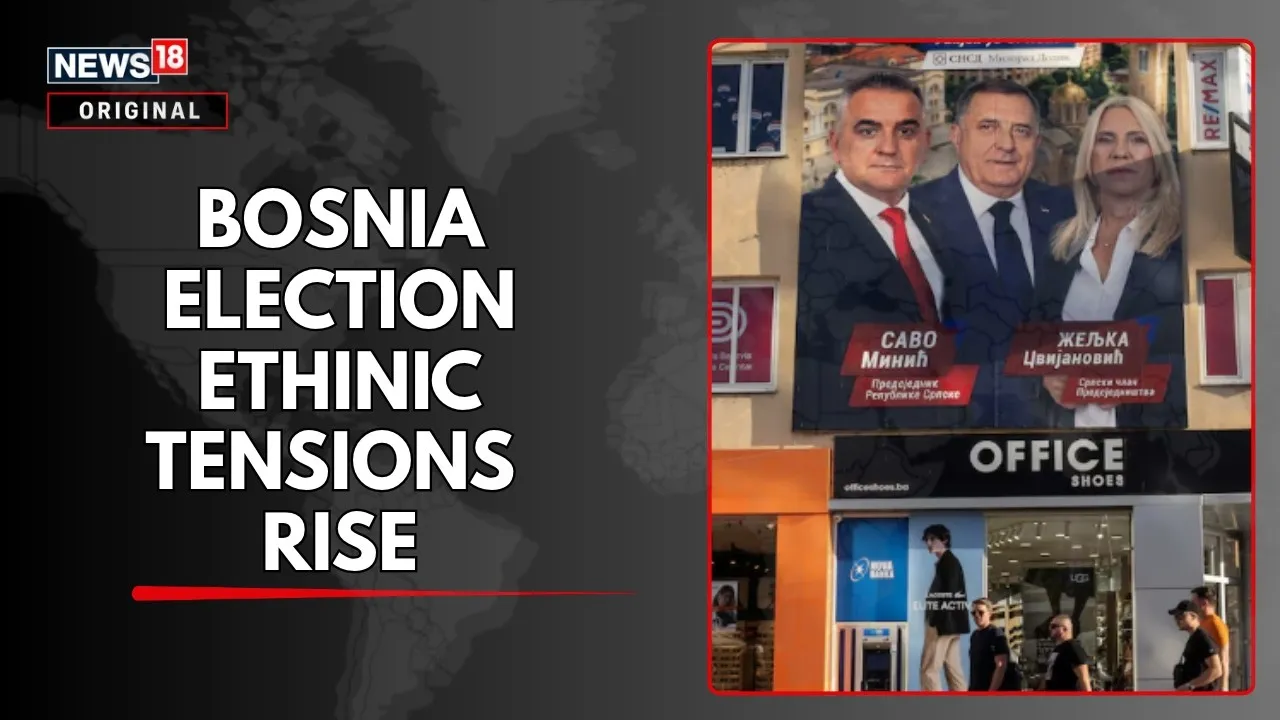
Polls opened Sunday in Bosnia for a general election, with voters choosing the three members of the country’s multi-ethnic presidency, lawmakers for the national Parliament, and heads of institutions for the two entities, the Federation of Bosnia and Herzegovina and Republika Srpska.
Around 3.4 million voters participated, focusing on everyday problems despite some politicians stirring up war-era tensions.
Milorad Dodik, the separatist and nationalist former president of Republika Srpska, remains influential despite being banned from public office for defying the 1995 peace agreement.
Analyst Dragan Bursac noted Dodik’s continued media presence and influence, suggesting that measures to ban him from political life are not effective.
Bosnia, one of Europe’s poorest countries, is still grappling with the aftermath of the 1992-1995 war, with politicians maintaining divisions between Bosniaks, Serbs, and Croats.
While Bosnia has been peaceful recently, Bosnian Serb leaders like Dodik have pushed for separation, raising concerns among Western countries.
Bosnia is seeking EU membership, but progress has been stalled due to internal divisions.
Voters expressed mixed feelings about the election process, with some like Radomir Vukelic praising the transparency of the voting system.
Despite the complexity of Bosnia’s governing institutions, established by a U.S.-brokered peace agreement in 1995, many voters remain skeptical about the impact of their votes.
Voter Ivan Silic from Mostar echoed this sentiment, stating that nothing has improved since he first voted and that politicians live well while everyone else’s situation remains unchanged.
What this adds
Dodik's influence persists despite his ban, highlighting the deep-rooted ethnic tensions in Bosnia.
The election process aimed to ensure fair voting, but voter confidence remains low due to ongoing political divisions.
What's confirmed
- SARAJEVO: Polls opened Sunday morning in Bosnia for a general election in which most citizens of the multi-ethnic Balkan nation are focused on everyday problems, while some mainstream politicians are whipping up war-era tensions that have kept the country divided since its brutal 1992-95 conflict.
- Around 3.4 million voters in Bosnia are choosing the three members of the country’s multi-ethnic presidency, lawmakers for the national Parliament, and heads of institutions for the country’s two entities, the Federation of Bosnia and Herzegovina and Republika Srpska.
- “It is an impossible country. It doesn’t make any sense,” Dodik said at the rally, which was also attended by the Russian ambassador to Bosnia and Herzegovina, Igor Khalabukov.
- “He is all over the media, not only in the entity of Republika Srpska, but in all of Bosnia and Herzegovina. It is obvious that these measures to ban him from political life are not working, and he is using them,” Bursac said.
- One of the poorest countries in Europe, Bosnia is still struggling to recover decades after the war that started in 1992 after Bosnia declared independence from the Serb-led former Yugoslavia and ethnic Serbs took up arms to carve out their own state and join Serbia.
- Taking center stage in the contest is a staunchly pro-Russian politician who, despite not appearing on the ballot, has dominated the campaign and inflamed divisions that have sparked fears of renewed instability.
- While Bosnia has been peaceful in recent years, its politicians have kept alive the divisions between the country’s Bosniaks, who are mainly Muslim, and its Serbs and Croats.
- Bosnian Serb leaders like Dodik have pushed for the separation of their entity from the rest of Bosnia, which has led to concerns among Western countries that tensions could once again spill over.
What's still developing
- Bosnia is formally seeking to join the European Union, but progress toward membership has been stalled despite EU efforts to encourage Bosnia’s divided leaders to work together for reform.
- A man walks beneath an election poster featuring Our Party (NS) candidates for the upcoming general elections in Sarajevo, Bosnia, on Sept.
- A woman places her ballot into an electronic ballot box during the general election in Sarajevo, Bosnia, Sunday, Oct.
- “This is why I expect the results to be correct. You’ve got a scanner, you’ve got a paper, you’ve got it all,” he said.