
Home · World · Oct 3 archive
India Protests Over Voter Roll Controversy
Confirmed
In Short: Critics accuse Kumar of manipulating voter rolls in ways that could benefit the ruling Bharatiya Janata Party (BJP). The controversy centers on a nationwide voter-verification exercise that critics say has led to millions of eligible voters being removed from electoral rolls.
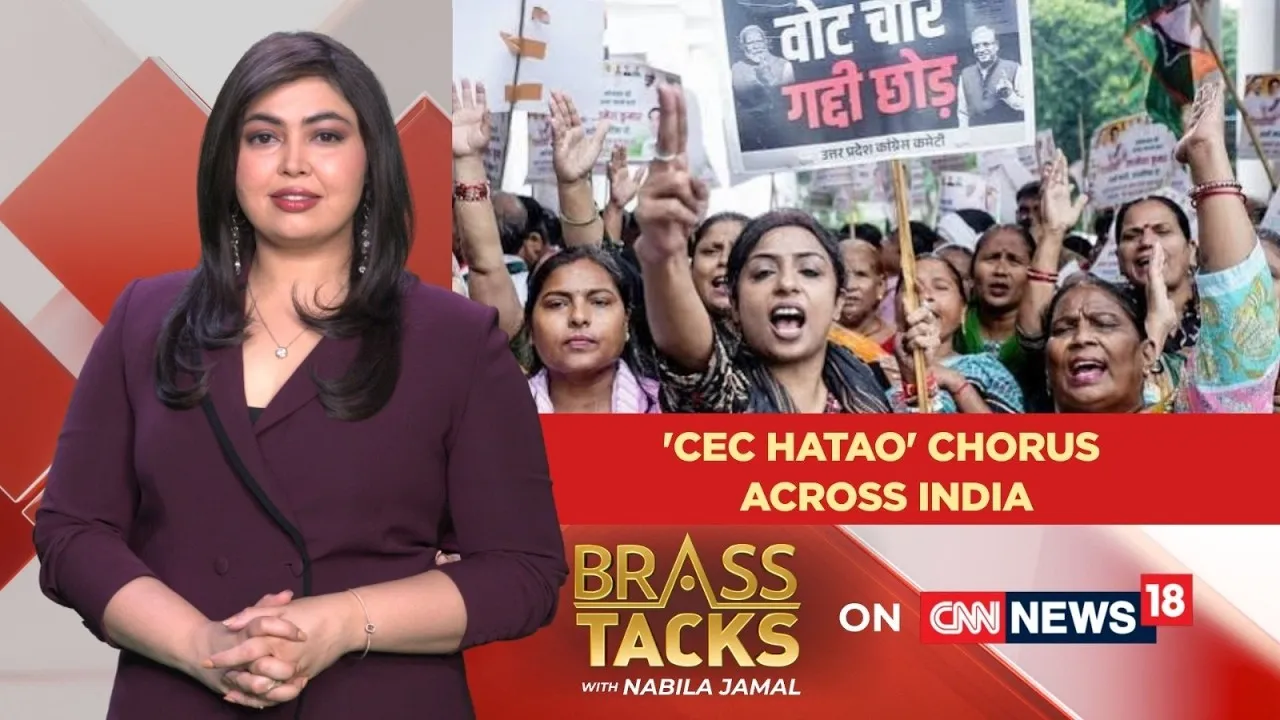
In Delhi, the protest was led by student bodies and political parties, while in Mumbai, the Cockroach Janta Party, which previously forced the resignation of the education minister, led the demonstration.
Critics accuse Kumar of manipulating voter rolls in ways that could benefit the ruling Bharatiya Janata Party (BJP). The controversy centers on a nationwide voter-verification exercise that critics say has led to millions of eligible voters being removed from electoral rolls.
At the Delhi protest, Mina Giri, 38, said her name had been removed from the rolls despite living in the capital for 15 years and voting in previous elections. Another protester, June Moniroy, said, 'People are being stripped off their voting rights.
The Election Commission's two deputies have raised concerns at least 14 times over the past 10 months over voter-list revisions, registration procedures, and the commission's digital systems.
The protests mark the latest escalation in a dispute that has put unprecedented scrutiny on India's Election Commission, long regarded as one of the country's most trusted institutions.
The commission directed officials to register newly eligible voters and those omitted from electoral rolls, indicating a potential easing of its stance.
The Delhi Police registered at least three cases in connection with Friday’s protests, citing violations of prohibitory orders under section 163 of the Bharatiya Nagarik Suraksha Sanhita (BNSS).
What this adds
The controversy has intensified scrutiny of India’s Election Commission, which oversees elections across the country.
Opposition parties led by the Congress party are set to begin protests demanding Kumar's resignation on October 6.
Background
The controversy has intensified scrutiny of India’s Election Commission, which oversees elections across the country.
What's confirmed
- In another post, Dipke said 'Season 2 begins.' The protest in India's financial capital began at around 4 p.m. (1030 GST) and is likely to continue into the evening.
- Activists, opposition leaders and student bodies are demanding Kumar's resignation over alleged irregularities in the controversial revision of electoral rolls, which led to mass deletion of voters.
- At the Delhi protest, Mina Giri, 38, said her name had been removed from the rolls even though she has lived in the capital for 15 years and voted in previous elections.
- India trade minister meets counterparts on sidelines of G20 event India's commerce minister Piyush Goyal met with his counterparts from France, Canada, Saudi Arabia and South Korea to discuss furthering bilateral trade, at a time when India is looking to diversify away from the United States.
- At the same G20 event, US Trade Representative Jamieson Greer said he did not think there was "something imminent" on the trade deal with India, News agency PTI reported.
- "Voter enrollment is a continuous process and any person not yet enrolled in the electoral roll or whose name has got deleted can apply for enrollment at any point of time. The objective of the special drive is to identify and facilitate such electors," the order said.
- Hundreds have gathered in central Delhi to demand the resignation of India's Chief Election Commissioner Gyanesh Kumar, over the deletion of voters from electoral rolls.
- Here are the top headlines from India on Friday, October 2: That's all for today!
- While a protest in Delhi was being led by student bodies and political parties, Mumbai's demonstrations was led by the Cockroach Janta Party which galvanized thousands of Indians earlier a few months ago to force the resignation of former Education Minister Dharmendra Pradhan.
What's still developing
- Opposition parties led by the Congress party are also set to begin protests demanding Kumar's resignation on October 6.
- About 400 schools in France are expected to remain closed on Friday after student protests that began over education-related grievances escalated into violence in some places.
- Prime Minister Narendra Modi faced renewed pressure on Friday as the Gen Z-led Cockroach Janta Party and a separate coalition of student and activist groups stage fresh protests, demanding the resignation of the elections commission chief over a controversial voter roll revision.
- The task he faced was daunting: The Indian electorate at the time was composed of 176 million citizens, 85 percent of whom were illiterate.
- More than 60 percent of those eligible voted in India’s first election, and the votes that followed in the next few decades were widely seen as free and fair.
- Literacy was increasing—and with it, voter participation at all levels.
- Among them, it reported that Kumar added new names to India’s voter rolls while deleting others—all without consulting his two deputies.
- Analysis: Modi Faces Protest Threat Over Election Commission Scandal Create an FP account to save articles to read later.
- As the country’s first chief election commissioner, Sukumar Sen—a civil servant who trained as a mathematician—was responsible for overseeing the voter rolls and ensuring the integrity of the vote.
- Some members of India’s Constituent Assembly, which drafted the new constitution, had opposed granting universal adult suffrage, asserting that illiteracy and poverty meant that people would fall under the sway of dubious political appeals.
- The Delhi Police have registered at least three cases in connection with Friday’s protests by students organisations, political parties and civil society activists whose attempts to gather at Jantar Mantar and demand the resignation of chief election commissioner (CEC) Gyanesh Kumar over alleged irregularities in the Special Intensive Revision (SIR) of electoral rolls were foiled by police and security forces, at least two senior officers aware of the development said.
- The second officer, who also wished anonymity, said that the FIRs were registered because, by gathering in large numbers in the New Delhi district and carrying out protests, the protesters violated the prohibitory orders that were already invoked across central Delhi (New Delhi district police jurisdiction) under section 163 of the Bharatiya Nagarik Suraksha Sanhita (BNSS).