
Home · Entertainment · Oct 3 archive
How ‘Unmasking a Monster: Aileen Wuornos’ Used AI to Bring a Serial Killer Back to Life
Confirmed
In Short: Unmasking A Monster: Aileen Wuornos uses AI to digitally transform actress Morag Peacock into the notorious serial killer.
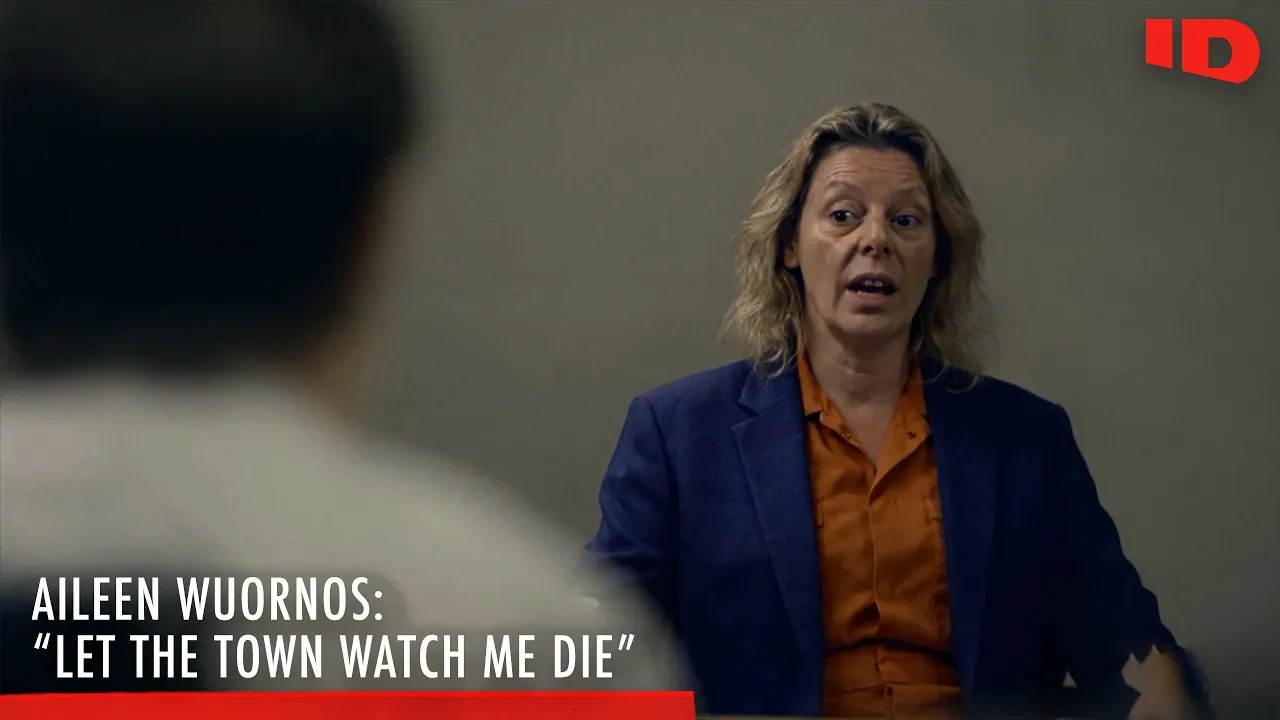
Executive producer Stephen Dost announced that the three-part docuseries will employ an 'AI mask tool' to recreate Wuornos's likeness over Peacock's face.
The series aims to capture the suffering evident in Wuornos's face, according to Dost, who emphasized the importance of showing her face for a reason.
Wuornos, often referred to as the first female serial killer, met her victims through sex work and robbed them afterward.
The docuseries explores Wuornos's crimes and conviction, using groundbreaking digital replication and VFX techniques.
Moore, Wuornos's partner, testified against her, revealing Wuornos's confessions of her crimes.
Moore's testimony was crucial in linking Wuornos to the murders, leading to her conviction.
Wuornos's tumultuous upbringing, marked by abuse and homelessness, led her to survive through street prostitution from the age of 11.
Between November 1989 and November 1990, Wuornos shot and killed seven male clients along central Florida highways.
The docuseries aims to provide a fresh perspective on Wuornos's life and crimes, using AI to bring her back to life.
This approach contrasts with previous portrayals, such as Charlize Theron's Oscar-winning performance in 'Monster' and Jean Smart's role in the 1992 TV movie 'Overkill: The Aileen Wuornos Story'.
What this adds
The use of AI in the docuseries is a new approach to depicting Wuornos, differing from traditional methods.
The series aims to highlight the complexities of Wuornos's life and the societal fascination with female killers.
The docuseries will explore Wuornos's relationship with her partner, Tyria Moore, and the events leading to her conviction.
Background
Investigation Discovery's 'Unmasking a Monster: Aileen Wuornos' uses AI to make actress Morag Peacock look like the serial killer.
What's confirmed
- Moore was living with Wuornos during some of the murders but denied any involvement.
- Serial killer Aileen Wuornos, sometimes (falsely) called the first female serial killer, met her victims through sex work and robbed them afterward.
- At some point, she moved to Florida, where she was working as a maid in motels when she met Wuornos.
- Before living with Wuornos, she lived with friends, according to the South Florida Sun Sentinel.
- In June 1986, Wuornos, calling herself “Lee,” met 24-year-old Moore at a gay bar in Daytona, Florida.
- Moore began to get suspicious was soon linked with the cases after she was seen leaving the scene of a car accident with Wuornos in July 1990, according to The Tampa Bay Times.
- The couple was driving the car of Peter Siems, one of Wuornos’s alleged victims.
- Eventually, Moore saw herself on a wanted poster alongside Wuornos, and soon left Florida and to move in with her parents in Ohio, United Press International reported.
- Police found Moore had Wuornos call her on a recorded line from jail a week later, the South Florida Sun Sentinel reported.
- During her testimony, she told the court that during a “typical night” Wuornos confessed her crimes to her.
- Wuornos was later found guilty and executed by lethal injection by the state of Florida in 2002.
- Unmasking a Monster: Aileen Wuornos is a three-part docuseries that will use “groundbreaking” digital replication and VFX techniques, according to Deadline.
What's still developing
- That was the report today from Unmasking A Monster: Aileen Wuornos executive producer Stephen Dost, at any rate, who excitedly told The Hollywood Reporter that the three-part docuseries about the life, crimes and death by lethal injection of infamous serial murderer Wuornos would use an “AI mask tool” to replace lead actress Morag Peacock’s face with something approximating Wuornos’.
- This must all come as a surprise to both Theron and Monster: The Lizzie Borden Story ‘s Sarah Paulson, who went the traditional, non-AI route toward capturing the tortured soul of the noted serial killer.
- Poor Charlize Theron, putting in all those hours in makeup and physically transforming her body to win her Oscar for portraying late serial killer Aileen Wuornos in 2003’s Monster.
- I just kept coming back again and again to Aileen Wuornos, and probably the reason for that is that if you’re going to show someone’s face, there’s got to be a reason.
- Now, a new documentary is diving into the true story behind the killer, titled Unmasking A Monster: Aileen Wuornos.
- According to Chesler, had the jury been properly informed about the nuances of prostitution and Wuornos’ complicated history, though they may have still found her guilty, they would have been less likely to sentence her to death.
- Pop culture has a real fascination with Aileen Wuornos, the Michigan woman convicted of murdering seven men over 12 months between 1989 and 1990 and the first woman to be classified as a serial killer by the FBI.
- There’s something about female killers that captures the morbid fascination of society.
- Aileen Wuornos has been the subject of two films: a 1992 TV movie titled Overkill: The Aileen Wuornos Story, where Jean Smart played the titular character; and Monster, which was released in 2003 and saw Charlize Theron win an Oscar for her portrayal of Wuornos.
- The latest season of Ryan Murphy’s true crime drama Monsters hones in on alleged 19th-century murderer, Lizzy Borden — with a surprise cameo from Sarah Paulson playing Wuornos in a flash-forward, too — and now, two new documentary series, one from Investigation Discovery and one from Netflix, are chronicling the harrowing story of the Michigan woman-turned-murderer.