
Home · Science · Oct 3 archive
Emissions Choices Could Limit Antarctic Ice Loss and Sea-Level Rise
Confirmed
In Short: A new study published in Nature Geoscience indicates that today's emissions choices could significantly impact the future of the Antarctic Ice Sheet and global sea-level rise.
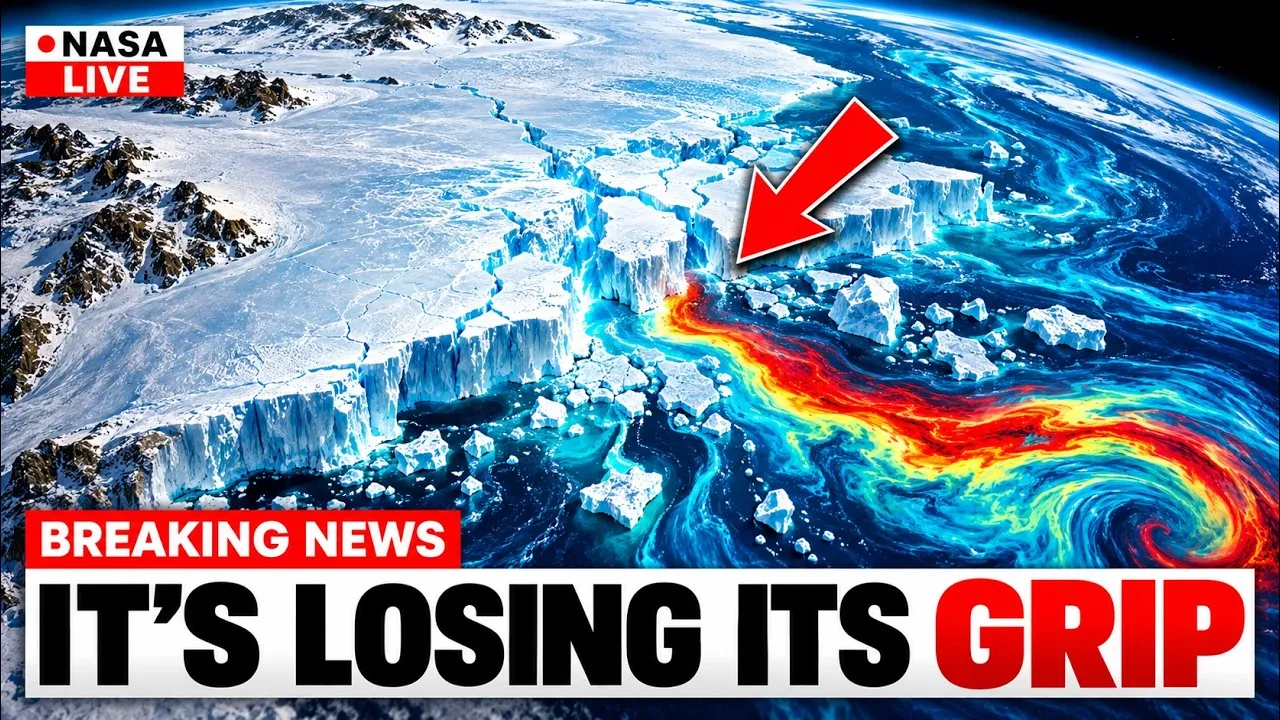
The Antarctic Ice Sheet, the largest source of uncertainty in sea-level rise projections, is committed to mass loss in the 21st century, even under aggressive emissions-reduction scenarios.
Higher emissions are projected to drive greater Antarctic mass loss by 2100, increasing near-term coastal risks.
Under very high-emissions scenarios, the study identifies mechanisms that could result in up to 25.4 cm of sea-level rise by 2100, with a median estimate of 15.7 cm.
Effective management of these risks to coastal communities requires not only rapid emissions reductions but also improved constraints on climate model selection and ice-shelf melt parameterizations.
The Antarctic Peninsula, an early warning system for climate change in the continent, is particularly sensitive to these changes.
Glaciologist Bethan Davies from Newcastle University notes, 'The Antarctic Peninsula is really the alarm bell for the continent. Changes that happen there don't stay there, impacting global ocean circulation.
Sea-level rise has intensified coastal hazards over recent decades, a trend expected to accelerate this century, posing substantial socio-economic risks to densely populated coastal communities.
What this adds
This study adds to the understanding of how current emissions choices can influence future sea-level rise and the stability of the Antarctic Ice Sheet.
While the study highlights the importance of rapid emissions reductions, it also underscores the need for improved climate models and parameterizations to better predict future scenarios.
Background
World leaders approved the first UN declaration on sea level rise, ensuring nations losing land to the ocean retain their statehood and maritime rights.
What's confirmed
- The Antarctic Ice Sheet, the largest source of uncertainty in sea-level rise projections, is committed to mass loss in the 21st century, even under aggressive emissions-reduction scenarios.
- Higher emissions are projected to drive greater Antarctic mass loss by 2100, increasing near-term coastal risks.
- Under very high-emissions scenarios, the study identifies mechanisms that could result in up to 25.4 cm of sea-level rise by 2100, with a median estimate of 15.7 cm.
- Effective management of these risks to coastal communities requires not only rapid emissions reductions but also improved constraints on climate model selection and ice-shelf melt parameterizations.
- The Antarctic Peninsula, an early warning system for climate change in the continent, is particularly sensitive to these changes.
- Glaciologist Bethan Davies from Newcastle University notes, 'The Antarctic Peninsula is really the alarm bell for the continent. Changes that happen there don't stay there, impacting global ocean circulation.
- Sea-level rise has intensified coastal hazards over recent decades, a trend expected to accelerate this century, posing substantial socio-economic risks to densely populated coastal communities.
What's still developing
- You are using a browser version with limited support for CSS.
- In ice-sheet model intercomparison exercises, these uncertainties—typically attributed to intermodel differences—stem from modelling choices that may bias ensembles towards commonly adopted approaches regardless of observational consistency.
- Under very high-emissions scenarios, we identify cascading mechanisms that could produce up to 25.4 cm of sea-level rise by 2100 (95th percentile; median = 15.7 cm) while remaining consistent with satellite observations.
- The Antarctic Ice Sheet (AIS) contains Earth’s largest freshwater reservoir, equivalent to 57.9 m of global mean SLR.
- Antarctic Peninsula models show emissions levels will shape ice, seas and wildlife A new study examining possible future greenhouse gas emissions scenarios forecasts the range of fates for the Antarctic Peninsula, and for Antarctic wildlife like these elephant seals ( Mirounga leonina ).
- That, in turn, can slow down the formation of a water mass known as Antarctic Intermediate Water, which links the Southern Ocean to global ocean circulation.