
Home · Health · Oct 3 archive
Delhi Audit Reveals Low CCTV Coverage in Parks
Developing
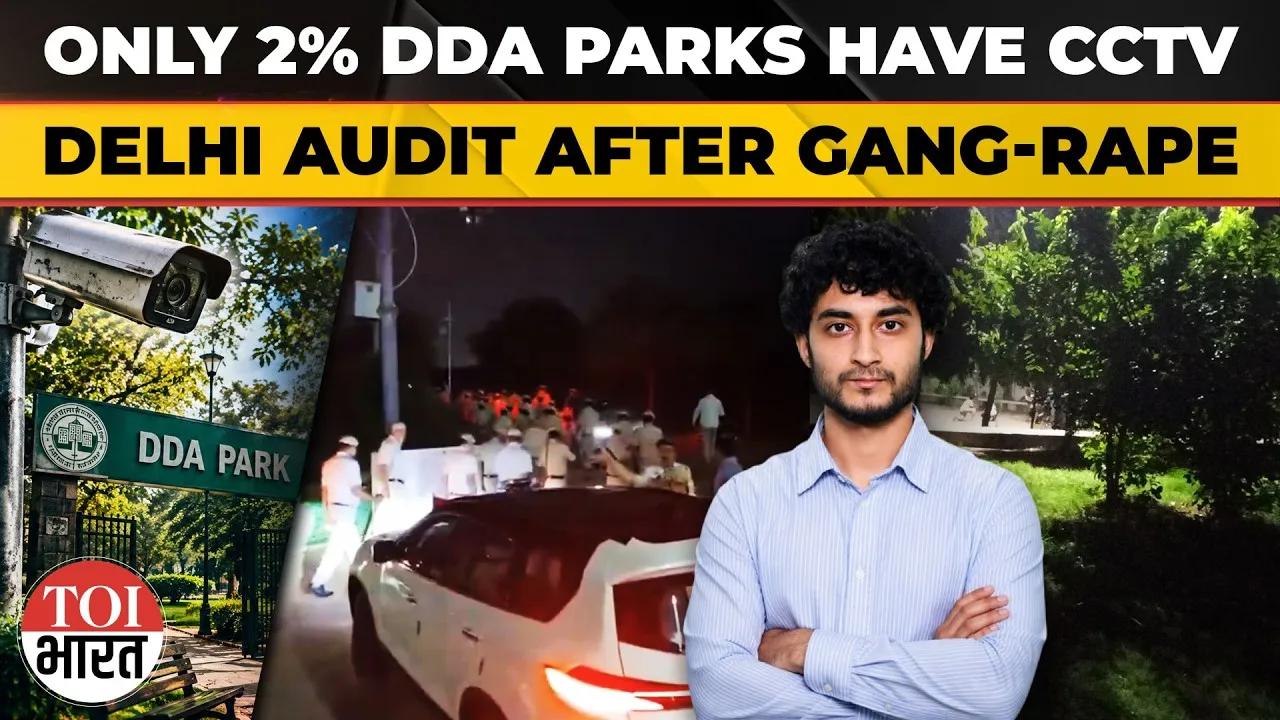
In Short: An audit by the Delhi Development Authority (DDA) has revealed that only 16 of the 736 parks it manages have CCTV surveillance, according to an audit ordered by Lieutenant Governor Taranjit Singh Sandhu following a gang-rape incident in one of its parks last month.
The audit, which categorized parks based on risk levels, identified 190 parks as 'high risk,' 258 as 'medium risk,' and 288 as 'low risk.' The 'high risk' category includes parks where issues such as 'night-time infiltration,' 'local nuisance,' encroachment, 'crime-prone surroundings,' dense forest areas, and drug-related activities have been identified.
The DDA has identified 323 parks for installing new CCTV cameras and has also noted issues with gates and access security in 163 parks, where unlockable gates need to be converted into lockable ones.
The audit also found boundary-related vulnerabilities in 399 parks, with repairs to missing grill work addressed in 233 of these parks. The DDA is carrying out night patrolling in 245 major parks in the capital and has provided large parks with bike patrolling for faster coverage, with hooters where necessary.
The DDA official stated, 'Large parks have been provided with bike patrolling for faster coverage, with hooters where required, to ensure quick response to incidents. Standard Operating Procedures (SOPs) are under progress for patrolling, guard performance, supervisor accountability, attendance, reporting, and police coordination.
Parks flagged as 'high risk' include Aastha Kunj, where the 17-year-old was gang-raped on September 21, as well as green areas at Hastsal, District Park Hauz Khas, green area at Maa Anandmayi Marg, Sanjay Lake, Jahanpanah City Forest, Ridge and forest areas, and biodiversity parks along the Yamuna floodplains.
The report highlighted that several parks, including District Park Hauz Khas and Bonta Park near the Northern Ridge, lack proper lighting, even at night. The DDA has also activated biometric attendance of security guards in 602 parks, with plans to expand this to all DDA parks.
The findings are significant as large parks are not single, easily observed public rooms, and the audits have exposed a basic urban contradiction: green spaces may be publicly accessible and heavily used, yet remain difficult to secure once lighting, surveillance, boundary walls, and patrol access fail.
What this adds
The audit also found that 520 parks require additional lighting, highlighting the need for comprehensive safety measures beyond just CCTV coverage.
Background
The audit, conducted in response to a gangrape incident in a Kalkaji park, also found that 520 parks require additional lighting.
What's still developing
- Just 16 of the 736, or two percent, parks managed by the Delhi Development Authority (DDA) have CCTV surveillance, found an audit conducted by the authority in the aftermath of the gang-rape of a 17-year-old girl in one of its parks last month.
- The Indian Express had reported about the pitch darkness because of lack of functioning lamps and the absence of CCTV cameras in the 142-acre Aastha Kunj Park.
- The Rohini example shows why safety audits must examine more than crime statistics.
- In Dwarka, police audited 113 parks and wrote to the agencies concerned about the safety lapses identified.
- The inspections were intensified after the gang rape of a teenager in south Delhi’s Aastha Kunj Park, bringing renewed attention to how the city manages safety across its parks rather than at a single site.
- The audit’s focus on dark spots, overgrown bushes, boundary walls and gate-closing times indicates that park safety depends on the relationship between physical design and daily operations.