
Home · Faith · Oct 2 archive
Supreme Court to Hear Case on Church Prayer Grotto
Developing
In Short: The Supreme Court agreed to hear a case involving St. John Church's fight to build a prayer grotto on its property.
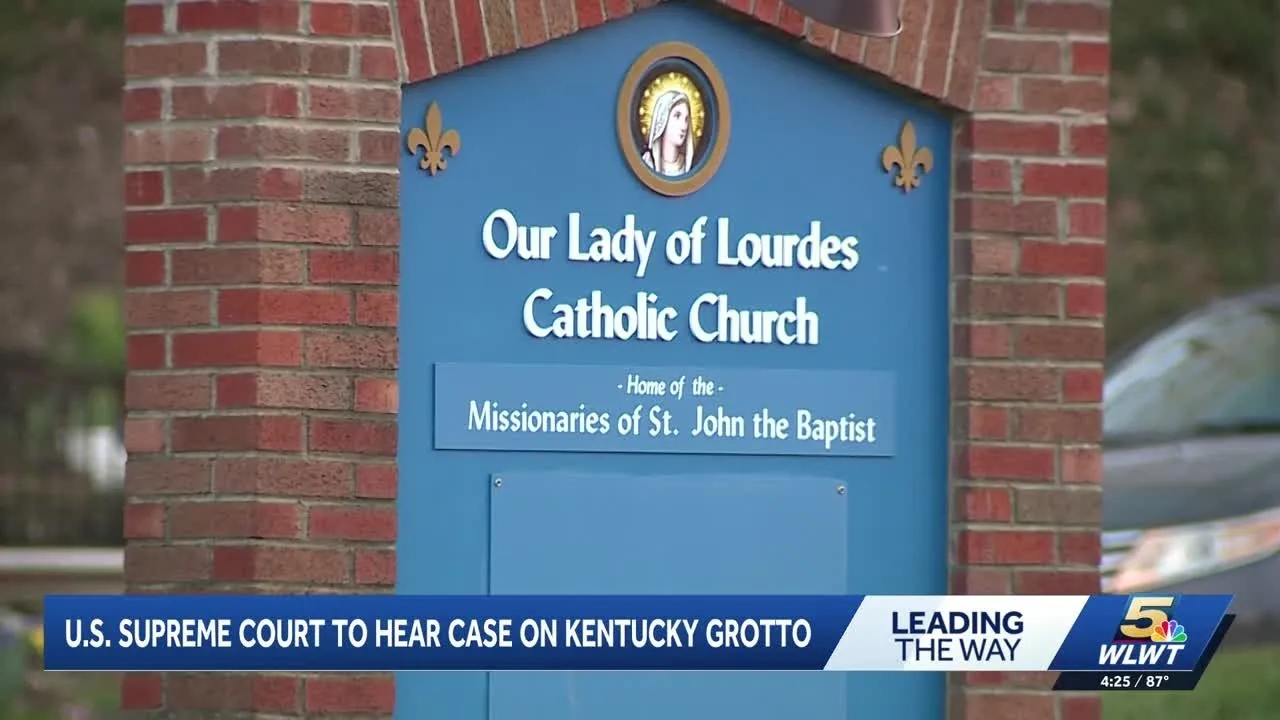
St. John Church in Park Hills, Kentucky, is at the center of a Supreme Court case over plans to build a prayer grotto on its property. The church applied for a conditional-use permit and variance to build the grotto in March 2021.
The case centers around a proposed 16-by-39-foot grotto that would include a shrine to the Virgin Mary, a plaza, walking path, and retaining wall.
The church's initial fight was not with the local government, but a trial court ruled in favor of the church, which was later reversed by the Kentucky Court of Appeals.
Attorney Jeremy Gardner told Fox News Digital that this case has the potential to impact every single zoning law in the country, as lower courts have developed different approaches to the law since its enactment in 2000.
Gardner argued that zoning regulations remain subject to federal-level protections for religious exercise, and the case could shape religious land-use law across the country.
For the Missionaries of St. John the Baptist, the case began with a roughly 600-square-foot place of prayer, and now it could have far-reaching implications for religious land-use law.
The property history is more complicated than the case's shorthand description suggests, with the church building itself predating Park Hills' zoning ordinance adopted in 1974.
Background
Alito's last-minute recusal in the climate change dispute, Suncor Energy Inc. v. County Commissioners of Boulder County, was revealed in a short letter to advocates involved in the case.
The Supreme Court, with no dissents, upheld a state court order requiring Missouri to use the 2022 election map, which favors Republicans in six of the eight districts but preserves a key seat for Democrats.
What's still developing
- Gardner said lower courts have developed different approaches to the law since Congress enacted it in 2000, leaving religious organizations with different levels of protection depending on where a dispute arises.
- The missionaries similarly argued in their Supreme Court petition that federal and state courts are divided over how to determine whether a land-use restriction creates a "substantial burden" under RLUIPA.
- The Frederics also argued that the Missionaries failed to show that alternative locations for the grotto were unavailable.
- That question, he said, reaches well beyond one prayer grotto in Kentucky.