
Home · Faith · Oct 2 archive
Simchat Torah: Where there’s change, I find hope
Confirmed
In Short: In Brooklyn, the organizers of Simchat Torah Across Brooklyn announced changes to their usual festivities due to the ongoing tragedy.
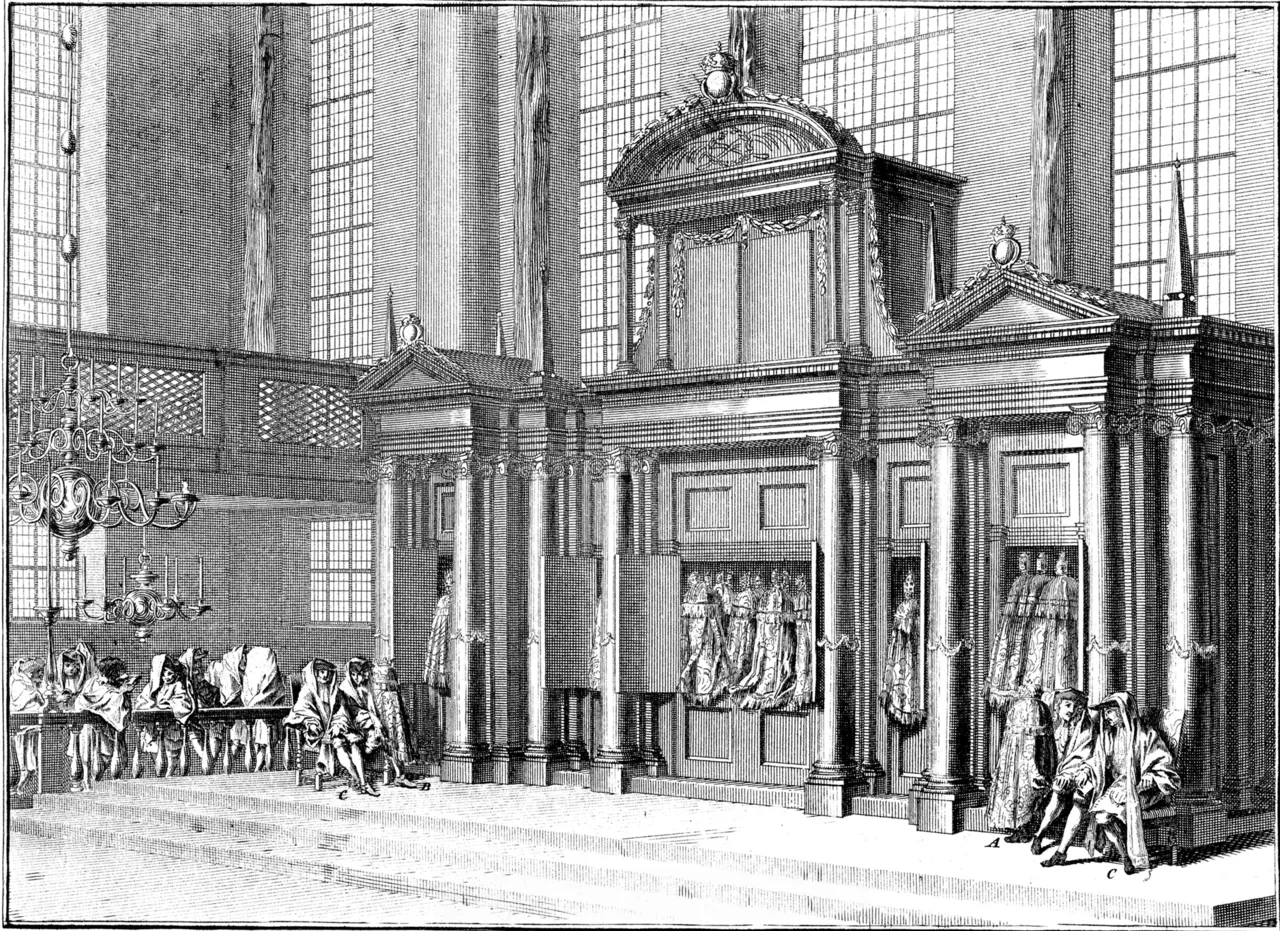
Simchat Torah, celebrated by Jews around the world, marks the completion and immediate restarting of the annual Torah reading cycle.
The holiday, which falls on the 22nd of Tishrei in Israel and the 22nd and 23rd in the Diaspora, includes traditions like hakafot—processions with Torah scrolls—and reciting the prayer for rain.
The holiday's duality of joy and sorrow was also reflected in historical context, such as the Warsaw Ghetto in 1942, where Jews celebrated Simchat Torah under dire circumstances.
Rabbi Menachem Ziemba and others gathered to perform hakafot and recite Simchat Torah verses, symbolizing the resilience of Jewish tradition.
Today, Simchat Torah remains a poignant reminder of the enduring commitment to Jewish traditions, even in the face of adversity.
The holiday's essence, as captured by a Hasidic tale, is not just about completing the Torah cycle but about how the Torah has influenced and transformed individuals.
Simchat Torah, a human innovation, continues to inspire hope and unity among Jews globally, despite the challenges faced in recent times.
What this adds
The exact nature of the changes made to Simchat Torah celebrations in Brooklyn and other locations remains unspecified.
What's confirmed
- On the morning of Oct. 7, 2023, as Jews across Israel were preparing to celebrate the completion of the annual Torah-reading cycle, Hamas terrorists poured in from the Gaza Strip, murdering 1,200 Israelis and taking 251 others hostage.
- An answer can be found in another Simchat Torah, more than 80 years ago, in the Warsaw Ghetto in 1942.
- They took Torah scrolls in their arms and began the traditional hakafot, circling the room.
- The men began reciting the familiar Simchat Torah verses, but instead of singing them exuberantly, they intoned them mournfully.
- Rabbi Orlean saw the boy, grabbed him and pulled him close to the Torah scroll he was holding.
- And yet, he saw a Jewish child standing beside a Torah scroll and understood that this was something the Germans had not yet managed to destroy: the possibility of a Jewish future.
- For many Jews, that has made Simchat Torah one of the most emotionally complicated days on the calendar.
- Hillel Seidman, a religious Jew who kept a remarkable diary of life inside the ghetto, recorded what happened on Simchat Torah.
- About 15 men gathered in the apartment of the great Torah scholar Rabbi Menachem Ziemba at 37 Nalewki Street.
- But in advance of the holiday’s onset Saturday night, the organizers of Simchat Torah Across Brooklyn announced that the day’s unprecedented violence in Israel had caused a change of plans.
- It was a transformation that unfolded again and again across the United States as Simchat Torah, celebrated as one of the most joyous days of the Jewish calendar, began under the shadow of catastrophe.
- “Today is Israel’s 9/11. All of us know people in Israel. All of us have spent the day thinking and praying for them. All of us. And it’s Simchat Torah,” he said.
What's still developing
- Published by the Jewish Federation of Southern New Jersey The practice of restarting our public reading of Torah–both concluding and restarting the cycle–on Simchat Torah does not come from the Torah itself.
- In fact, nowhere in the Torah does it say anything at all about the holiday of Simchat Torah!
- Around Simchat Torah each year, I find myself returning to the Hasidic tale of a Misnaged (Lithuanian opponent of Hasidism) who boasts, “I have been through the entire Torah countless times!” The Rebbe replies to him simply: “But how many times has it been through you?” The point of Simchat Torah is not only to show off that we have been through the Torah another time.
- Shemini Atzeret and Simchat Torah are the culmination of the High Holiday season that starts with the Hebrew month of Elul and Rosh Hashanah, and continues with the 10 Days of Repentance, Yom Kippur and Sukkot.
- They are observed by beginning the recitation of the prayer for rain ( tefilat geshem ), singing and dancing with the Torah, completing the yearly cycle of Torah readings and beginning the next cycle and refraining from work.
- The prayer for rain ( tefilat geshem ) is recited beginning on Shemini Atzeret since the day marks the start of the rainy season in Israel. (Until Passover, the phrase “ masheev ha’ruach u’moreed hagashem,” “Who causes the wind to blow and the rain to fall” is recited in the Amidah prayer.) Simchat Torah literally means “joy of the Torah” and is the grand finale of the holiday season (in Israel it is integrated into Shemini Atzeret).
- On this day, we complete the yearly cycle of Torah readings (the ending of Sefer Devarim /the Book of Deuteronomy) and immediately start the cycle again from the beginning (the first part of Sefer Beresheet /the Book of Genesis).
- These processions are called hakafot and symbolize the continuous cycle of Torah readings.
- As this is happening, the Torah scrolls are passed to different members of the congregation so that many people have an opportunity to participate.
- It is traditional to read the last Torah portion several times and invite everyone in the congregation to be called up for an aliyah (blessing on the Torah).
- The next day, the celebration continues with seven more hakafot and Torah readings of the last portion of Devarim (called V’Zot HaBracha ) and first portion of Beresheet (called Beresheet ).
- Shemini Atzeret and Simchat Torah immediately follow the seven-day festival of Sukkot.