
Home · Faith · Oct 2 archive
Simchas Torah Celebrations Mark Resilience Amid Tragedy
Confirmed
In Short: Jews worldwide celebrate Simchas Torah, marking the completion of the Torah reading cycle, despite the backdrop of recent tragedies.
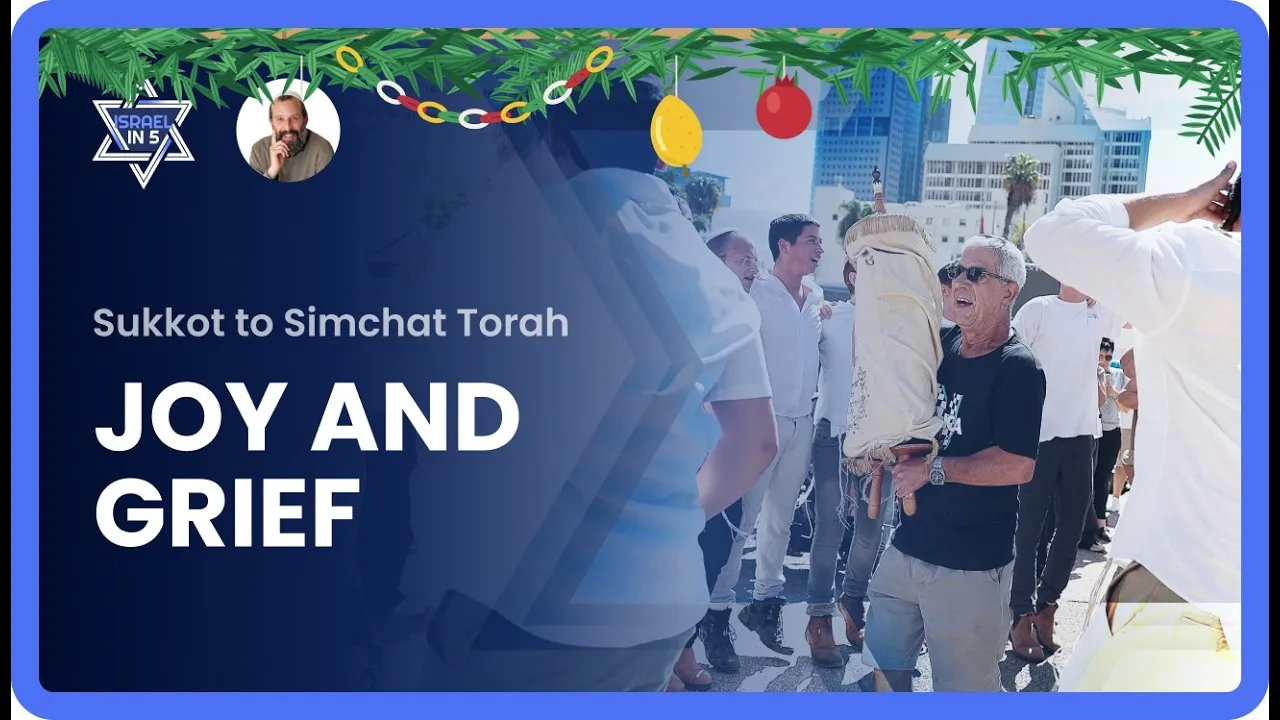
The Third Annual Simchas Torah Achdus Hakafos will take place Sunday, 1:00–1:45 PM, at the corner of Albany Avenue and Crown Street in Crown Heights, according to COLlive.
In accordance with the Beis Din of Crown Heights, Sifrei Torah will not be taken out onto the street during the event.
On Oct. 7, 2023, Hamas terrorists attacked Israel, killing 1,200 Israelis and taking 251 others hostage, just as Jews were preparing to celebrate Simchas Torah.
Hillel Seidman's diary from the Warsaw Ghetto in 1942 recounts how Jews gathered to celebrate Simchas Torah despite the horrors of the Holocaust.
Seidman noted that about 15 men gathered in Rabbi Menachem Ziemba's apartment to perform hakafot, circling the Torah with mournful intonations.
Rabbi Orlean saw a Jewish child standing beside a Torah scroll and understood that the Germans had not yet managed to destroy the possibility of a Jewish future.
For many Jews, Simchas Torah is now one of the most emotionally complicated days on the calendar, as they grapple with the joy of the holiday and the recent tragedies.
Rabbi Menachem Heller of Chabad of Bushwick invites the community to join them for Simchas Torah, emphasizing the importance of resilience and unity.
Hakafot involve circling the bimah with Torah scrolls, a tradition believed to have started in the 1500s by Rabbi Yitzchak Luria.
The Gaon of Vilna noted that the commandment to rejoice on Simchas Torah is the 'most difficult' of all mitzvahs, highlighting the complexity of celebrating amid tragedy.
What this adds
Simchas Torah celebrations often extend for hours, with some synagogues allowing dancing for up to three hours or more.
Serious Torah students, including Rabbi Lior Engelman, have expressed concerns about the extended dancing on Simchas Torah.
What's confirmed
- On the morning of Oct. 7, 2023, as Jews across Israel were preparing to celebrate the completion of the annual Torah-reading cycle, Hamas terrorists poured in from the Gaza Strip, murdering 1,200 Israelis and taking 251 others hostage.
- An answer can be found in another Simchat Torah, more than 80 years ago, in the Warsaw Ghetto in 1942.
- They took Torah scrolls in their arms and began the traditional hakafot, circling the room.
- The men began reciting the familiar Simchat Torah verses, but instead of singing them exuberantly, they intoned them mournfully.
- Rabbi Orlean saw the boy, grabbed him and pulled him close to the Torah scroll he was holding.
- And yet, he saw a Jewish child standing beside a Torah scroll and understood that this was something the Germans had not yet managed to destroy: the possibility of a Jewish future.
- For many Jews, that has made Simchat Torah one of the most emotionally complicated days on the calendar.
- How do you dance on the anniversary of a massacre?
- Hillel Seidman, a religious Jew who kept a remarkable diary of life inside the ghetto, recorded what happened on Simchat Torah.
- About 15 men gathered in the apartment of the great Torah scholar Rabbi Menachem Ziemba at 37 Nalewki Street.
- To underscore this international character, the Torah prescribes 70 bulls as festival offerings on Sukkot, corresponding to the 70 nations of the ancient world.
- “Hakafah means to encircle,” Matalon said, explaining the tradition that takes place the night of the holiday and continues the next day to celebrate starting the reading of the Torah anew. (Simchat Torah literally means “Joy of the Torah.”) “Basically, the people carry a Torah scroll around the synagogue, encircle the synagogue with the Torah scrolls, and then people encircle the Torahs by dancing around it,” Matalon explained.
What's still developing
- Instead, we can all consider how much of what I’m saying might describe any shul in any of our communities, and what we can do about it.) I used to cry at the beautiful words, the sheer pomp and circumstance with which the chatan Torah and chatan Bereishit would be called up.
- If I ever give up on Simchas Torah celebrations, it will be because I’m no longer sure what it is I’d be joining.
- As an adult, that connection to Torah sustained the joy I felt in the day.
- I refused to see women as sidelined, and made a point of dancing with however many women would join me, even if it was just my own reluctant toddler and even if it was just me – because I knew that appearances aside, Torah is as much mine as it is any man’s.
- In more recent years, I’ve begun to worry that I might lose my connection to Simchat Torah.
- It has nothing to do with being a woman, though, and everything to do with being a lover of Torah.
- (Before I go on, let me be clear that I’ve been to multiple shuls on Simchas Torah, sometimes more than one in the same year.
- “With the permission, blah blah, honor of Torah, yada yada…” Where’s the pomp and circumstance that befits the Torah?
- The dancing on Simchat Torah, however, requires almost no skill and consists largely of trotting around (while singing spirited Hebrew songs), circling people who are carrying Torahs.
- I have long had a problem with the central rite of Simchat Torah: dancing.
- I have nothing against the kind of dancing that requires learning certain steps — I then enjoy the challenge of mastering the particular dance.
- In traditional synagogues (on the night of Simchat Torah and then again during the day; this year, on Oct.