
Home · Business · Oct 2 archive
Micron Reports Strong Earnings, Reinforcing AI-Driven Memory Demand
Confirmed
In Short: The surge in demand for memory chips has driven prices up, while companies like Micron have been cautious about expanding supply capacity.
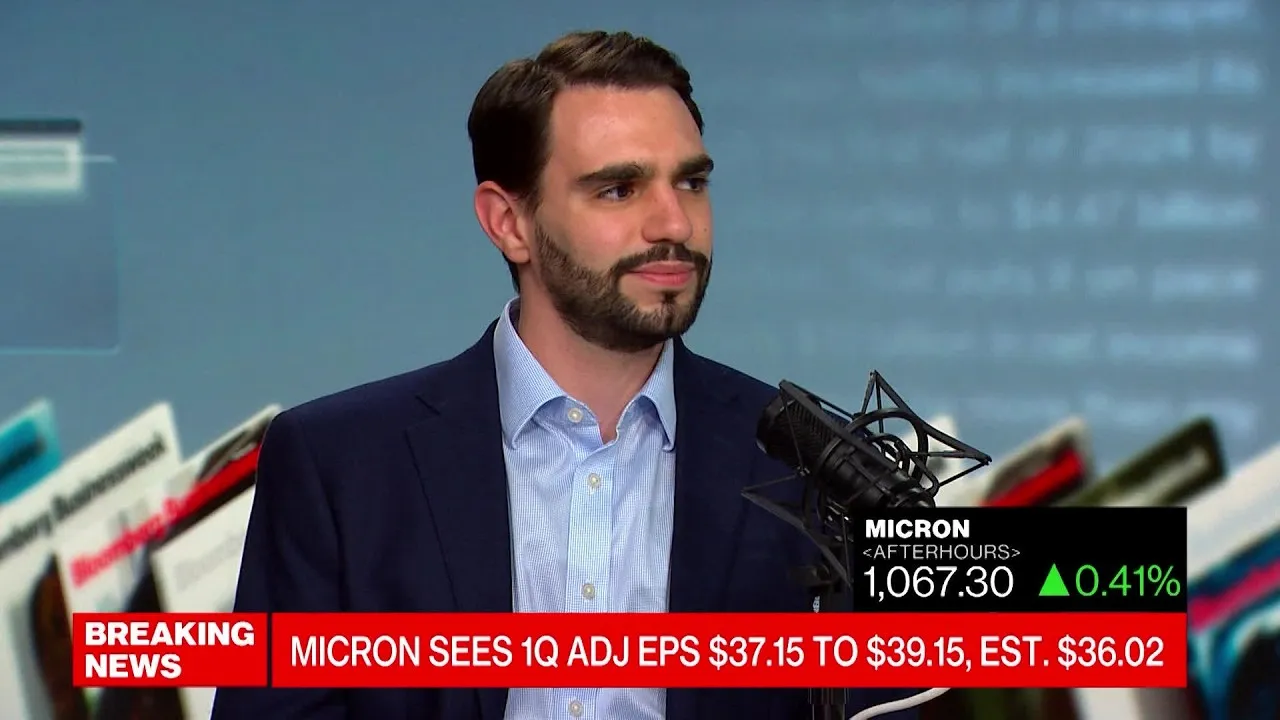
Micron Technology reported strong earnings for its latest quarter, reinforcing the ongoing impact of artificial intelligence (AI) on the memory chip market.
The company has completed agreements for the majority of its 2027 high-bandwidth memory (HBM) supply at significantly higher prices compared to the previous year.
Micron's adjusted gross margin reached 87%, reflecting the strong pricing environment.
The company expects fiscal Q1 revenue of $61.5 billion and adjusted earnings per share (EPS) of $38.15, exceeding market expectations.
The positive outlook from Micron has bolstered investor confidence in the semiconductor sector, particularly in AI-related stocks.
Tokyo's Nikkei 225 surged to 68,957 on October 1, marking a significant rebound in the AI-driven market cycle.
The rally was driven by renewed optimism that AI demand remains robust, supporting earnings across the semiconductor supply chain.
Investors view Micron's strong earnings as confirmation that the AI cycle continues to generate earnings power.
Analysts note that Micron's stock typically recovers quickly once it becomes evident that the company has started another earnings cycle.
The memory market remains in a severe shortage, with expectations for this condition to persist through 2027.
Tech industry analyst TrendForce expects a moderate increase in dynamic random access memory prices in the third quarter.
What this adds
The strong earnings outlook from Micron has directly supported Japanese companies tied to memory, chip equipment, and AI infrastructure.
Investors are optimistic that the AI-driven demand will continue to support earnings growth in the semiconductor sector.
What's confirmed
- Micron Technology reported strong earnings for its latest quarter, reinforcing the ongoing impact of artificial intelligence (AI) on the memory chip market.
- The company has completed agreements for the majority of its 2027 high-bandwidth memory (HBM) supply at significantly higher prices compared to the previous year.
- Micron's adjusted gross margin reached 87%, reflecting the strong pricing environment.
- The company expects fiscal Q1 revenue of $61.5 billion and adjusted earnings per share (EPS) of $38.15, exceeding market expectations.
- The positive outlook from Micron has bolstered investor confidence in the semiconductor sector, particularly in AI-related stocks.
- Tokyo's Nikkei 225 surged to 68,957 on October 1, marking a significant rebound in the AI-driven market cycle.
- The rally was driven by renewed optimism that AI demand remains robust, supporting earnings across the semiconductor supply chain.
- Investors view Micron's strong earnings as confirmation that the AI cycle continues to generate earnings power.
- Analysts note that Micron's stock typically recovers quickly once it becomes evident that the company has started another earnings cycle.
- The memory market remains in a severe shortage, with expectations for this condition to persist through 2027.
- Tech industry analyst TrendForce expects a moderate increase in dynamic random access memory prices in the third quarter.
What's still developing
- And the outlook suggests momentum remains firmly intact.
- The memory theme has been volatile since July, but the October 1 session showed that investors still see Kioxia as a major beneficiary when global AI hardware demand improves.
- The rally lifted the Nikkei above 68,000 for the first time in about six weeks and marked one of the sharpest rebounds of the recent AI-driven market cycle.
- The move followed a strong September 30 rally, extending the market’s recovery from the ex-dividend decline earlier in the week.
- That directly supported Japanese names tied to memory, chip equipment and AI infrastructure.
- A surge in demand for memory chips has sent prices through the roof, while Micron and its competitors have taken a cautious approach to expanding supply capacity.
- With expectations for semiconductor spending to keep climbing through the end of the decade, investors may be wondering if Micron still has significant upside from here.
- That's a result of some customers no longer being able to support higher memory chip pricing and of Micron and its competitors' moves to sign long-term agreements that lock in pricing bands.