
Home · Politics · Oct 1 archive
Supreme Court to Review Trump's Migrant Detention Policy
Confirmed
In Short: The Supreme Court agreed to hear a challenge to the Trump administration's policy of mandatory detention for illegal immigrants.
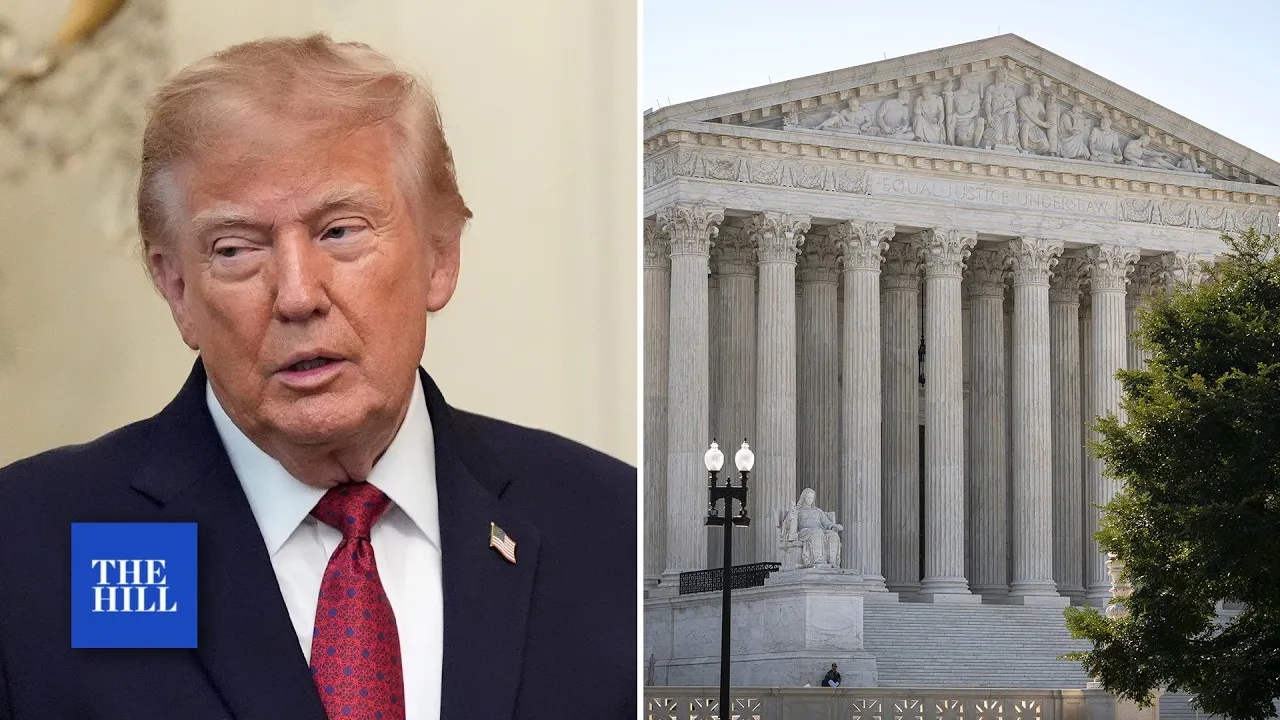
The Supreme Court on Thursday agreed to hear a challenge to Immigration and Customs Enforcement's (ICE) mass detention policy, which has faced several defeats in lower courts amid President Donald Trump's mass deportation efforts.
Challengers, led by the American Civil Liberties Union, argue that the policy is a 'radical reinterpretation' of immigration law, pointing out that some of those being detained were young children when they crossed the border.
In July 2025, the US Department of Homeland Security issued new guidance to federal immigration officials, announcing that immigrants in the United States illegally are subject to mandatory detention without a bond hearing for the duration of their deportation proceedings, which can take months or even years.
The policy change departs from the practices of prior administrations, which typically allowed most noncitizens without criminal records to request a bond hearing if they were arrested away from the border.
The case will test a key pillar of the Trump administration’s hard-line immigration agenda, as most federal appellate courts to review the policy have ruled against it.
The Trump administration has defended the policy by citing the 1996 Immigration and Nationality Act as authorizing the detention procedure, with officials claiming past administrations simply declined to use the authority they had under the INA.
The Supreme Court, which has a 6-3 conservative majority, has allowed a number of Trump’s hardline immigration policies to go into effect, but has also ruled against some of his policies during his second term.
The case now before the Supreme Court stems from a ruling by the 2nd U.S. Circuit Court of Appeals, which upheld a lower court’s ruling against the policy.
The justices took up the administration’s appeal of the lower court’s ruling against the policy.
The case will be heard in the coming months as the Supreme Court begins its new term on Monday.
The outcome of this case will determine whether certain noncitizens held in immigration detention while awaiting deportation are entitled to bond hearings, an issue that has divided the federal appeals courts.
Background
The Supreme Court on Tuesday allowed the Trump administration to resume its policy of deporting illegal immigrants to third countries, a move that has been challenged in lower courts.
The Supreme Court, with no dissents, upheld a state court order requiring Missouri to use the 2022 election map, which favors Republicans in six of the eight districts but preserves a key seat for Democrats.
In most legal jurisdictions, a supreme court, also known as a court of last resort, apex court, high court of appeal, and court of final appeal, is the highest court within the hierarchy of courts. Broadly speaking, the decisions of a supreme court are binding on all other courts in a nation and are not subject to further review by any other court.
What's confirmed
- The US Department of Homeland Security in July 2025 issued new guidance to federal immigration officials announcing that immigrants in the United States illegally are subject to mandatory detention without a bond hearing for the duration of their deportation proceedings, which can take months or even years to play out.
- The Supreme Court, which has a 6-3 conservative majority, has allowed a number of Trump’s hardline immigration policies to go into effect.
- The Supreme Court on Thursday agreed to review a Trump administration policy denying bond hearings for immigrants as the government carries out a sweeping crackdown.
- President Donald Trump’s administration had urged the high court to take up a different but related case that involves the broader constitutional implications of the new policy.
- “The result is an unworkable patchwork of inconsistent immigration enforcement, where aliens present without admission are subject to mandatory detention in some circuits but are entitled to bond hearings and often released in others,” lawyers for the administration wrote.
- The policy change departs from the practices of prior administrations, which typically allowed most noncitizens without criminal records to request a bond hearing if they were arrested away from the border.
- The case will test a key pillar of the Trump administration’s hard-line immigration agenda.
- He sought a bond hearing after an immigration judge determined that his detention was mandatory following his September 2025 arrest.
- Attorneys from the Republican administration argue the circuits’ split is “disrupting the orderly administration of immigration law.” They say the nation’s courts have been inundated with thousands of petitions filed by immigrants challenging the government’s legal interpretation.
- READ MORE: ICE extends no-bid contract for major detention center in Texas, rejecting calls for closure The high court agreed to hear the case of Ricardo Aparecido Barbosa da Cunha, a citizen of Brazil.
What's still developing
- The case was among three the court took up ahead of the justices’ return to action on Monday for a new nine-month term following a summer break.
- John Sauer called it a “critically important question of immigration law.” The policy removes a “perverse incentive” whereby people who evade detention when they enter the United States get treated more leniently than those detained at the border, he added.
- In this latest legal battle over Trump’s hardline immigration agenda to reach the top US judicial body, the justices face an issue that has divided lower courts as numerous lawsuits by migrants and advocacy groups challenging the policy have played out.
- Immigrants detained under the policy have filed tens of thousands of lawsuits seeking their release.
- The change in immigration policy follows continued complaints by members of the Iran World Cup party that travel restrictions were impacting their ability to compete at the tournament.
- The hikes are part of immigration policy changes introduced to manage Japan's growing foreign population Japan has raised fees for foreigners seeking permanent residency in the country by 20 times to 200,000 yen ($1,270; £955).
- The fee increases are part of a series of changes to Japan's immigration policy under Prime Minister Sanae Takaichi, which aim to manage its rapidly growing foreign population.
- This however has led to growing anxieties over immigration and social change.
- Takaichi has made managing immigration one of her key priorities since she took office in October last year.
- Judges at the Kosovo Specialist Chambers in The Hague found Thaci, 58, guilty of murder, torture, cruel treatment and arbitrary detention.
- Washington has launched a new US visa restriction policy targeting targeting ‘foreign nationals’ tied to ‘race-based’ policies.
- The United States has announced a sweeping new US visa restriction policy targeting South African individuals linked to race-based legislation, uncompensated land reform, and racial incitement.