
Home · Science · Oct 1 archive
Nasa Studies Scottish Rocks for Mars Life Signs
Confirmed
In Short: Nasa scientists are studying ancient rocks in Scotland's Highlands to understand if there was once life on Mars.
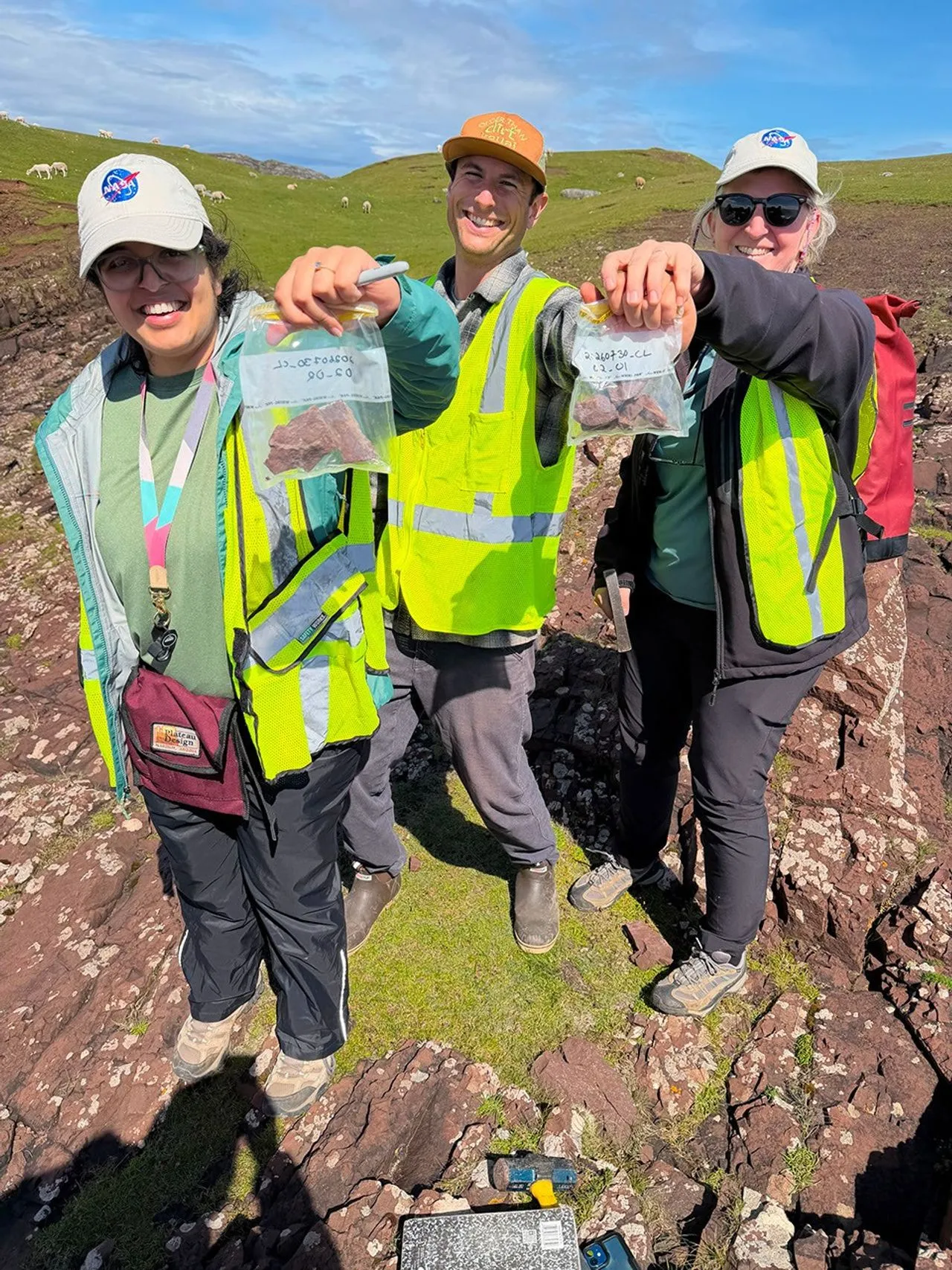
Nasa scientists are studying ancient rocks in Scotland's Highlands to understand if there was once life on Mars. The US space agency announced last year that its Perseverance rover had found potential biosignatures, markings on rocks possibly made by ancient microbes.
The expedition, led by Nasa's Goddard Instrument Field Team, focused on rocks at Clachtoll in Assynt, a small crofting community on the Sutherland coast about 100 miles north of Inverness.
The scientists said the rocks at Clachtoll were formed under similar conditions to rocks found on Mars. These rocks, formed around 1.2 billion years ago, contain evidence of microbial activity.
The expedition was influenced by questions raised after the Perseverance rover identified unusual features known as reduction spots inside rocks at Jezero Crater on Mars. These features are signs of chemical reactions that scientists are studying as possible indicators of ancient environmental activity.
The remote cliffs of Scotland’s Clachtoll region provide scientists with a natural laboratory for studying conditions that resemble parts of ancient Mars. The Stoer formation, which contains layers of mudstone and siltstone, is especially interesting because it combines environments comparable to ancient Martian waterways with evidence connected to microbial life on Earth.
By studying how possible traces of ancient life are preserved in Earth materials, researchers hope to improve the interpretation of observations made by Mars missions. This summer, NASA scientists headed to the Scottish Highlands to follow up on last year’s announcement of potential biosignatures on Mars and prepare for future research.
Nasa said the area's rocks formed in environments comparable to ancient Martian lakes and rivers, but could also hold evidence of microbial life from 1.2 billion years ago.
The expedition was carried out by the Goddard Instrument Field Team, a group based at NASA’s Goddard Space Flight Center in Greenbelt, Maryland.
Although the planet is now cold and dry, geological evidence shows that Mars once had rivers, lakes, and environments where water interacted with rocks for long periods.
This combination allows researchers to study how biological and geological signals can become recorded together inside rocks. Understanding these processes may help scientists interpret future discoveries from Mars missions.
What's confirmed
- Nasa scientists are studying ancient rocks in Scotland's Highlands to understand if there was once life on Mars. The US space agency announced last year that its Perseverance rover had found potential biosignatures, markings on rocks possibly made by ancient microbes.
- The expedition, led by Nasa's Goddard Instrument Field Team, focused on rocks at Clachtoll in Assynt, a small crofting community on the Sutherland coast about 100 miles north of Inverness.
- The scientists said the rocks at Clachtoll were formed under similar conditions to rocks found on Mars. These rocks, formed around 1.2 billion years ago, contain evidence of microbial activity.
- The expedition was influenced by questions raised after the Perseverance rover identified unusual features known as reduction spots inside rocks at Jezero Crater on Mars. These features are signs of chemical reactions that scientists are studying as possible indicators of ancient environmental activity.
- The remote cliffs of Scotland’s Clachtoll region provide scientists with a natural laboratory for studying conditions that resemble parts of ancient Mars. The Stoer formation, which contains layers of mudstone and siltstone, is especially interesting because it combines environments comparable to ancient Martian waterways with evidence connected to microbial life on Earth.
- By studying how possible traces of ancient life are preserved in Earth materials, researchers hope to improve the interpretation of observations made by Mars missions. This summer, NASA scientists headed to the Scottish Highlands to follow up on last year’s announcement of potential biosignatures on Mars and prepare for future research.
- Nasa said the area's rocks formed in environments comparable to ancient Martian lakes and rivers, but could also hold evidence of microbial life from 1.2 billion years ago.
- The expedition was carried out by the Goddard Instrument Field Team, a group based at NASA’s Goddard Space Flight Center in Greenbelt, Maryland.
- Although the planet is now cold and dry, geological evidence shows that Mars once had rivers, lakes, and environments where water interacted with rocks for long periods.
- This combination allows researchers to study how biological and geological signals can become recorded together inside rocks. Understanding these processes may help scientists interpret future discoveries from Mars missions.
What's still developing
- Video Plummeting Israel flight like 'rollercoaster', says passenger Celebrity Traitors is back - here's what you need to know ahead of the first show Watch: Moment Esther Rantzen reunites man with children he saved from Nazi occupation Energy bills are rising by £60 a year - here's what you can do about it Son who used AI to help save mum's life hopes case offers Parkinson's clues Cornell case spotlights 'confusing' web of systems for reporting campus assaults Meet the robot looking after Vera, 74, in her own home Five girls.
- Last year, technology which will be used in the search for evidence of Martian life was tested by a University of St Andrews team at Lower Diabaig, in Torridon.
- Aberdeenshire-based Brewdog had more than £500m of debts when it was sold Former Brewdog staff and several creditors of the collapsed Scottish beer giant are not expected to receive anything from the administration process.
- Far North MSP demands action on NC500 waste and stronger outdoor access laws Golspie man who caused ‘serious injury’ to passenger while under influence of cocaine sentenced 5,000 years of Lewis archaeology brought to life with new digital experience Danny coasts in to Inverness following 79-mile chin-controlled journey 'It's very overcrowded': Freed prisoners speak to BBC as new early release scheme begins We fear for our lives after being told our abusive exes will be freed from jail early US death row inmate survives execution attempt after two lethal injections We fear for our lives after being told our abusive exes will be freed from jail early Plummeting Israel flight like 'rollercoaster', says passenger.