
Home · Technology · Oct 1 archive
California Law Imposes Fines on Robotaxi Operators Blocking First Responders
Confirmed
In Short: The National Highway Traffic Safety Administration is also reviewing robotaxi safety, noting multiple instances of autonomous vehicles entering active emergency scenes and blocking first responders.
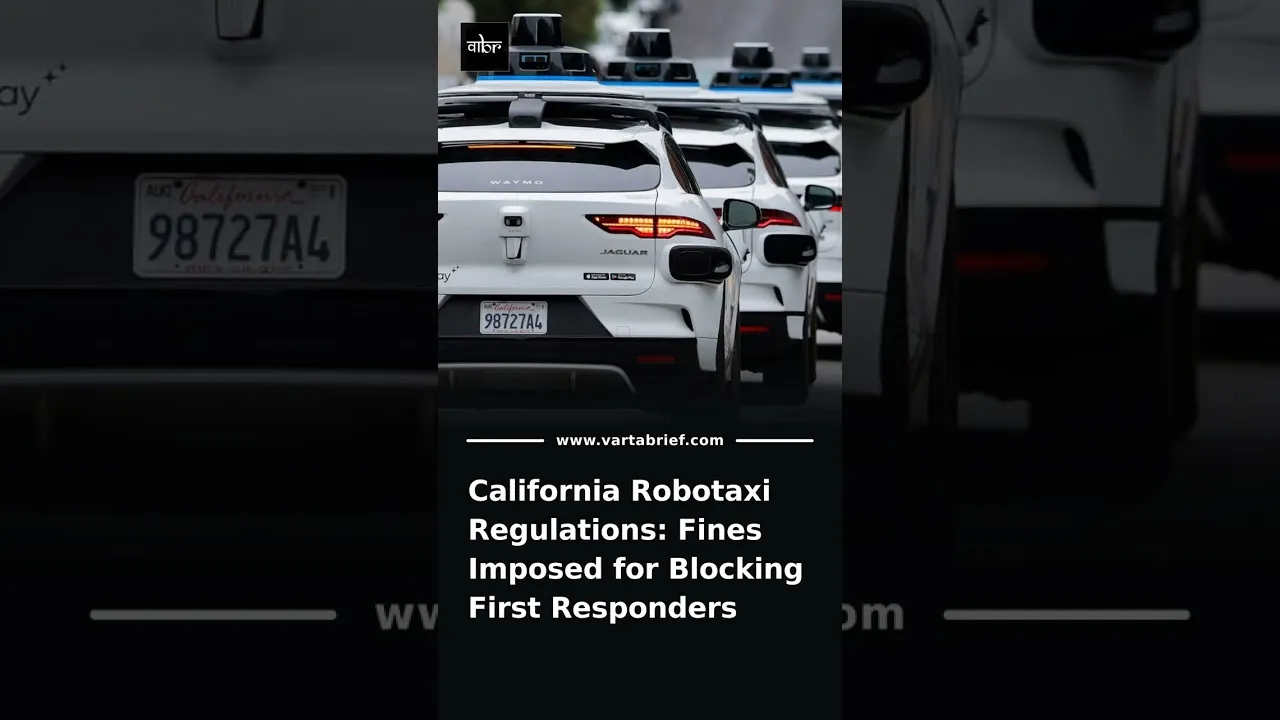
California has enacted Senate Bill 1246, which was signed into law by Governor Gavin Newsom, setting new rules for autonomous vehicles (AVs) to enhance safety and response times when they encounter issues or interfere with emergency responders.
The law was prompted by incidents where Waymo, a leading AV company, relied on first responders to manually drive its vehicles when they faced problems.
Under the new law, AV companies like Tesla, Waymo, and Zoox must provide local support to first responders when their robotaxis cause problems.
Operators could face penalties if a robotaxi blocks police or firefighters for more than 30 minutes.
The law follows a series of high-profile incidents in California where robotaxis broke down, disrupted traffic, or impeded first responders, with Waymo being the most affected due to its large fleet of about 4,000 autonomous vehicles.
Waymo expressed gratitude for the amendments made to the bill, stating that they ensure autonomous vehicle operators can still feasibly serve Californians.
Internationally, London recently launched a small fleet of robotaxis, while Wuhan, China, operates more than 1,000 robotaxis, demonstrating the global expansion of autonomous vehicle technology.
What's confirmed
- California has enacted Senate Bill 1246, which was signed into law by Governor Gavin Newsom, setting new rules for autonomous vehicles (AVs) to enhance safety and response times when they encounter issues or interfere with emergency responders.
- The law was prompted by incidents where Waymo, a leading AV company, relied on first responders to manually drive its vehicles when they faced problems.
- Under the new law, AV companies like Tesla, Waymo, and Zoox must provide local support to first responders when their robotaxis cause problems.
- Operators could face penalties if a robotaxi blocks police or firefighters for more than 30 minutes.
- The law follows a series of high-profile incidents in California where robotaxis broke down, disrupted traffic, or impeded first responders, with Waymo being the most affected due to its large fleet of about 4,000 autonomous vehicles.
- Waymo expressed gratitude for the amendments made to the bill, stating that they ensure autonomous vehicle operators can still feasibly serve Californians.
- Internationally, London recently launched a small fleet of robotaxis, while Wuhan, China, operates more than 1,000 robotaxis, demonstrating the global expansion of autonomous vehicle technology.
What's still developing
- Those incidents prompted state and federal lawmakers to call for stricter rules governing robotaxis, particularly how they behave around first responders.
- “California has embraced autonomous vehicles, but we cannot embrace innovation at the expense of public safety. When an autonomous vehicle crashes, breaks down, blocks a roadway in an emergency, or gets in the way of law enforcement or first responders, there must be clear accountability,” said state Senator Dave Cortese, who introduced the bill.
- In several locations, including Wuhan, operators have already dispensed with the human safety driver required in London.
- In the Chinese city of Wuhan, more than 1,000 robotaxis are in operation, while fleets also operate in locations including Beijing, San Francisco and Dubai.
- The National Highway Traffic Safety Administration is scrutinizing robotaxi safety, documenting multiple instances of autonomous vehicles traveling into active emergency scenes and blocking first responders.