
Home · World · Sep 30 archive
US Ends ISIS-Fighting Mission in Iraq, Shifts to Bilateral Defense
Confirmed
In Short: The U.S. military’s role will now shift from a wartime coalition mission to an Iraqi-led security effort supported by a more conventional bilateral security relationship.
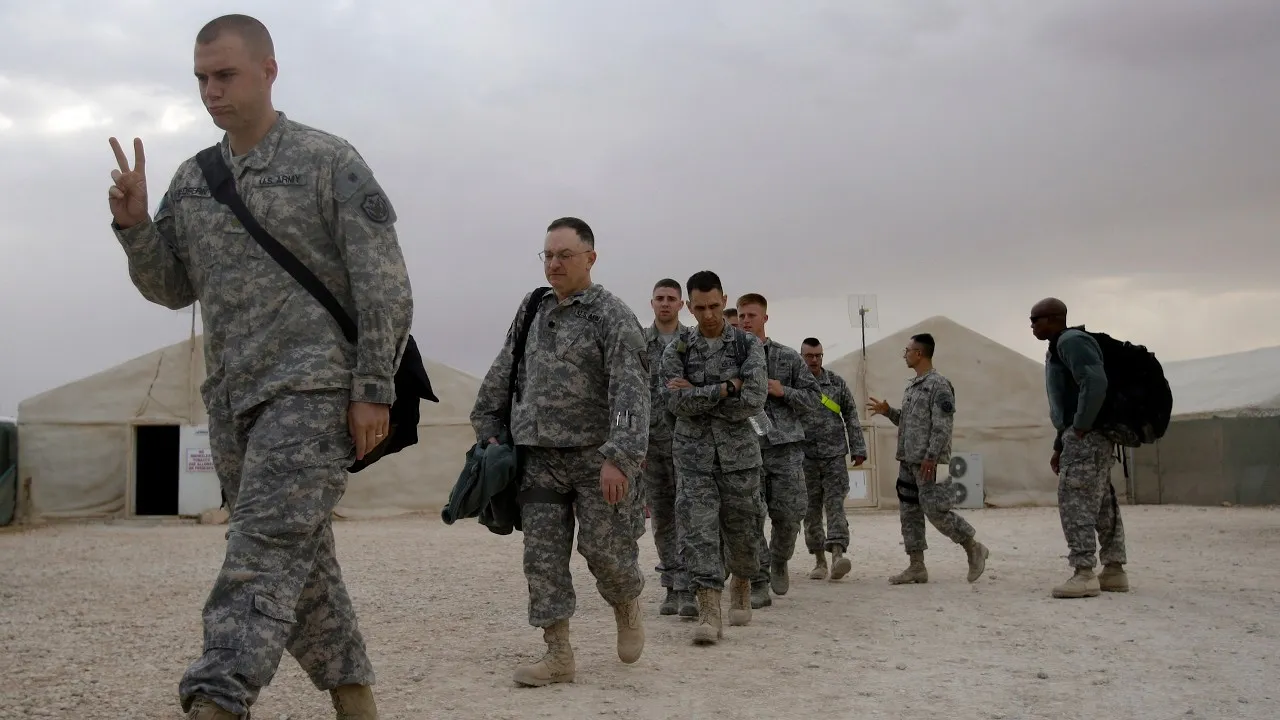
U.S. Central Command (CENTCOM) stated that the task force overseeing the operations will now be headquartered in Jordan, while U.S. forces will continue the counter-ISIS mission in Syria alongside coalition partners and the Syrian government.
The U.S. military began withdrawing from Iraq last October, with Erbil Air Base in northern Iraq serving as the mission’s operational hub. The base hosted most of the 1,500 American and coalition personnel supporting the counter-ISIS operations.
CENTCOM Commander Adm. Kenneth “Ken” F. McKenzie Jr. praised the tens of thousands of American service members, diplomats, and civilian personnel who participated in the mission, attributing the success to their efforts.
Iraqi forces, including the Peshmerga, will now lead the effort to keep Iraq secure and manage ISIS remnants. Iraqi Prime Minister Ali al-Zaidi emphasized that Iraqi security forces would continue the fight against ISIS and work to ensure that non-state groups no longer possess weapons.
The U.S. military’s role will now shift from a wartime coalition mission to an Iraqi-led security effort supported by a more conventional bilateral security relationship. This shift is part of a planned transition from a coalition military mission to a bilateral defense relationship between the United States and Iraq.
Iraq’s government will also be responsible for addressing other security threats, including Iran-aligned militias that undermine Iraqi sovereignty and regional stability. The disarmament of these militias has faced significant delays and is not expected to be completed until June 2027.
Iraq is now looking towards establishing individual bilateral security agreements with the United States, NATO, and other nations. This move comes as Iraq finds itself at the epicenter of the US-Iran conflict, with both American military installations and Iranian-affiliated groups facing attacks.
An official from the Kurdistan Regional Government expressed concern, stating that the political, security, and military situation in Iraq has not yet reached a level of stability that would justify such a withdrawal. The official noted that the withdrawal timetable was initially associated with a demand for militias to disarm, as Baghdad faces mounting pressure from Washington to manage militia activities.
What this adds
The shift from a coalition mission to a bilateral defense relationship marks a significant change in U.S. military strategy in the region.
The disarmament of militias in Iraq is expected to take more than a year, complicating the transition to full Iraqi control over security.
What's confirmed
- “This milestone reflects the success of a 12-year campaign that defeated ISIS as an organized military threat in Iraq and across the region,” Parnell said.
- The Government of Iraq will now take primary responsibility for the country’s security.
- The departure is part of a planned shift from a coalition military mission to a bilateral defense relationship between the United States and Iraq.
What's still developing
- “Because of your grit, sacrifice and professionalism, ISIS no longer poses a systemic threat to Iraq’s national security,” Cooper said.
- The U.S. military launched CJTF-OIR in 2014 to combat ISIS, an offshoot terrorist organization that arose from the former al-Qaeda in Iraq.
- Home » Featured » CENTCOM Announces End To Operation Inherent Resolve In Iraq – The 12-Year Counter-ISIS Mission Your email address will not be published.
- While the mission of the US-led coalition is drawing to a close, officials confirm that the remaining US troops located in the Kurdish region will adhere to the September 30 withdrawal deadline.
- US military involvement in Iraq began in 2003 with the intent of toppling Saddam Hussein, leading to a prolonged occupation and counterinsurgency efforts.
- The US-led coalition's combat operations in Iraq are officially concluding today, September 30, 2026.
- This mission was initially established in response to the territorial advances made by ISIS in 2014.
- The military returned three years later after Iraqi authorities invited a US-led coalition to help fight ISIS, which had captured large areas of Iraq and Syria.