
Home · Health · Sep 30 archive
Tozorakimab Reduces COPD Exacerbations in Trials
Confirmed
In Short: AstraZeneca's investigational anti–IL-33 antibody, tozorakimab, significantly reduced the annualized rate of moderate or severe chronic obstructive pulmonary disease (COPD) exacerbations in two Phase 3 trials.
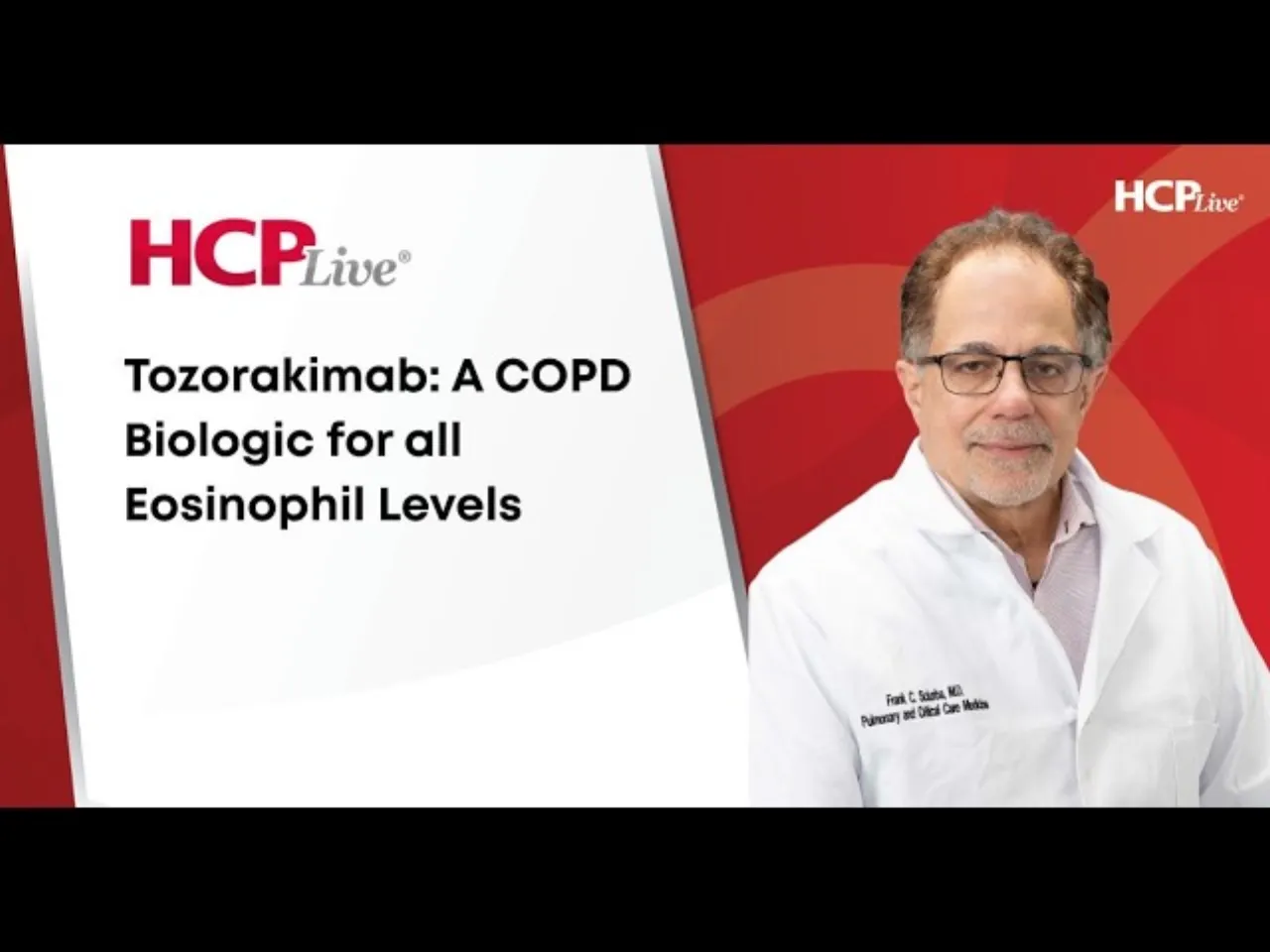
AstraZeneca's investigational anti–IL-33 antibody, tozorakimab, significantly reduced the annualized rate of moderate or severe chronic obstructive pulmonary disease (COPD) exacerbations in two Phase 3 trials, OBERON and TITANIA, presented at the European Respiratory Society (ERS) Congress 2026 and published in the New England Journal of Medicine.
In the OBERON trial, tozorakimab reduced exacerbations by 29% compared to placebo, while in TITANIA, the reduction was 34%. Both trials included former smokers and patients with a history of exacerbations, regardless of smoking status or blood eosinophil count.
Patients received 300 mg of subcutaneous tozorakimab every 4 weeks for 52 weeks, added to stable background maintenance therapy that included triple inhaled therapy in over 90% of participants.
The primary end point in both trials was the reduction in the annualized rate of moderate or severe exacerbations, which was achieved with tozorakimab in both studies.
Lead investigator Frank C. Uller noted, “Tozorakimab significantly reduces the annualized rate of moderate and severe exacerbations versus placebo.” Uller also highlighted the potential of tozorakimab to address innate immune challenges and reduce inflammation.
Tozorakimab's efficacy was observed across all blood eosinophil levels, a benefit not offered by current COPD biologics like dupilumab and mepolizumab, which are indicated only for patients with elevated blood eosinophil counts.
The safety profile of tozorakimab was favorable, with serious adverse events reported in 23.3% of the tozorakimab group in OBERON and 31.1% in TITANIA, compared to 27.0% and 32.4% in the placebo groups, respectively.
AstraZeneca stated that the only adverse drug reaction identified was an injection-site reaction, which occurred more frequently with tozorakimab than with placebo.
These results underscore tozorakimab's potential as an innovative treatment for the millions of people living with COPD who remain at risk despite treatment with inhaled standard of care.
Tozorakimab targets both pathways of IL-33 signaling simultaneously, neutralizing both active states of the cytokine and halting acute cellular inflammation while preventing the protein from oxidizing into its tissue-remodeling form.
Given the heterogeneity of COPD, hitting broadly when it comes to the pathogenesis is crucial, and tozorakimab offers a promising approach to addressing this.
COPD affects approximately 16 million adults in the United States, and COPD-related hospitalizations account for nearly 50% of the disease's direct medical costs.
What's confirmed
- AstraZeneca's investigational anti–IL-33 antibody, tozorakimab, significantly reduced the annualized rate of moderate or severe chronic obstructive pulmonary disease (COPD) exacerbations in two Phase 3 trials, OBERON and TITANIA, presented at the European Respiratory Society (ERS) Congress 2026 and published in the New England Journal of Medicine.
- In the OBERON trial, tozorakimab reduced exacerbations by 29% compared to placebo, while in TITANIA, the reduction was 34%. Both trials included former smokers and patients with a history of exacerbations, regardless of smoking status or blood eosinophil count.
- Patients received 300 mg of subcutaneous tozorakimab every 4 weeks for 52 weeks, added to stable background maintenance therapy that included triple inhaled therapy in over 90% of participants.
- The primary end point in both trials was the reduction in the annualized rate of moderate or severe exacerbations, which was achieved with tozorakimab in both studies.
- Lead investigator Frank C. Uller noted, “Tozorakimab significantly reduces the annualized rate of moderate and severe exacerbations versus placebo.” Uller also highlighted the potential of tozorakimab to address innate immune challenges and reduce inflammation.
- Tozorakimab's efficacy was observed across all blood eosinophil levels, a benefit not offered by current COPD biologics like dupilumab and mepolizumab, which are indicated only for patients with elevated blood eosinophil counts.
- The safety profile of tozorakimab was favorable, with serious adverse events reported in 23.3% of the tozorakimab group in OBERON and 31.1% in TITANIA, compared to 27.0% and 32.4% in the placebo groups, respectively.
- AstraZeneca stated that the only adverse drug reaction identified was an injection-site reaction, which occurred more frequently with tozorakimab than with placebo.
- These results underscore tozorakimab's potential as an innovative treatment for the millions of people living with COPD who remain at risk despite treatment with inhaled standard of care.
- Tozorakimab targets both pathways of IL-33 signaling simultaneously, neutralizing both active states of the cytokine and halting acute cellular inflammation while preventing the protein from oxidizing into its tissue-remodeling form.
- Given the heterogeneity of COPD, hitting broadly when it comes to the pathogenesis is crucial, and tozorakimab offers a promising approach to addressing this.
- COPD affects approximately 16 million adults in the United States, and COPD-related hospitalizations account for nearly 50% of the disease's direct medical costs.
What's still developing
- “With tozorakimab, we will really move more upstream towards the airway epithelium and have more response towards these innate immune challenges. By blocking this response, we could affect inflammation, not just type 2 inflammation but bronchial hyperreactivity and exacerbation,” Uller said during her presentation discussion.
- Existing approved biologics in COPD remain restricted to patients displaying an inadequately controlled eosinophilic phenotype.