
Home · World · Sep 30 archive
Russian Strikes Devastate Ukraine's Steel Industry
Confirmed
In Short: Before the full-scale invasion in 2022, metallurgy and mining accounted for roughly 10% of Ukraine's GDP and a third of its exports. Among those lost were the Azovstal and Illich plants in Mariupol, captured after a months-long Russian siege.
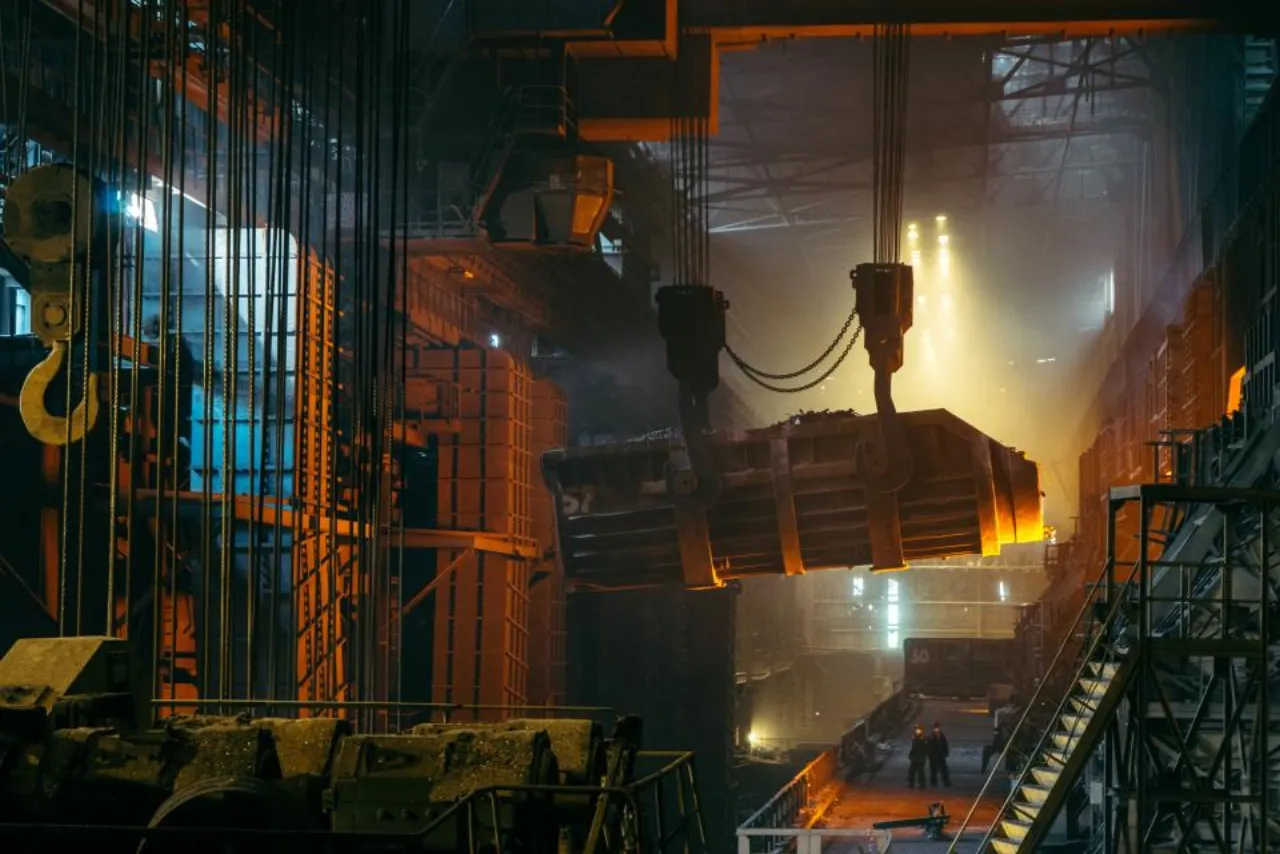
Russia fired a total of 17 missiles at Zaporizhstal, according to Oleksandr Myronenko, chief operating officer of steelworks owner Metinvest. The Zaporizhstal works has been hit by four waves of Russian attacks, with the campaign starting in August.
On September 25, Ukraine's biggest steelworks, Arcelor Mittal Kryvyi Rih, announced it was unable to reopen after repeated attacks over five weeks, with five workers having died.
The Zaporizhstal works, which employs 8,500 people, has shut down indefinitely after four waves of Russian attacks. Like thousands of other residents of Zaporizhzhia, Denys Maksyshko has spent years working for local steel factory Zaporizhstal.
The huge factory now has no windows left, and there are holes in the roofs. After one attack, a blast furnace was restarted only for the site to be hit again hours later.
Oleksandr Kalenkov, president of Ukrmetallurgprom, a Ukrainian steel association, told the Kyiv Independent that the recent attacks have likely cost steelmakers close to $100 million.
Building firms will have to import more expensive steel from Europe, hiking construction prices, fueling inflation, and ultimately raising the costs of reconstruction, Denys Sakva, a senior analyst at Ukrainian investment firm Dragon Capital, told the Kyiv Independent.
Karin Karlsbro, a member of the European Parliament (MEP), is urging Brussels to urgently review its trade policy and remove Ukraine from its tariff regime introduced in June.
The metallurgy sector, which contributed 7% of Ukraine’s GDP last year and employs tens of thousands of people, has been one of the biggest victims, suffering at least nine separate ballistic missile attacks since August.
This is the sector’s worst year since 2022, when Russian forces occupied and destroyed the Azovstal and Illich plants in Mariupol, wiping out 40% of Ukraine’s steel production.
During the attacks, Russia launches precise strikes that damage critical equipment like blast furnaces, preventing Ukrainian steelmakers from producing pig iron — a key material for steel.
What this adds
The attacks on Ukraine's steel industry are part of a broader Russian campaign targeting critical infrastructure.
Ukraine's steel industry's collapse could have significant economic repercussions, affecting not just Ukraine but potentially Europe as well.
What's confirmed
- Russia fired a total of 17 missiles at Zaporizhstal, according to Oleksandr Myronenko, chief operating officer of steelworks owner Metinvest. The Zaporizhstal works has been hit by four waves of Russian attacks, with the campaign starting in August.
- On September 25, Ukraine's biggest steelworks, Arcelor Mittal Kryvyi Rih, announced it was unable to reopen after repeated attacks over five weeks, with five workers having died.
- The Zaporizhstal works, which employs 8,500 people, has shut down indefinitely after four waves of Russian attacks. Like thousands of other residents of Zaporizhzhia, Denys Maksyshko has spent years working for local steel factory Zaporizhstal.
- The huge factory now has no windows left, and there are holes in the roofs. After one attack, a blast furnace was restarted only for the site to be hit again hours later.
- Oleksandr Kalenkov, president of Ukrmetallurgprom, a Ukrainian steel association, told the Kyiv Independent that the recent attacks have likely cost steelmakers close to $100 million.
- Building firms will have to import more expensive steel from Europe, hiking construction prices, fueling inflation, and ultimately raising the costs of reconstruction, Denys Sakva, a senior analyst at Ukrainian investment firm Dragon Capital, told the Kyiv Independent.
- Karin Karlsbro, a member of the European Parliament (MEP), is urging Brussels to urgently review its trade policy and remove Ukraine from its tariff regime introduced in June.
- The metallurgy sector, which contributed 7% of Ukraine’s GDP last year and employs tens of thousands of people, has been one of the biggest victims, suffering at least nine separate ballistic missile attacks since August.
- This is the sector’s worst year since 2022, when Russian forces occupied and destroyed the Azovstal and Illich plants in Mariupol, wiping out 40% of Ukraine’s steel production.
- During the attacks, Russia launches precise strikes that damage critical equipment like blast furnaces, preventing Ukrainian steelmakers from producing pig iron — a key material for steel.
What's still developing
- Before the start of the full-scale invasion in 2022, metallurgy and mining accounted for roughly 10% of Ukraine's GDP and a third of its exports.
- Among those lost were the Azovstal and Illich plants in Mariupol, Ukraine's south-eastern city captured after a months-long Russian siege.
- "This is a catastrophic problem for Ukraine's economy. Before the war, the mining and metallurgical industry was a key industry," he told the BBC.
- Now, following a series of Russian missile strikes, this heart has stopped beating.
- Ukraine comes closer to making Patriot missiles domestically.
- Key Takeaways Ukrainian President Volodymyr Zelensky stated on September 25 that US President Donald Trump has made a “final decision” to grant Ukraine licenses to produce unspecified types of Patriot air defense systems interceptor missiles.
- * Russian forces are intensifying efforts to specifically target Ukrainian data centers and telecommunications infrastructure as part of their ongoing long-range strike campaign aimed at degrading Ukraine’s economy since 2022.
- * This latest diversification of Russia’s strike campaign aims to disrupt Ukraine’s economy and the digital infrastructure that civilians and businesses rely on daily.
- * Russian strikes against data centers and telecommunications infrastructure can cause temporary internet outages but are unlikely to lead to a complete internet shutdown.
- * Russian strikes on data centers are one of the latest Russian attempts to disrupt the Ukrainian economy and follow a similarly targeted Russian strike campaigns against Ukraine’s port and railway infrastructure.
- * Russian high-ranking military officials continue exaggerating the extent of Russian advances in northern Sumy Oblast as part of the Kremlin’s continuous cognitive warfare effort to portray Ukrainian defenses as collapsing and divert attention from Ukraine’s advances north of Lyman.
- * Ukrainian forces struck Russian oil refineries and several military industrial enterprises across Russia on September 24 or overnight on September 24 to 25.