
Home · Science · Sep 30 archive
One-third of world population exposed to harmful air pollution: Monitor
Confirmed
In Short: The Copernicus Atmosphere Monitoring Service reports dangerous ozone levels affecting nearly 40% of the world's population due to extreme heat and human-caused pollution.
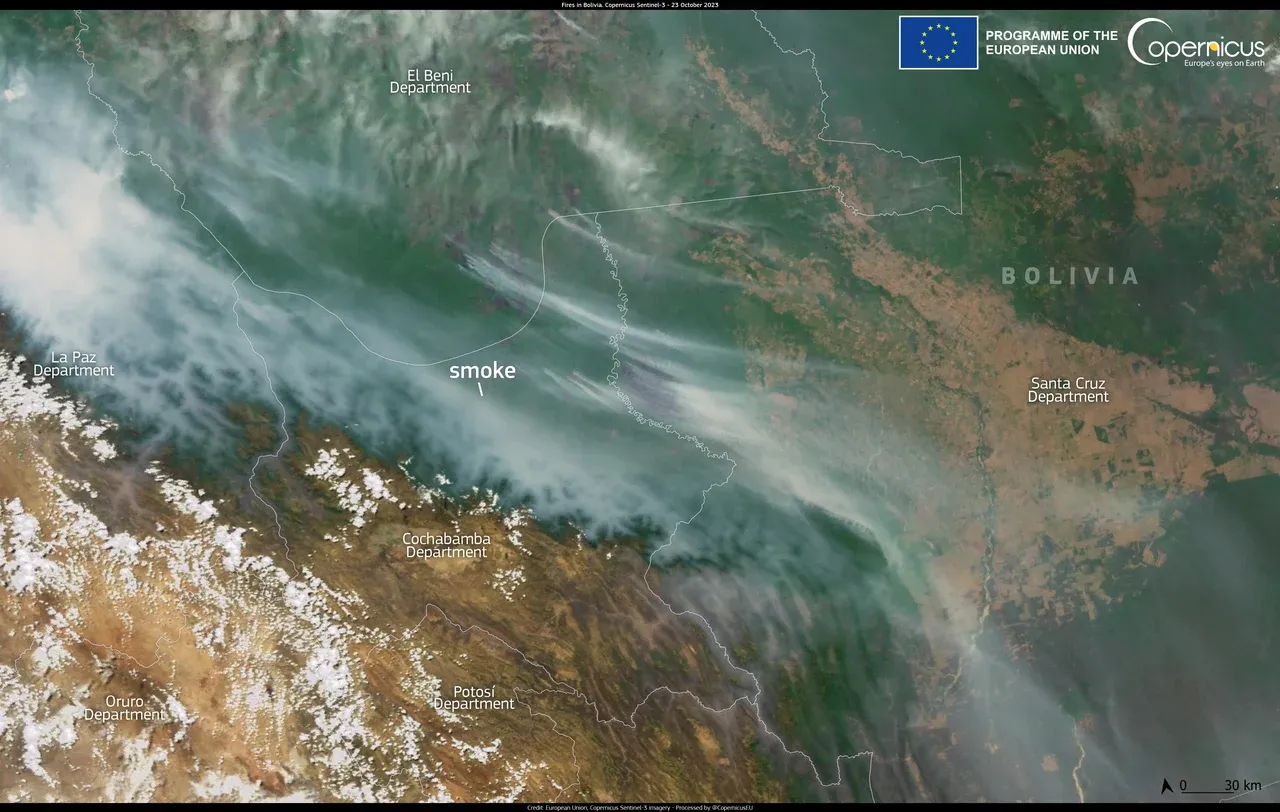
The Copernicus Atmosphere Monitoring Service (CAMS) has reported that nearly 40% of the global population has been exposed to dangerous levels of ground-level ozone this year, according to a new analysis of data from the first eight months of 2026.
This alarming statistic is a result of the combination of widespread extreme heat and human-caused air pollution, as detailed in a report by CAMS.
CAMS, which provides one of the most comprehensive assessments of Earth’s atmosphere, uses satellite data and advanced atmospheric modeling to monitor air pollution and wildfires globally.
The organization's analysis shows that 34% of the global population experienced ozone concentrations well above the World Health Organization’s recommended exposure levels between January 1 and September 15.
The Jharkhand High Court in India recently directed its state pollution control board to conduct surprise inspections and continuously monitor pollution data of two factories in Ramgarh to ensure compliance with air and water pollution limits.
In the Philippines, seven air monitoring stations across Manila recorded unhealthy levels of PM2.5 pollutants, following forecasts from the Copernicus Atmosphere Monitoring Service.
Meanwhile, Kuching, the capital of Malaysia’s Sarawak state, was named the world’s most polluted major city with air quality reaching hazardous levels.
The findings highlight the close link between climate change and air pollution, emphasizing the need for continuous monitoring and regulatory measures to address these issues.
What this adds
The report adds to the growing body of evidence linking climate change and air pollution, underscoring the importance of global monitoring and regulatory measures.
The sources have not established the exact geographical distribution of the affected population or the specific sources contributing to the ozone pollution.
What's confirmed
- The Copernicus Atmosphere Monitoring Service (CAMS) has reported that nearly 40% of the global population has been exposed to dangerous levels of ground-level ozone this year, according to a new analysis of data from the first eight months of 2026.
- This alarming statistic is a result of the combination of widespread extreme heat and human-caused air pollution, as detailed in a report by CAMS.
- CAMS, which provides one of the most comprehensive assessments of Earth’s atmosphere, uses satellite data and advanced atmospheric modeling to monitor air pollution and wildfires globally.
- The organization's analysis shows that 34% of the global population experienced ozone concentrations well above the World Health Organization’s recommended exposure levels between January 1 and September 15.
- The Jharkhand High Court in India recently directed its state pollution control board to conduct surprise inspections and continuously monitor pollution data of two factories in Ramgarh to ensure compliance with air and water pollution limits.
- In the Philippines, seven air monitoring stations across Manila recorded unhealthy levels of PM2.5 pollutants, following forecasts from the Copernicus Atmosphere Monitoring Service.
- Meanwhile, Kuching, the capital of Malaysia’s Sarawak state, was named the world’s most polluted major city with air quality reaching hazardous levels.
- The findings highlight the close link between climate change and air pollution, emphasizing the need for continuous monitoring and regulatory measures to address these issues.
What's still developing
- This includes indoor air pollution monitors, portable air quality monitors and more.
- In that time I’ve… This is a review of the Qingping Air Quality Monitor Generation 2.
- Experts that monitor the island's sea eagle population did not expect the male chick to survive, but it has now been spotted three years on - soaring above the island with the distinctive kink in its wing clearly visible.
- Satellites are the best tool researchers have for continuously monitoring dust across the planet, but it is difficult to separate it out from other aerosol types such as smoke and pollution.
- Observing that “environmental harm routinely transcends its geographical roots”, the Jharkhand High Court recently directed its state pollution control board to conduct surprise inspections and continuously monitor the pollution data of the two factories situated in Ramgarh to ensure continuous compliance with air and water pollution limits A bench of Chief Justice MS Sonak and Justice Rajesh Shankar was hearing a Public Interest Litigation (PIL) filed in 2024 by a man raising concerns of residents of Ramgarh, an industrial town in Jharkhand where two factories were causing “serious environmental pollution”.
- On Wednesday morning, seven air monitoring stations across the metropolitan area of Philippine capital Manila recorded “unhealthy levels” of PM2.5 pollutant particulate, according to the country’s Environment and Natural Resources Department (DENR).
- The haze reaching Indonesia’s northern neighbor followed forecasts from Europe-based earth observation platform Copernicus Atmosphere Monitoring Services (CAMS) that showed the general trajectory of pollution from wildfires in the country to cross the South China Sea toward the Philippines.
- In a new paper published in ES&T: Air, scientists analyzed data collected throughout Addis Ababa between 2022 and 2025 from 10 air-quality monitoring sites deployed by NASA’s Multi-Angle Imager for Aerosols ( MAIA ) project.
- The new paper cites data from MAIA’s ground sensors indicating that average black carbon levels in Addis Ababa were approximately four to nine times higher than those measured in the three U.S. metropolitan areas the mission is monitoring.
- A NASA-funded air pollution monitoring network has provided one of the most detailed long-term views yet of the role of black carbon, or soot produced by fires, diesel vehicles, and other combustion sources, in Ethiopia’s capital, Addis Ababa.