
Home · Science · Sep 30 archive
Astronomers May Have Found Giant Planet in Habitable Zone of Hottest Star
Confirmed
In Short: Astronomers may have discovered a giant planet in the habitable zone of the hottest star yet, HD 156295.
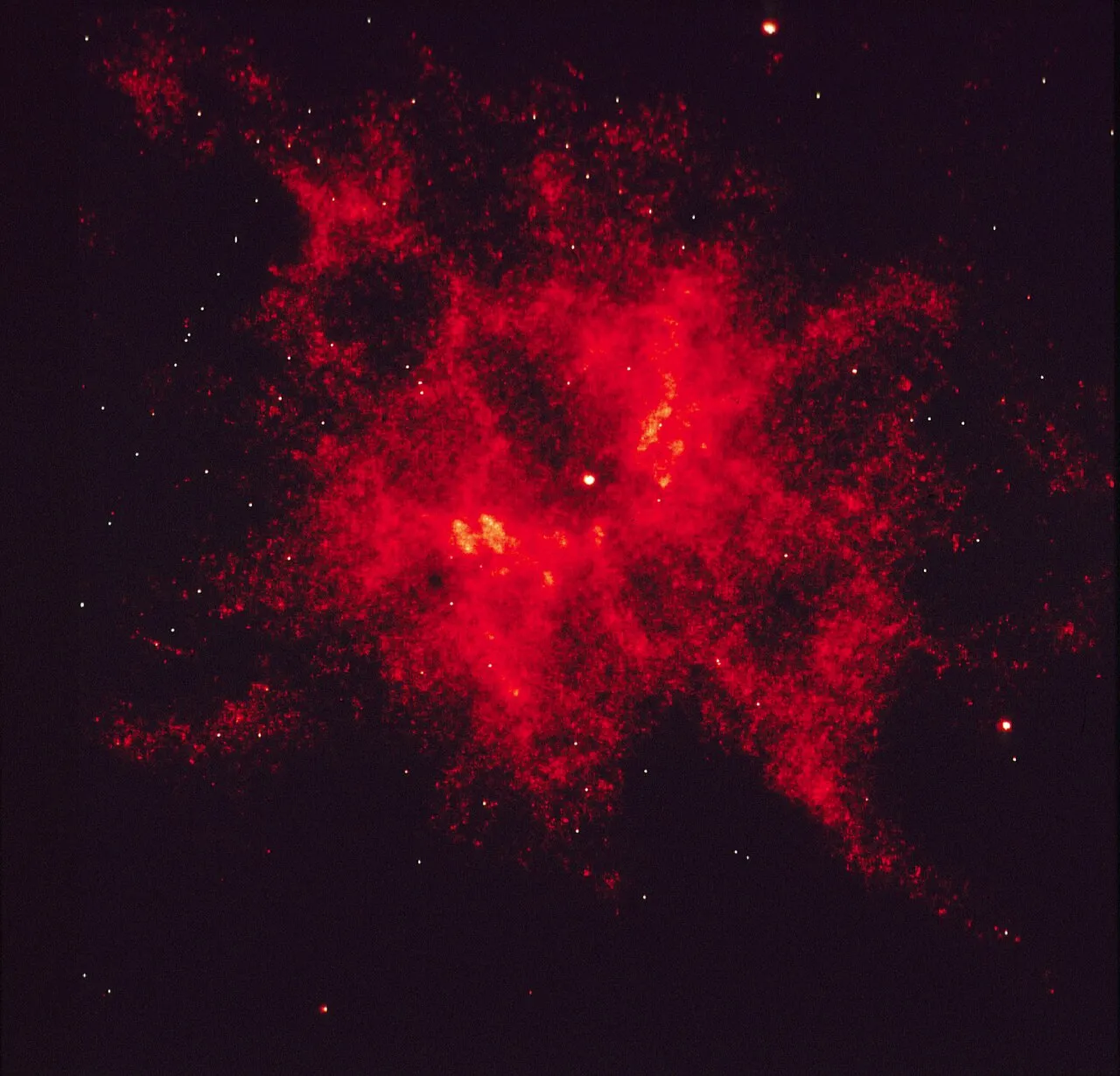
Astronomers may have made a groundbreaking discovery by potentially finding a giant planet in the habitable zone of the hottest star yet, HD 156295, according to a recent paper published in The Astrophysical Journal.
The star, HD 156295, is a Delta Scuti variable, meaning it pulsates in brightness regularly, making it a useful cosmic clock for precise measurements.
Using NASA's Transiting Exoplanet Survey Satellite (TESS), the team sifted through nearly 16,500 Delta Scuti stars, narrowing down their selection to just nine star systems.
One of these systems, HD 156295, hosts the exoplanet candidate HD 156295 b, which is estimated to be six times larger than Jupiter and orbits its star at a distance approximately four times that of Earth from the Sun.
Despite HD 156295's intense heat, with a surface temperature of about 7,500 degrees Celsius (13,500 degrees Fahrenheit), the star's habitable zone could theoretically allow for the existence of liquid water.
The detection method used, called pulsation timing, measures variations in the star's light to detect potential planets.
This discovery is significant as it expands the search for habitable planets to hotter stars, which are less commonly studied.
The European Space Agency's PLATO observatory will soon offer improved precision in its mission to view over 200,000 stars, potentially leading to more discoveries.
If confirmed, this would be the first known exoplanet in the habitable zone of a massive, A-type star, marking a milestone in the search for extraterrestrial life.
What this adds
This report adds details on the detection method and the significance of the discovery in expanding the search for habitable planets to hotter stars.
The sources have not established the exact conditions on HD 156295 b or confirmed the presence of liquid water.
The New York Post provided additional context on the star's temperature and the planet's size relative to Jupiter.
Background
Astronomers may have discovered a giant planet in the habitable zone of the hottest star yet, HD 156295.
What's confirmed
- As described in a recent paper published in The Astrophysical Journal, the astronomers sifted through nearly 16,500 Delta Scuti stars observed by NASA's Transiting Exoplanet Survey Satellite (TESS), an electronic eye in the sky (four eyes, in fact) designed to expand our exoplanetary repertoire.
- If confirmed, this would be the first known exoplanet in the habitable zone of a massive, A-type star, named HD 156295.
- This naked-eye-visible star is around nine times brighter than the Sun, approaching 7,500 degrees Celsius (13,500 degrees Fahrenheit), and only around 140 light-years away.
- Overall, the astronomers whittled down their selection to just nine star systems, one of which hosts the aforementioned exoplanet candidate HD 156295 b and eight of which host candidate brown dwarfs.
What's still developing
- Impressively, astronomers have found more than 6,300 exoplanets so far using various methods.
- For perspective, there's a dearth of discovered exoplanets around A-type stars.
- And at only 700 million years young, this system is just getting started.
- Detecting planets outside of our Solar System mostly relies on measuring minute changes in the light of distant stars.
- If this were akin to finding a needle in a haystack, astronomers would delight.
- Astronomers broke major ground in their hunt for new worlds after potentially locating a giant, habitable planet near the hottest star ever discovered.
- The star in question, dubbed HD 156295, is notably hotter than the Sun on its surface, which burns at a face-melting 13,500 degrees Fahrenheit compared to around 10,000 F for our solar star, Science Alert reported.
- To find this potential exoplanet — a world that is situated outside our solar system — the team had to conduct a serious star search.
- Using this novel technique, the researchers managed to narrow down the field to nine star systems, including one that harbored HD 156295 b.