
Home · Science · Sep 29 archive
Primate Communication May Follow Grammar Patterns Once Thought Uniquely Human
Developing
In Short: According to University of Zurich linguist Remo Nitschke and his colleagues, these primates generate call sequences that can be described by supra-regular recursive grammars, a pattern previously thought unique to human language.
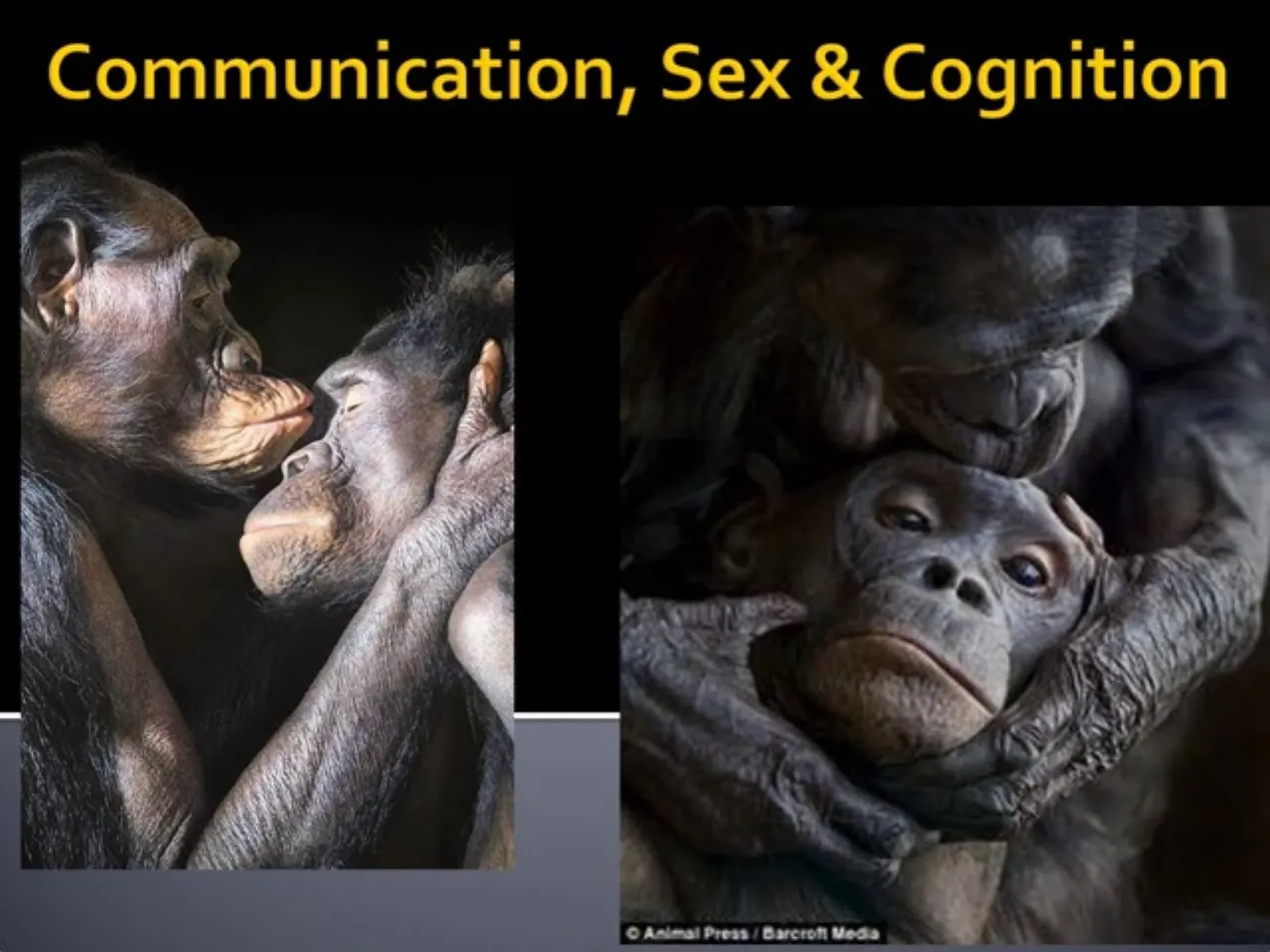
A new study published in ScienceAlert suggests that three non-human primate species—the common marmoset, the olive colobus monkey, and the bonobo—may use complex grammar patterns in their calls.
The researchers used mathematical models to analyze the call sequences of these primates, comparing them to human speech patterns.
The study found that the primates' call sequences were better explained by the model that accounted for nested hierarchies, indicating a level of complexity previously not attributed to non-human primate communication.
However, the datasets used in the study were relatively small, and further research is needed to confirm these findings across larger and more diverse sets of primate calls.
Since the meaning of primate calls is not fully understood, the researchers relied on mathematical analysis to identify patterns.
This study challenges the long-held belief that nested patterns of language are uniquely human, suggesting that other animals may possess more sophisticated communication abilities than previously thought.
What's still developing
- "We show for the first time that animals generate call sequences that can be captured by supra-regular recursive grammars and hence share more similarities with human language than previously thought," writes University of Zurich linguist Remo Nitschke and his colleagues.
- We've long thought those nested patterns of language – known as supra-regular recursive grammar – distinguished us from any other animal on Earth.
- Since we don't know what the components of primate speech actually mean and how they fit together, the researchers used some tricky math to analyze the call sequences.
- One of these models was designed to predict how a call sequence would progress based on the assumption that the sequence of sounds is linear (also known as probabilistic regular grammar).
- The other was designed to factor in nested hierarchies, where the position of smaller chunks of sound within the call sequence is also factored in to predicting what comes next (also known as probabilistic context-free grammar).