
Home · Science · Sep 29 archive
Direct neutral gas found in galaxies 700M yrs post-Big Bang
Developing
In Short: Researchers using ALMA have identified neutral gas in galaxies formed 700 million years after the Big Bang, shedding light on early star formation.
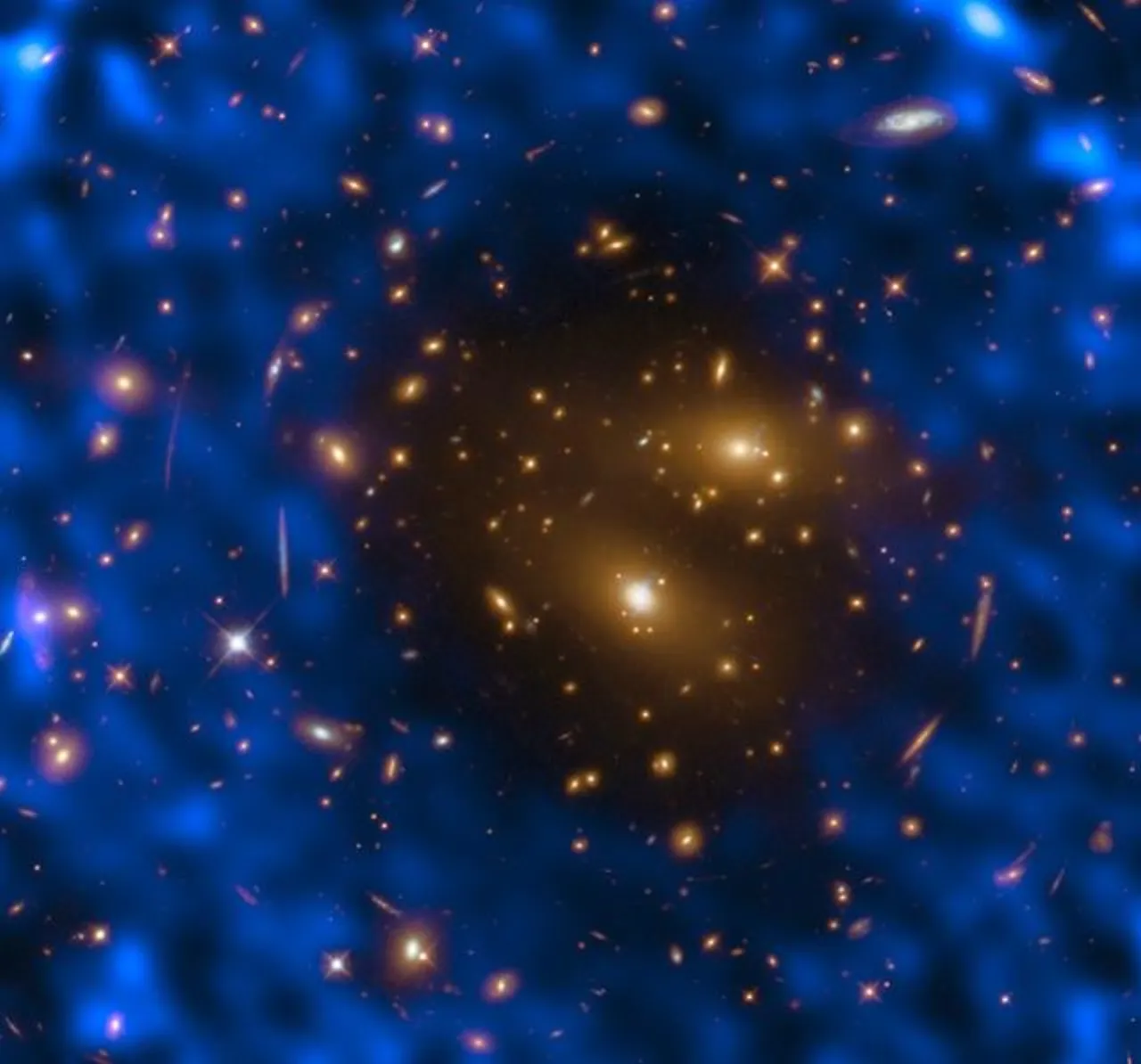
Scientists have detected neutral gas in galaxies formed approximately 700 million years after the Big Bang, according to a study published in The Astronomical Journal.
Using ALMA's powerful spectroscopy instruments, researchers observed four star-forming galaxies estimated to have existed between 700-800 million years post-Big Bang.
The findings indicate that these galaxies were composed of neutral gas, as evidenced by the [O I] 145 µm emission line, which emits neutral oxygen atoms.
This discovery suggests that early galaxies had very compact and dense star formations, with stars forming much closer to each other compared to modern galaxies.
ALMA was crucial for this research because neutral gas does not emit ultraviolet, optical, or infrared light, making it undetectable with telescopes like JWST and Hubble.
What this adds
The research highlights the importance of ALMA in observing neutral gas, which cannot be detected by other powerful space telescopes.
What's still developing
- While the Big Bang has yet to be directly observed, scientists have worked tirelessly to piece together the events that happened immediately after the Big Bang, specifically the first billion years or less, with the goal of gaining insight into the how the first stars, and potentially planets, formed and evolved.
- "We plan to extend these observations to a larger sample of galaxies and, by combining ALMA with JWST and other facilities, build a comprehensive picture of how galaxies formed and evolved from the cosmic dawn to the present day,” said Dr. Yoshinobu Fudamoto, who is an assistant professor in the Center for Frontier Science at Chiba University in Japan and lead author of the study.
- The distances the researchers observed the four galaxies are measured in what’s known as redshift (designated as z), which is calculated based on the expanding universe for objects moving closer to or away from the observer.
- Approximately 13.8 billion years ago, the Big Bang is hypothesized to have occurred, kickstarting our universe and eventually life on our small, blue world.
- Now, an international team of scientists might be one step closer to unraveling the post-Big bang events as they used the Atacama Large Millimeter/submillimeter Array (ALMA) in Northern Chile to observe a star-forming gas known as neutral gas.
- After identifying little to no evidence of this ionized gas, the researchers concluded that the four galaxies are comprised of neutral gas.
- After comparing this data with JWST data, the researchers ascertained these four galaxies exhibit high densities of stars compared to present-day galaxies, the latter of which exhibit widely dispersed stars.