
Home · Science · Sep 29 archive
Black Hole Could Decay Into Boson Star
Confirmed
In Short: Theoretical physicists suggest a black hole could decay by ejecting itself, leaving a boson star.
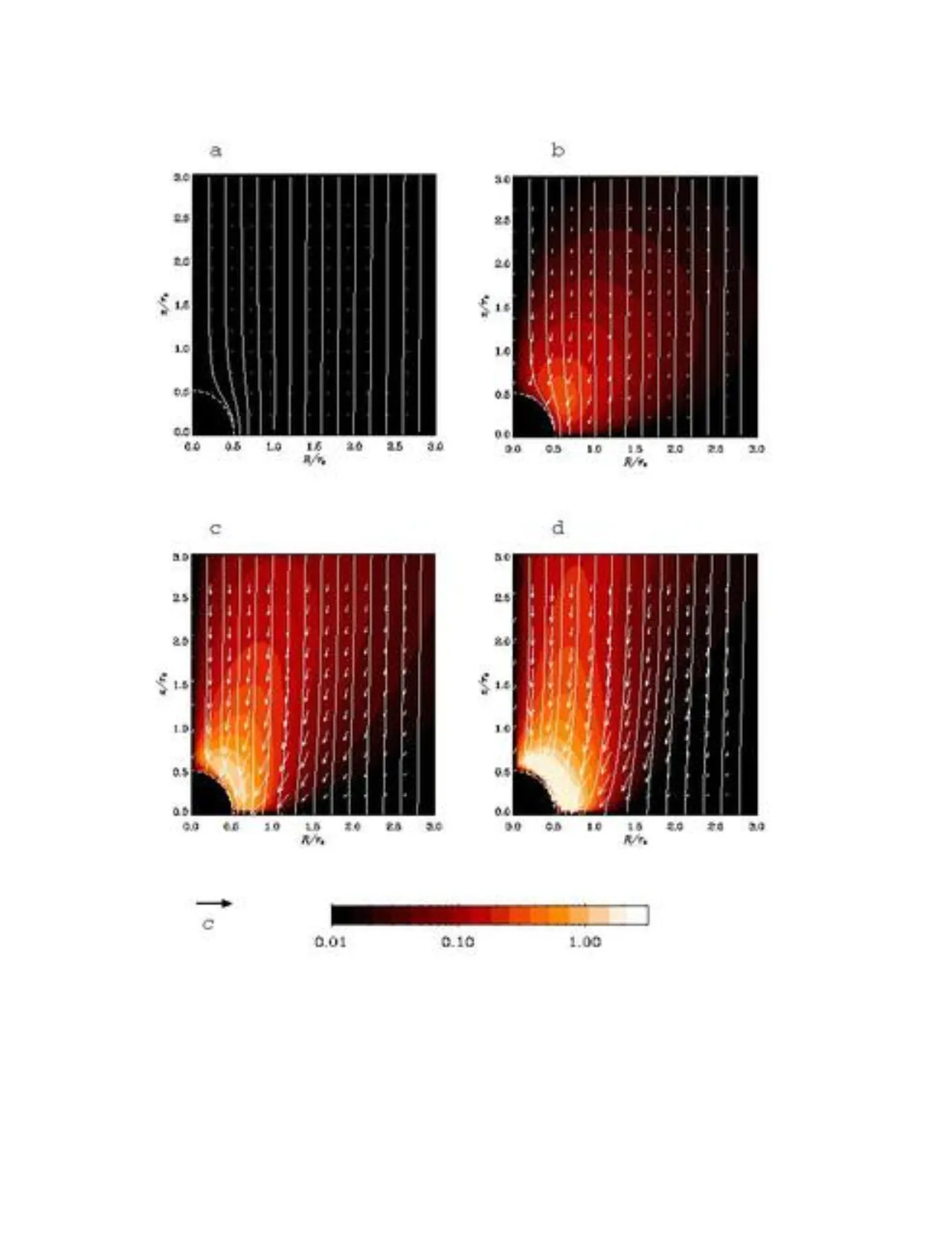
Theoretical physicists have proposed a new method of black hole decay that is as bizarre as the objects themselves. According to researchers from the University of Aveiro in Portugal, a black hole could potentially 'squirt itself out of its own hair,' leaving behind a fully functional boson star.
Black holes are typically straightforward under standard general relativity, with only a few parameters like spin and mass needed to describe their behavior once they are settled. However, the researchers found a resonance mechanism that allows a scalar field and the black hole's horizon to remain in equilibrium.
In their model, the black hole exists in three dimensions but must behave identically in every direction. This symmetry is crucial for the decay process, where the black hole is balanced at the top of a metaphorical mountain, making it an unstable equilibrium.
The researchers noted that black holes can have additional features called 'hair,' which can take the form of a scalar field. This field can interact with the black hole in ways that allow for the decay process.
Black holes offer unique opportunities to explore extreme forms of matter and fields that are otherwise difficult to detect. The decay process described by the researchers could provide new insights into the behavior of these extreme objects.
The study highlights the potential for black holes to decay in ways that were previously unimagined, opening up new avenues for theoretical exploration and potentially leading to a better understanding of the universe's most extreme objects.
What's confirmed
- Theoretical physicists have proposed a new method of black hole decay that is as bizarre as the objects themselves. According to researchers from the University of Aveiro in Portugal, a black hole could potentially 'squirt itself out of its own hair,' leaving behind a fully functional boson star.
- Black holes are typically straightforward under standard general relativity, with only a few parameters like spin and mass needed to describe their behavior once they are settled. However, the researchers found a resonance mechanism that allows a scalar field and the black hole's horizon to remain in equilibrium.
- In their model, the black hole exists in three dimensions but must behave identically in every direction. This symmetry is crucial for the decay process, where the black hole is balanced at the top of a metaphorical mountain, making it an unstable equilibrium.
- The researchers noted that black holes can have additional features called 'hair,' which can take the form of a scalar field. This field can interact with the black hole in ways that allow for the decay process.
- Black holes offer unique opportunities to explore extreme forms of matter and fields that are otherwise difficult to detect. The decay process described by the researchers could provide new insights into the behavior of these extreme objects.
- The study highlights the potential for black holes to decay in ways that were previously unimagined, opening up new avenues for theoretical exploration and potentially leading to a better understanding of the universe's most extreme objects.
What's still developing
- If anything is forever in this Universe, it's black holes – or so their physics suggests.
- Actually, we don't know what other parameters might be lurking in black-hole space – but math allows physicists to explore some really weird possibilities.
- [This story contains spoilers for Lanterns episode six, “Bad Optics.”] When Lanterns first announced itself as an earthy riff on True Detective, Training Day and Banshee, some fans questioned whether Nathan Fillion ’s Green Lantern from Superman (2025) would fit such a markedly different tone.
- The lack of energy from these reactions allows gravity to pull the interior of the star in on itself, collapsing it into a neutron star or black hole.
- The first frame is dark as you peer into the black hole itself.