
Home · World · Sep 28 archive
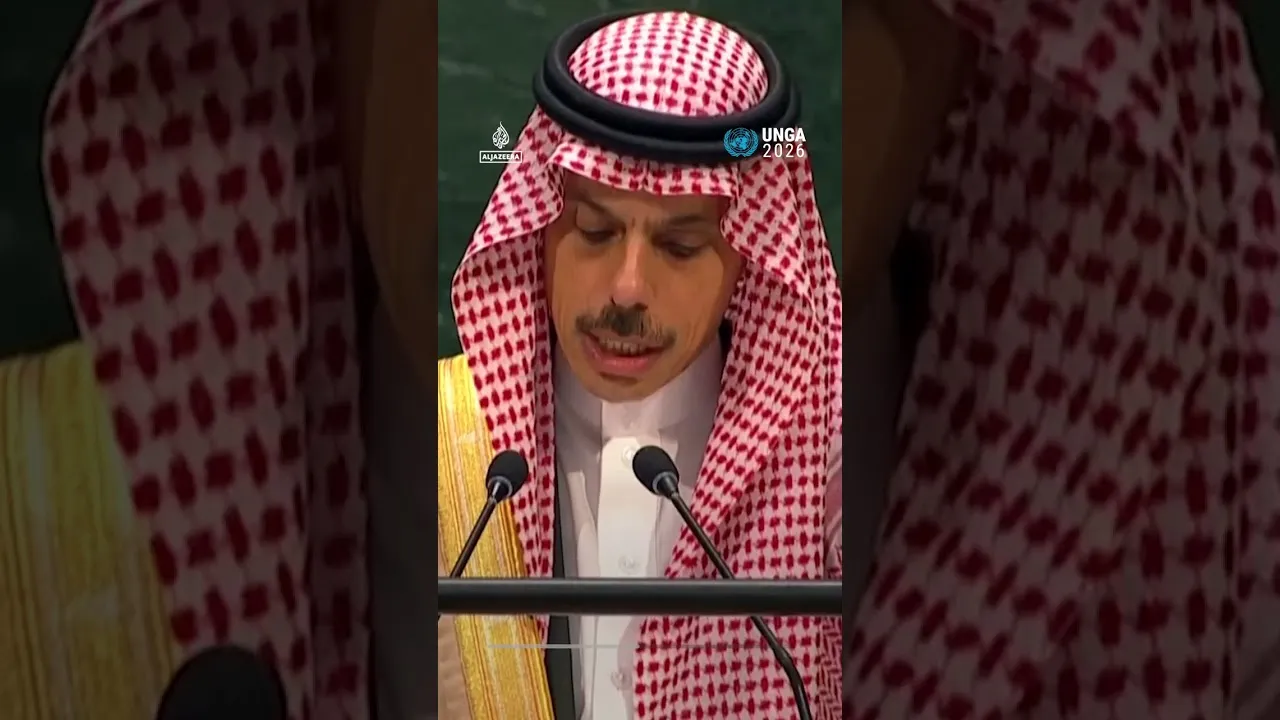
Saudi FM Warns of Global Houthi Threat at UN
Confirmed
In Short: Saudi Arabia's foreign minister, Prince Faisal bin Farhan, warned the United Nations General Assembly of a growing threat from Yemen's Iran-backed Houthis, extending beyond Saudi borders and impacting global energy security.
He noted that Saudi Arabia's air defenses had intercepted six ballistic missiles launched by the Houthis toward Saudi cities, including Taif and Yanbu, and issued emergency warnings in areas like Jeddah and Mecca.
Prince Faisal also addressed reports that President Donald Trump had declined Saudi requests for direct military intervention against the Houthis, stating that Riyadh was capable of defending itself but called for broader international support.
Saudi Arabia has been coordinating with the US and other international partners to counter Houthi attacks, while the US has provided intelligence and targeting support without entering the conflict directly.
The Saudi foreign minister expressed concern over the international community's response, saying, 'The international community has been absent from assuming its responsibilities in confronting all that threatens international peace and security.
Meanwhile, Israeli officials are closely monitoring Houthi movements, particularly their advances in western Yemen and control over the Bab al-Mandab Strait, which could pose a more dangerous situation than the Strait of Hormuz.
An Israeli official warned that Houthi control over the Bab al-Mandab Strait could enable them to increase pressure on oil tankers and commercial vessels, potentially leading to a more perilous situation than the one in the Strait of Hormuz.
The Houthis' recent attack on pro-government forces in Jabal Dubas was described as the deadliest in years, with casualties on both sides.
Prince Faisal's remarks come as Saudi Arabia and its partners seek to address the growing threat posed by the Houthis, emphasizing the need for a coordinated international response to protect global shipping routes and energy security.
What this adds
The report adds that the Houthis' control over the Bab al-Mandab Strait could be more dangerous due to its smaller size, allowing them to fire on ships without relying on advanced radar systems.
The sources have not established the exact number of casualties or the extent of the Houthis' control over the Bab al-Mandab Strait.
What's confirmed
- He noted that Saudi Arabia's air defenses had intercepted six ballistic missiles launched by the Houthis toward Saudi cities, including Taif and Yanbu, and issued emergency warnings in areas like Jeddah and Mecca.
- Prince Faisal also addressed reports that President Donald Trump had declined Saudi requests for direct military intervention against the Houthis, stating that Riyadh was capable of defending itself but called for broader international support.
- Saudi Arabia has been coordinating with the US and other international partners to counter Houthi attacks, while the US has provided intelligence and targeting support without entering the conflict directly.
- The Saudi foreign minister expressed concern over the international community's response, saying, 'The international community has been absent from assuming its responsibilities in confronting all that threatens international peace and security.
- Meanwhile, Israeli officials are closely monitoring Houthi movements, particularly their advances in western Yemen and control over the Bab al-Mandab Strait, which could pose a more dangerous situation than the Strait of Hormuz.
- An Israeli official warned that Houthi control over the Bab al-Mandab Strait could enable them to increase pressure on oil tankers and commercial vessels, potentially leading to a more perilous situation than the one in the Strait of Hormuz.
- The Houthis' recent attack on pro-government forces in Jabal Dubas was described as the deadliest in years, with casualties on both sides.
- Prince Faisal's remarks come as Saudi Arabia and its partners seek to address the growing threat posed by the Houthis, emphasizing the need for a coordinated international response to protect global shipping routes and energy security.
What's still developing
- The foreign minister thanked countries already working with Riyadh and confirmed that discussions with Washington were continuing.
- Since the United States and Israel launched their war on Iran in late February, Tehran has disrupted shipping through the Strait of Hormuz, while its Houthi allies in Yemen have subsequently done the same in the Bab al-Mandab Strait.
- “The kingdom rejects any party’s use of these vital passages as a tool for pressure, threat, or harm to the interests of states, in a manner consistent with international law and relevant United Nations resolutions,” he said.
- The US and Israel went to war to degrade the Iranian regime’s military capabilities, distance threats posed by Iran — including its nuclear and ballistic missile programs — and “create the conditions” for the Iranian people to topple the regime, the military and other Israeli leaders have said.
- Israel and Iran largely stopped exchanging fire in April, but US-Iranian tensions over the Strait of Hormuz and Iran’s nuclear program continue.
- Meanwhile, the Iran-backed Houthis have imposed a naval blockade on Saudi Arabia, hitting its tankers, seizing swaths of Yemen’s Red Sea coast vital for oil exports and causing energy prices to jump, while also raining missiles on the kingdom.
- A Houthi spokesperson says the group will soon announce a broader military campaign deep inside Saudi Arabia.
- Prime Minister Benjamin Netanyahu expressed that Israel may join a broader campaign against the Iranian-backed Houthi terror group in Yemen, Lebanese newspaper Al Akbar claimed on Friday, citing US sources.
- Israel is closely monitoring Houthi movements following the group’s capture of the Yemeni port city of Mocha, near the strategic Bab al-Mandab Strait, Maariv reported on Thursday.
- This comes as the Houthis advance in western Yemen, reaching the strategic island of Perim in the Bab al-Mandab Strait, potentially tightening their grip on one of the world's vital shipping routes.
- The official pointed to the gap in size between the Bab al-Mandab Strait and the Strait of Hormuz, saying that where the Houthis are, they would be able to fire on ships without relying on advanced radar systems.
- An officer with the government-aligned forces in Jabal Dubas told AFP that the Houthis briefly seized pro-government positions after launching the attack late on Friday, before government-aligned forces mounted a counterattack and retook the sites by dawn on Saturday.