
Home · World · Sep 26 archive
Ukraine's Drone Campaign Surpasses Russia's in Scale and Impact
Confirmed
In Short: Ukraine’s drone offensive has also impacted Russian society, with the United Russia Party Chairperson and Russian Security Council Deputy Chairperson Dmitry Medvedev emphasizing the need for Russian society to remain on a permanent war footing even after the war in Ukraine ends.
The Kyiv Post reports that Ukraine has conducted approximately three times more long-range drone strikes against targets in Russia than Moscow has launched in the opposite direction over the past 100 days.
The analysis, based on open-source data, found that even when Russia’s cruise, ballistic, hypersonic, and anti-ship missiles are included, the cumulative explosive payload delivered by Ukraine’s long-range drone campaign often matches, and at times exceeds, the total weight of warheads launched by Russia against Ukraine on a given night.
Ukraine’s drone strikes have frequently involved hundreds, and at times more than a thousand, drones directed at military, industrial, and energy targets across Russia.
In contrast, Russian strikes have generally relied on smaller numbers of drones supplemented by missiles.
According to the Kyiv Post, even if all Russian shootdown claims are accurate, some Ukrainian drones and missiles are not stopped and go on to hit targets in Russia.
The Kremlin claims to have destroyed 17,936 Ukrainian unmanned aerial vehicles (UAVs), yet an independent Western analysis estimates that Ukraine has likely launched only about 4,620 UAVs at Russia.
On September 9, Ukrainian forces conducted their deepest long-range drone strike, targeting one of Russia’s largest gas complexes nearly 3,000 kilometers from the Ukrainian border.
Ukraine’s 3rd Army Corps has launched the ‘Vivaldi’ offensive in Donetsk, targeting Russian infiltration tactics, with territorial gains and heavy Russian losses reported.
Medvedev indicated that the post-war Russian defense industry should reorient toward stockpiling weapons to repel the supposedly existential threat to Russia posed by NATO and US allies in the Pacific.
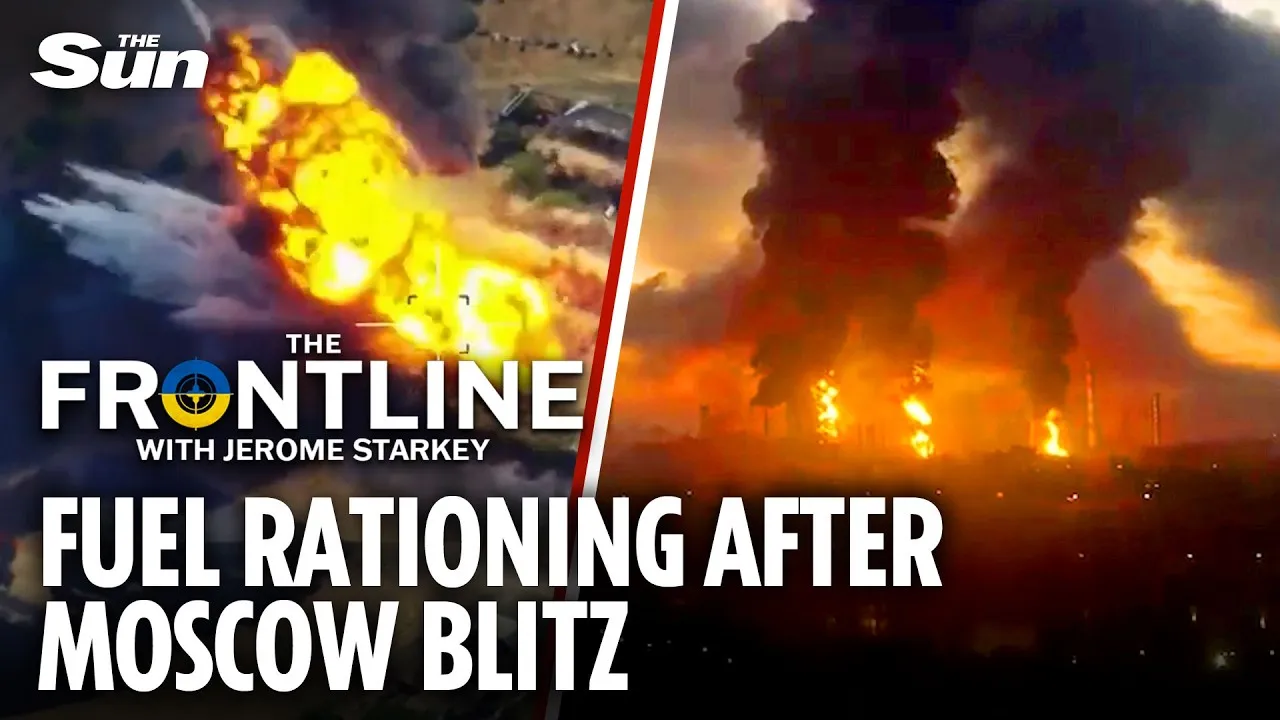
On September 20, Ukraine fired waves of drones at Moscow and the surrounding region, killing two people and setting an oil refinery ablaze as Russians voted in a final day of parliamentary elections.
What this adds
The Kyiv Post analysis suggests that Russia's official data on drone shootdowns is incomplete, with some days reporting figures for only 12 hours or less.
The Kremlin's efforts to centralize power and demand greater social sacrifices from the Russian public to support the war in Ukraine are evident in Medvedev's statements.
What's confirmed
- The Kyiv Post reports that Ukraine has conducted approximately three times more long-range drone strikes against targets in Russia than Moscow has launched in the opposite direction over the past 100 days.
- The analysis, based on open-source data, found that even when Russia’s cruise, ballistic, hypersonic, and anti-ship missiles are included, the cumulative explosive payload delivered by Ukraine’s long-range drone campaign often matches, and at times exceeds, the total weight of warheads launched by Russia against Ukraine on a given night.
- Ukraine’s drone strikes have frequently involved hundreds, and at times more than a thousand, drones directed at military, industrial, and energy targets across Russia.
- In contrast, Russian strikes have generally relied on smaller numbers of drones supplemented by missiles.
- According to the Kyiv Post, even if all Russian shootdown claims are accurate, some Ukrainian drones and missiles are not stopped and go on to hit targets in Russia.
- The Kremlin claims to have destroyed 17,936 Ukrainian unmanned aerial vehicles (UAVs), yet an independent Western analysis estimates that Ukraine has likely launched only about 4,620 UAVs at Russia.
- On September 9, Ukrainian forces conducted their deepest long-range drone strike, targeting one of Russia’s largest gas complexes nearly 3,000 kilometers from the Ukrainian border.
- Ukraine’s 3rd Army Corps has launched the ‘Vivaldi’ offensive in Donetsk, targeting Russian infiltration tactics, with territorial gains and heavy Russian losses reported.
- Medvedev indicated that the post-war Russian defense industry should reorient toward stockpiling weapons to repel the supposedly existential threat to Russia posed by NATO and US allies in the Pacific.
- On September 20, Ukraine fired waves of drones at Moscow and the surrounding region, killing two people and setting an oil refinery ablaze as Russians voted in a final day of parliamentary elections.
What's still developing
- Those databases, to some degree, undercount strike-weapon totals for Russia as not all launched weapons are detected by Ukrainian air defenses.
- Over the same three-month period, Russian defense ministry claims, compiled from daily reports published by state-run news agency RIA Novosti, indicated that Russian forces had shot down or otherwise neutralized between 48,000-55,000 Ukrainian long-range drones.
- Those figures suggest Ukraine was launching more than three times as many explosives-toting robot aircraft at targets in Russia compared to what Moscow was sending the other direction.
- Follow our coverage of the war on the @Kyivpost_official.
- One problem with the Russian official data is that it is incomplete.
- On some days, Russia’s defense ministry publishes shootdown claims covering a full 24-hour period, while on others it reports figures for only 12 hours or less.
- Petraeus Center for Emerging Leaders Enrichment and Advancement Opportunities for Entry-Level and Mid-Career Professionals Launch your Career at ISW with an Internship in Open-Source Intelligence, Geospatial Intelligence, Cognitive Warfare, or Communications Browse ISW’s published work, curated for maximum searchability Join the ISW Community and Help Us Safeguard America’s Security Your Donations Keep ISW Independent, Nonpartisan, and Objective Partnering With ISW Makes a Direct Impact on America’s Security and Future Leaders Ukrainian forces conducted their deepest long-range drone strike thus far in the war, striking one of Russia’s largest gas complexes nearly 3,000 kilometers from the Ukrainian border.
- The Ukrainian General Staff and Special Operations Forces (SSO) reported on September 9 that Ukrainian forces struck the Novy Urengoy Gas Condensate Treatment Plant and the Purovsky Gas Processing Plant in Yamalo-Nenets Autonomous Okrug (roughly 2,840 and 2,780 kilometers from the Ukrainian border respectively) — Ukraine’s farthest strikes thus far in the war.[1] The SSO noted that the Novy Urengoy Gas Condensate Treatment Plant’s annual capacity is 19.5 million tons, and the Purovsky Gas Processing Plant’s annual capacity is 13.4 million tons.
- This posturing supports the Kremlin’s efforts to centralize power, silence dissent, and set conditions to demand greater social sacrifices from the Russian public to support war in Ukraine and beyond.[7] A Russian drone entered Moldovan airspace as Ukrainian President Volodymyr Zelensky’s plane was preparing for takeoff at the Chisinau Airport, Moldova on September 9.
- United Russia Party Chairperson and Russian Security Council Deputy Chairperson Dmitry Medvedev formally articulated United Russia’s commitment to supporting a protracted war in Ukraine and solidified the party’s pro-war stance as part of Russia’s informal state ideology.
- Medvedev emphasized in a September 10 interview to Russian newspaper Vedomosti Russia’s commitment to the war in Ukraine, to the long-term militarization of Russian society, and to demands for increased economic sacrifices by Russian society.[3] Medvedev outlined the need for Russian society to remain on a permanent war footing even after the war in Ukraine ends.
- Biletsky reported territorial gains and heavy Russian losses, while Russian milbloggers acknowledge setbacks and OSINT analysts estimate Russia lost 200-240 sq. km (77-93 sq. miles).