
Home · Science · Sep 26 archive
New Amoeba Species Thrives in Extreme Heat
Confirmed
In Short: Researchers from Cell have identified a new species of amoeba, Incendiamoeba cascadensis, which can thrive in temperatures as high as 63 degrees Celsius, significantly higher than previously known limits for complex life.
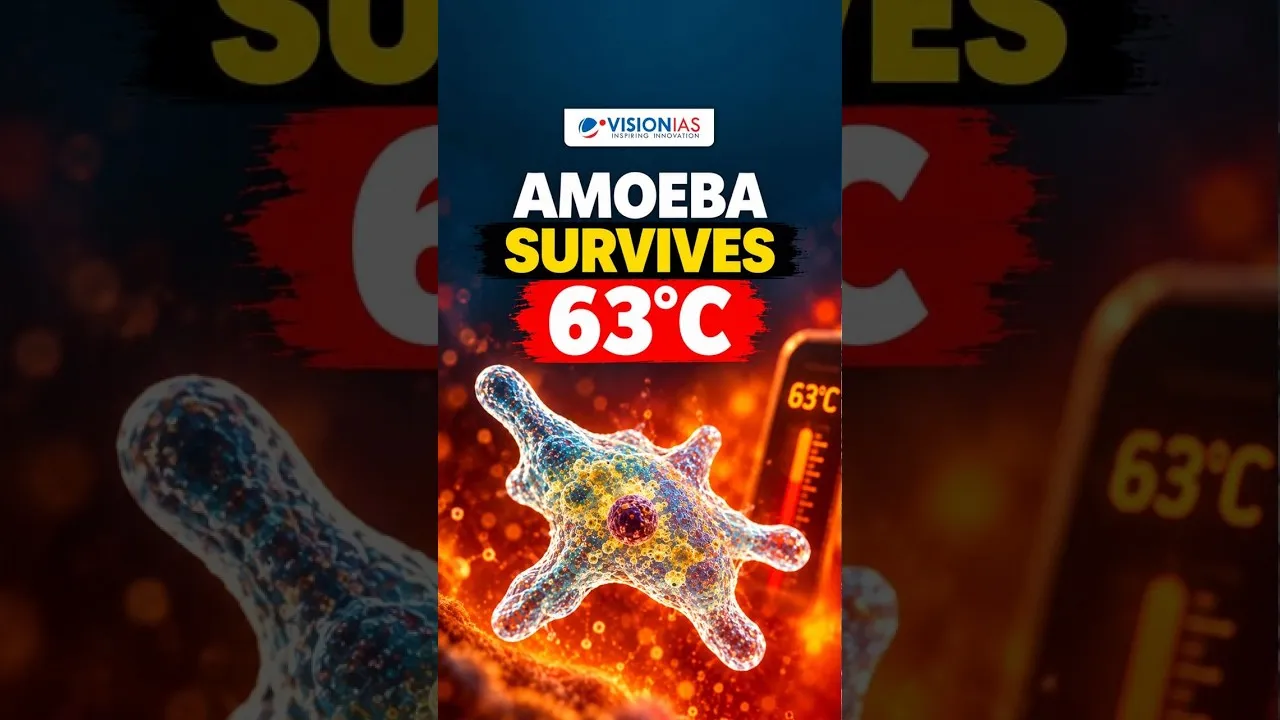
The amoeba was found in Lassen Volcanic National Park in California, where water temperatures range from 117 to 147 degrees Fahrenheit (47 to 64 degrees Celsius).
This newly discovered species, which researchers have nicknamed the 'fire amoeba,' can undergo mitosis at 145 degrees Fahrenheit (63 degrees Celsius), a temperature that would be unbearable for most organisms.
To survive such extreme conditions, the amoeba employs unique survival mechanisms. It can shape-shift and create a protective outer layer once temperatures rise above 145 degrees Fahrenheit.
Genomic analysis revealed that the fire amoeba has extra genes linked to protein maintenance and DNA repair, allowing it to withstand the harsh thermal environment.
The amoeba feeds on thermophilic bacteria that are naturally present in the hot springs, suggesting a long-standing symbiotic relationship.
In addition to its shape-shifting abilities, the fire amoeba can also form a dormant spore-like structure to protect itself at even higher temperatures.
The amoeba's ability to thrive at such high temperatures could offer clues for understanding how life might adapt to future environmental changes.
The research team collected samples from Lassen Volcanic National Park from 2023 to 2025, focusing on geothermal springs with water temperatures ranging from 117 to 147 degrees Fahrenheit.
This new species of amoeba, Incendiamoeba cascadensis, pushes the boundaries of what is known about life in extreme thermal conditions.
The fire amoeba's unique adaptations could have implications for biotechnology and the study of extremophiles in general.
What's confirmed
- The amoeba was found in Lassen Volcanic National Park in California, where water temperatures range from 117 to 147 degrees Fahrenheit (47 to 64 degrees Celsius).
- This newly discovered species, which researchers have nicknamed the 'fire amoeba,' can undergo mitosis at 145 degrees Fahrenheit (63 degrees Celsius), a temperature that would be unbearable for most organisms.
- To survive such extreme conditions, the amoeba employs unique survival mechanisms. It can shape-shift and create a protective outer layer once temperatures rise above 145 degrees Fahrenheit.
- Genomic analysis revealed that the fire amoeba has extra genes linked to protein maintenance and DNA repair, allowing it to withstand the harsh thermal environment.
- The amoeba feeds on thermophilic bacteria that are naturally present in the hot springs, suggesting a long-standing symbiotic relationship.
- In addition to its shape-shifting abilities, the fire amoeba can also form a dormant spore-like structure to protect itself at even higher temperatures.
- The amoeba's ability to thrive at such high temperatures could offer clues for understanding how life might adapt to future environmental changes.
- The research team collected samples from Lassen Volcanic National Park from 2023 to 2025, focusing on geothermal springs with water temperatures ranging from 117 to 147 degrees Fahrenheit.
- This new species of amoeba, Incendiamoeba cascadensis, pushes the boundaries of what is known about life in extreme thermal conditions.
- The fire amoeba's unique adaptations could have implications for biotechnology and the study of extremophiles in general.
What's still developing
- In the past, researchers have noted that amoebas (single-celled eukaryotes) are among the organisms that can survive in and near warm-water features, such as hot springs.
- While the team was analyzing the samples, they noted an unknown amoeba.
- The fire amoeba’s proteins also contain more positively charged amino acids on the surface, according to the study.
- The upper limit for some of these organisms is typically up to 140 degrees Fahrenheit (60 degrees Celsius).
- The Leopardus tigrinus species complex is a group of small, spotted felines found across Central and South America and known variously as tiger cats, little spotted cats, or tigrinas.
- Among the findings was a previously unknown species, named Leopardus tilcayo, discovered in Bolivia’s Yungas cloud forests.
- The researchers also identified a new subspecies from Peru’s Yungas region, Leopardus tigrinus antisuyo.
- Scientists have demonstrated that the South American tiger cat complex Leopardus tigrinus consists of five genetically distinct species, including one entirely new to science.
- They sequenced DNA from eight historical museum specimens, including skull fragments from Guyana that provided the first-ever genetic data from the species’ original type locality in the Guiana Shield, a population that had never before been molecularly sampled.
- Phylogenomics and museomics reveal five distinct species of tiger cats in South America.
- So the amoeba are eating thermophilic or heat loving bacteria, which have already been established in these environments.
- Beryl - They likely have been interacting together for many thousands of years, and the interactions between the amoeba and the bacteria have also likely changed the trajectory of these species.