
Home · Technology · Sep 25 archive
Tesla's Optimus Robot Faces Challenges in Production
Confirmed
In Short: Tesla's Optimus humanoid robot is encountering significant challenges in its production process, with the company reportedly still needing human assistance to manually assemble the robot's hands.
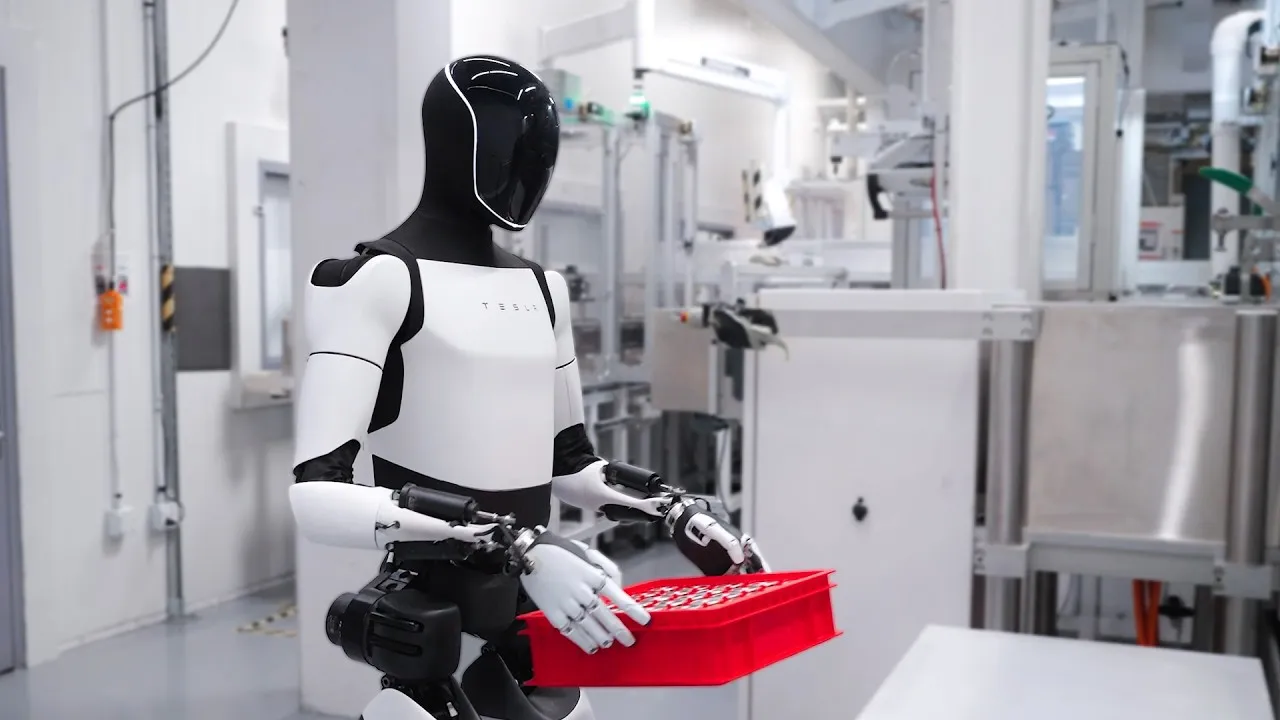
Tesla's Optimus humanoid robot is encountering significant challenges in its production process, with the company reportedly still needing human assistance to manually assemble the robot's hands.
According to reports, Tesla's goal of producing 20,000 Optimus robots per week is proving difficult, with the company currently producing only several hundred robots a week.
Tesla CEO Elon Musk has previously promised that Optimus would be the company's 'biggest product of all time,' but the robot is still being used internally for specific tasks and not generally available.
Tesla plans to lease the robots initially to collect training data and improve the robots, but it will need to get them out in the world first.
A recent leak from Tesla's Android app update revealed new digital assets that appear to show the production-ready Optimus Gen 3 robot, with tighter body paneling and a streamlined silhouette.
Tesla has been converting former Model S and Model X production lines at its Fremont factory to assemble Optimus robots, aiming for a capacity of one million units per year.
However, the Optimus program has seen a series of leadership changes, with the company's head of sensors for Optimus recently leaving, following the departure of Milan Kovac, who had led the Optimus group since 2022.
The departure of key personnel and ongoing production challenges raise concerns about Tesla's ability to compete with Chinese competitors in the humanoid robotics market.
Tesla is also focusing on its autonomous ride-hailing service, with plans to launch the Cybercab robotaxi service in Austin, Texas, on September 3, using earlier versions of Full Self-Driving V15 software.
These efforts highlight Tesla's broader ambitions in autonomous technology and robotics, but the Optimus program continues to face significant hurdles.
Tesla's Optimus robot is still in the early stages of development, with ongoing production challenges and leadership changes casting doubt on its future prospects.
What this adds
Tesla's leasing plan and use of training data to improve the robots is a new strategy to address production challenges.
The leak of the Optimus Gen 3 digital assets from Tesla's app provides the first clear look at the production-ready robot.
The departure of the head of sensors for Optimus is the latest in a series of leadership changes that could impact the program's progress.
What's confirmed
- Tesla's Optimus humanoid robot is encountering significant challenges in its production process, with the company reportedly still needing human assistance to manually assemble the robot's hands.
- According to reports, Tesla's goal of producing 20,000 Optimus robots per week is proving difficult, with the company currently producing only several hundred robots a week.
- Tesla CEO Elon Musk has previously promised that Optimus would be the company's 'biggest product of all time,' but the robot is still being used internally for specific tasks and not generally available.
- Tesla plans to lease the robots initially to collect training data and improve the robots, but it will need to get them out in the world first.
- A recent leak from Tesla's Android app update revealed new digital assets that appear to show the production-ready Optimus Gen 3 robot, with tighter body paneling and a streamlined silhouette.
- Tesla has been converting former Model S and Model X production lines at its Fremont factory to assemble Optimus robots, aiming for a capacity of one million units per year.
- However, the Optimus program has seen a series of leadership changes, with the company's head of sensors for Optimus recently leaving, following the departure of Milan Kovac, who had led the Optimus group since 2022.
- The departure of key personnel and ongoing production challenges raise concerns about Tesla's ability to compete with Chinese competitors in the humanoid robotics market.
- Tesla is also focusing on its autonomous ride-hailing service, with plans to launch the Cybercab robotaxi service in Austin, Texas, on September 3, using earlier versions of Full Self-Driving V15 software.
- These efforts highlight Tesla's broader ambitions in autonomous technology and robotics, but the Optimus program continues to face significant hurdles.
- Tesla's Optimus robot is still in the early stages of development, with ongoing production challenges and leadership changes casting doubt on its future prospects.
What's still developing
- Meanwhile, other developers have begun shifting to less lifelike designs for their robots, and earlier this month, Chinese regulators reportedly started holding back IPO listings for humanoid robotics companies.
- According to Tesla, Optimus Gen 3 has 22 degrees of freedom in its hands, almost reaching human-like functionality.
- The original post was later deleted, but not before it was shared by @TeslaNewswire.
- Rather than stylized concept sketches, the files represent official in-app UI models built to display Tesla’s robot on mobile.
- Overall body paneling appears far tighter, streamlining the robot’s silhouette and giving it the appearance of a consumer-ready hardware product rather than an exposed laboratory test project.
- Multiple Tesla Cybercab robotaxis have been spotted on the streets and highways of Austin, Texas, without any driver or human inside ( Unsupervised FSD ).
- In the last remaining days before launch, Tesla is training its Full Self-Driving AI neural nets with as much fresh data as possible every day.
- On launch day, Tesla will confirm whether the Cybercab robotaxi service will also be available in the same expanded area, or will have a much more limited geofence to start with.
- Driverless Cybercabs are just cruising around the streets with no one inside!! 🤯 pic.twitter.com/DUROQlklPc In the Tesla Q2 2026 Earnings Call, the company’s VP of AI, Ashok Elluswamy, revealed that Cybercabs and Model Y Robotaxis are using earlier versions of Full Self-Driving V15 (FSD v15) software.
- This will ensure maximum safety for the users of the Cybercab robotaxis.
- Tesla is already operating its Unsupervised Robotaxi Service in the entire Austin Metro Area using Model Y Juniper mid-sized electric SUVs.
- Huge mile stone for the whole @Tesla @robotaxi @Tesla_AI team!