
Home · Technology · Sep 25 archive
Tech Firms Explore Space Data Centers Amid Backlash
Confirmed
In Short: Tech companies like Google are testing space-based data centers as opposition to Earth-based facilities grows.
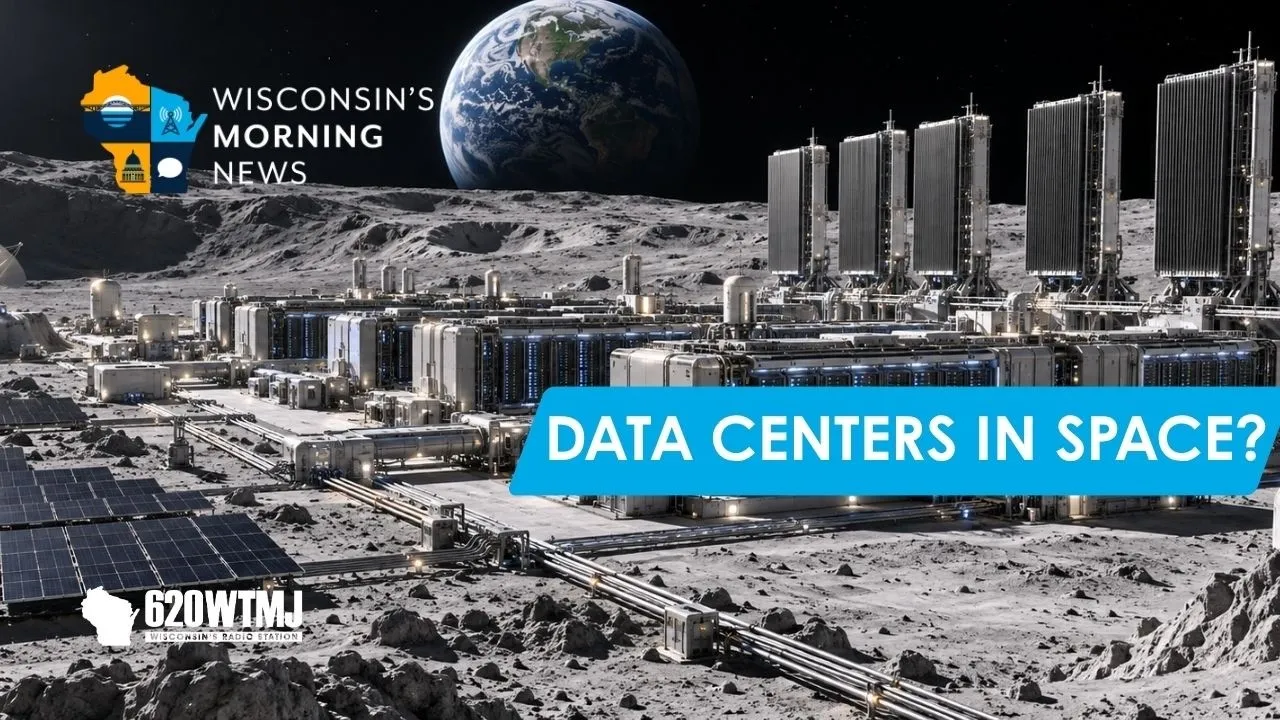
Tech companies like Google are exploring the possibility of launching data centers into space, a move driven by growing public opposition to Earth-based facilities.
Google plans to launch a pilot satellite capable of processing basic AI queries into orbit next Thursday, marking a significant step in the race to power AI from space.
The shift comes as data center construction has become increasingly controversial, costly, and backlogged on Earth.
In Abilene, Texas, Crusoe, a Denver-based AI data center startup, has built a massive 1.2 gigawatt data center for Oracle and OpenAI, but has scrapped plans to use Boom Supersonic's stationary power plants.
California Governor Gavin Newsom signed seven new data center bills Monday, requiring operators to shoulder more costs and disclose resource usage.
These measures reflect a surge in public opposition to data center construction, with seven in 10 Americans opposing such facilities in their communities.
In Arizona, the Tucson City Council rejected a data center project, leading Amazon Web Services to pull out and Blue Origin to file plans for space-based data centers.
Space data centers, however, come with their own challenges, including a $51.5 billion cost for a one-gigawatt facility compared to $16 billion on land.
Despite the challenges, aerospace engineer Andrew McCalip and space systems engineer Jason Aspiotis believe the engineering hurdles are solvable with time and money.
Tech companies are promising new jobs and economic growth, but these promises have not won over the majority of Americans who oppose data center construction due to environmental and energy concerns.
What this adds
The shift towards space-based data centers reflects a broader trend of tech companies seeking to address public opposition to Earth-based facilities.
California's new laws represent a notable shift in the state's approach to data centers, marking a significant change in policy following public outcry.
Background
California lawmakers have approved measures requiring data center developers to disclose water use and cover infrastructure costs, amid growing opposition and environmental concerns.
Hundreds of Oregonians from across the state, including Governor Kate Brown, rallied at the State Capitol in Salem today to demand a statewide moratorium on new and expanding large-scale data centers.
What's confirmed
- Tech companies like Google are exploring the possibility of launching data centers into space, a move driven by growing public opposition to Earth-based facilities.
- Google plans to launch a pilot satellite capable of processing basic AI queries into orbit next Thursday, marking a significant step in the race to power AI from space.
- The shift comes as data center construction has become increasingly controversial, costly, and backlogged on Earth.
- In Abilene, Texas, Crusoe, a Denver-based AI data center startup, has built a massive 1.2 gigawatt data center for Oracle and OpenAI, but has scrapped plans to use Boom Supersonic's stationary power plants.
- California Governor Gavin Newsom signed seven new data center bills Monday, requiring operators to shoulder more costs and disclose resource usage.
- These measures reflect a surge in public opposition to data center construction, with seven in 10 Americans opposing such facilities in their communities.
- In Arizona, the Tucson City Council rejected a data center project, leading Amazon Web Services to pull out and Blue Origin to file plans for space-based data centers.
- Space data centers, however, come with their own challenges, including a $51.5 billion cost for a one-gigawatt facility compared to $16 billion on land.
- Despite the challenges, aerospace engineer Andrew McCalip and space systems engineer Jason Aspiotis believe the engineering hurdles are solvable with time and money.
- Tech companies are promising new jobs and economic growth, but these promises have not won over the majority of Americans who oppose data center construction due to environmental and energy concerns.
What's still developing
- President Donald Trump’s recent bluster aside, it’s possible that the only thing as bipartisan as loving Dolly Parton is hating data centers, whose construction has become so controversial, so costly, and so backlogged here on Earth that companies like Google, Meta, and of course, SpaceX, are actively flirting with the idea of flinging them into orbit instead.
- We rely on readers like you to fund our journalism.
- What Big Tech’s sci-fi dream reveals about the infrastructure America actually needs.
- During a tense vote on a data center being built in her drought-stricken Arizona district last summer, Tucson City Councilmember Nikki Lee made an unlikely pitch: “We’re going to get a little out-of-this-world for a second, so just bear with me.” Like many of her constituents, Lee did not want Project Blue, a sprawling 290-acre data center, gobbling up an ounce of her local drinking water.
- Soon after the Tucson City Council rejected Project Blue’s attempt to connect to city utilities, Amazon Web Services, the secretive intended beneficiary, pulled out of the project, and another Jeff Bezos company, Blue Origin, filed a plan with regulators for tens of thousands of possible new data centers, this time, destined for orbit.
- Sure, launching a hyperscale AI data center into space is still unprecedented engineering-wise, carries an unfathomably large price tag, could engender its own severe environmental risks, and may or may not draw unwelcome attention from the hunters among the stars.
- But it is a major step toward a future in which many or even most of our AI queries will be powered not from the outskirts of a city like Tucson, but from a blinking data center circling the skies.
- Introduced by Reps. Gabe Evans (R-CO) and Kathy Castor (D-FL), the bill would require tech companies to pay for the infrastructure and energy required to construct data centers.
- The House is back in Washington for its final week before the November midterm elections, with lawmakers set to confront three politically charged issues before heading home to campaign: rising energy costs tied to data centers, sanctions on Russia, and President Donald Trump’s war in Iran.
- President Trump, for his part, has been an outspoken champion of rapid data center growth, calling the sector the “oil of the next 20, 25 years” during remarks last week at the All-In Summit, a business leaders’ conference.
- “When you’re looking down the barrel of public outcry that says we don’t want [data centers] at all, and you’ve got localities that are saying they’re going to ban them, then you know the atmosphere has changed,” said Assemblymember Diane Papan, a San Mateo Democrat who authored two of the bills Newsom signed Monday.
- A Gallup poll from May found that seven in 10 Americans oppose having data centers built in their own communities, while a July survey from the Public Policy Institute of California found comparable resistance among state residents.
Sources
- TechCrunchlink
- vox.comlink
- Washingtonexaminerlink
- Hsjchroniclelink
- TechCrunchlink
- Bakersfieldlink
- Danvillesanramonlink
- CBS Newslink
- Newsonelink
- Dallasexpresslink
- Newsdaylink
- PBSlink
- Utilitydivelink
- Cfpubliclink
- WarpBeat — background on Data centers are a flashpoint in the U.S. But what happens when one comes to town? link
- WarpBeat — background on From fracking to data centers: Hearing from people on both sides of the opposition link
- 620 WTMJ — video link