
Home · World · Sep 25 archive
Saudi, Pakistan, Türkiye Meet to Discuss Defense After Attacks
Confirmed
In Short: Saudi Arabia, Pakistan, and Türkiye foreign ministers met to discuss joint defense measures following recent attacks on Saudi territory.
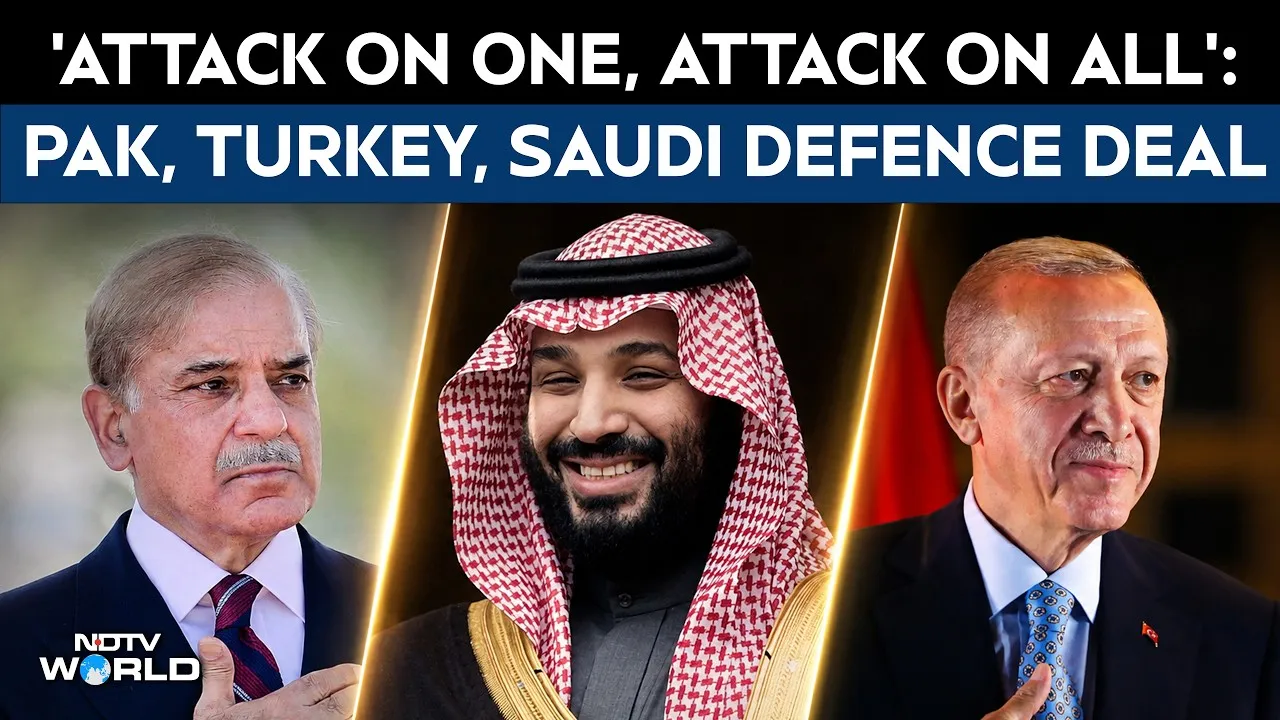
Saudi Arabia, Pakistan, and Türkiye foreign ministers met to discuss joint defense measures following recent attacks on Saudi territory. The meeting, held on the sidelines of the UN General Assembly, reviewed progress on establishing the General Secretariat of the Makkah Joint Defense Agreement and preparations for the start of its activities.
The ministers strongly condemned the attacks targeting Mecca and civilian and economic facilities in Saudi Arabia. They praised the vigilance of the Saudi armed forces and their ability to protect the Kingdom’s security, affirming Saudi Arabia’s right to take measures it considers necessary to defend its security under Article 51 of the UN Charter.
They also discussed arrangements for an urgent meeting of the three countries’ chiefs of staff to consider ways to support Saudi Arabia under the Makkah Joint Defense Agreement. The agreement states that aggression against one party constitutes an attack against all parties.
The ministers discussed the situation in the region and stressed the importance of respecting international law, good neighborly relations, state sovereignty, and non-interference in internal affairs. They affirmed the Kingdom’s right to take measures it deems appropriate to defend the country’s security.
The meeting came as Saudi Arabia reported a new wave of Houthi attacks, including attempts to strike Riyadh with a ballistic missile and further attacks against other parts of the Kingdom. Saudi authorities said the missile targeting the capital was intercepted, with no reported casualties or damage.
The ministers also discussed ongoing arrangements for an urgent meeting of the chiefs of staff of Saudi Arabia, Pakistan, and Türkiye to examine ways of supporting the Kingdom under the Makkah Joint Defense Agreement. The agreement itself calls for de-escalation and restraint alongside stronger collective defense capabilities.
Pakistan's Foreign and Defense Ministry described the agreement as a defensive arrangement aimed at strengthening regional peace and stability, improving defense cooperation, developing military capabilities, and collectively deterring actions that could destabilize the region. Islamabad also stressed that the agreement is not directed against any country.
Since then, Pakistan's position has combined a strong commitment to Saudi security with an emphasis on diplomacy and regional stability. High-ranking Pakistani officials have again emphasized the country's commitment to Saudi Arabia's security, while the exact operational details of the agreement still have not been made public.
Despite the agreement, neither Turkey nor Pakistan have offered to directly participate in Saudi Arabia’s escalating conflict with Yemen’s Houthi rebels. The Houthis have intensified attacks on Saudi territory, targeting major oil, military, and residential infrastructure mainly in Jazan and Riyadh areas, while emergency alerts have also been issued in Mecca, Yanbu, Jeddah, and Tabuk.
What this adds
The bilateral trade between Saudi Arabia and Pakistan reached approximately $4.75 billion in the 2025 to 2026 fiscal year, with Saudi Arabia becoming Pakistan's largest source of remittances.
Saudi Arabia and Pakistan have maintained close relations for decades, with their partnership spanning defense, diplomacy, trade, and energy, while millions of Pakistanis work and live in the Kingdom.
The Mecca agreement leaves room for different forms of cooperation, from intelligence sharing, technical assistance, and air defense support to military deployments if the hour demands it.
Background
Saudi, Pakistan, and Türkiye foreign ministers met to discuss joint defense measures following attacks on Saudi Arabia.
What's confirmed
- The meeting reviewed progress on establishing the agreement’s General Secretariat, committees and working groups, as well as preparations for the start of their activities.
- Saudi Foreign Minister Prince Faisal bin Farhan met with Pakistan’s Deputy Prime Minister and Foreign Minister Mohammad Ishaq Dar and Türkiye’s Foreign Minister Hakan Fidan as part of efforts under the Makkah Joint Defense Agreement.
- The ministers strongly condemned the attacks targeting Mecca and civilian and economic facilities in Saudi Arabia.
- They praised the vigilance of the Saudi armed forces and their ability to protect the Kingdom’s security, while affirming Saudi Arabia’s right to take measures it considers necessary to defend its security under Article 51 of the UN Charter.
- They also discussed arrangements for an urgent meeting of the three countries’ chiefs of staff to consider ways to support Saudi Arabia under the Makkah Joint Defense Agreement, which states that aggression against one party constitutes an attack against all parties.
- The ministers discussed the situation in the region and stressed the importance of respecting international law, good neighborly relations, state sovereignty and non-interference in internal affairs.
- The ministers also discussed ongoing arrangements for an urgent meeting of the chiefs of staff of Saudi Arabia, Pakistan and Türkiye to examine ways of supporting the Kingdom under the Makkah Joint Defense Agreement.
What's still developing
- The bilateral trade between the two countries reached approximately $4.75 billion in the 2025 to 2026 fiscal year, according to official figures, with Saudi Arabia becoming Pakistan's largest source of remittances.
- On Sept. 19, Turkish Foreign Minister Hakan Fidan said Türkiye was ready to help meet potential Saudi military and technical needs under the trilateral arrangement, while describing the attacks on Saudi territory as a serious issue concerning the Kingdom's sovereignty and territorial integrity.
- Saudi Arabia and Pakistan have maintained close relations for decades, with their partnership spanning defense, diplomacy, trade and energy, while millions of Pakistanis work and live in the Kingdom.
- This leaves room for different forms of cooperation, from intelligence sharing, technical assistance and air defense support to military deployments if the hour demands it.
- The Saudi-led military coalition in Yemen, which has lost large swathes of Red Sea territory to the Houthi offensive, earlier in September said that Saudi forces intercepted and destroyed a “hostile drone” before it entered the airspace of Mecca, the holiest city in Islam.
- In addition, the Houthis have imposed a maritime blockade on Saudi vessels transiting in the Red Sea, threatening Riyadh's oil exports that have largely been diverted to its western shores amid the Iranian closure of the Strait of Hormuz.
- The blockade, which came after the Houthis accused Riyadh of bombing Sanaa International Airport and of perpetuating an embargo of Houthi-controlled territory, has threatened Saudi oil exports, hampering transit along its western coast.
- Similarly, the bombardment of Saudi oil infrastructure by pro-Iran Iraqi factions and the subsequent Saudi bombardment of Popular Mobilization Forces (PMF) sites across Iraq has led to a diplomatic firestorm in Baghdad.