
Home · Faith · Sep 25 archive
Pope Leo XIV Begins Four-Day Visit to France
Confirmed
In Short: Pope Leo XIV arrived in Paris on Friday for a four-day visit to France, beginning with a packed first day that included stops at UNESCO headquarters, Notre-Dame Cathedral, and a youth vigil at the Stade de France.
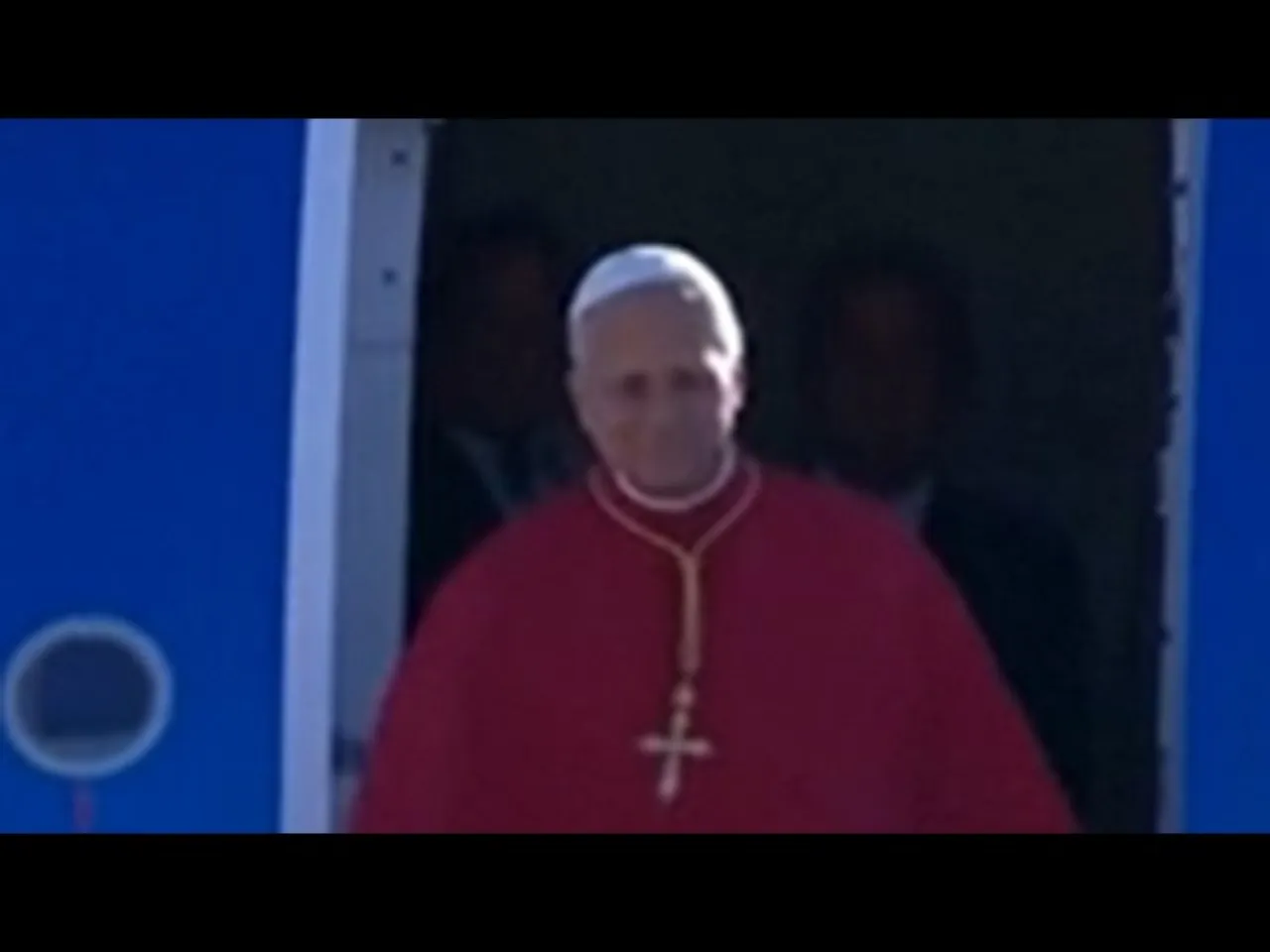
Pope Leo XIV arrived in Paris on Friday for a four-day visit to France, beginning with a packed first day that included stops at UNESCO headquarters, Notre-Dame Cathedral, and a youth vigil at the Stade de France.
Cardinal Jean-Marc Aveline, head of the French bishops’ conference, said the defense of human life would be at the heart of Leo’s message.
Pope Leo XIV met with President Emmanuel Macron at the Elysee Palace and delivered an address at UNESCO, where he called for an authentic secularity that ensures dialogue between the state and religious institutions.
Pope Leo XIV also addressed the newly enacted assisted dying law in France, which the Catholic Church opposes, and called for a ban on nuclear weapons.
The pope highlighted France’s deep Christian roots and praised the national motto of ‘liberty, equality, and fraternity’ as ethical imperatives.
Pope Leo XIV urged the international community to pursue peaceful solutions and cautioned against the dangers of artificial intelligence.
Pope Leo XIV’s visit comes as the Catholic Church in France confronts contentious issues, including the lasting fallout from clerical sexual abuse and the newly enacted assisted dying law.
What this adds
Pope Leo XIV’s visit focuses on issues like artificial intelligence and meeting abuse survivors, as previously reported.
The visit highlights the moral imperatives facing global leaders and the ethical challenges posed by rapid technological advancement.
Background
Pope Leo XIV started a four-day visit to France, focusing on issues like artificial intelligence and meeting abuse survivors.
In preparation for Pope Leo XIV's visit to Lourdes, Bishop Jean-Marc Micas ordered the complete covering of Father Marko Rupnik's mosaics.
What's confirmed
- “Let us not forget that mutual respect and the protection of every human life is a duty incumbent upon each and every one of us,” he said.
- “Nowadays there is a temptation to expect science to eliminate or alleviate every form of suffering. This often brings the risk of self-delusion,” Pope Leo said.
- “Through the remarkable efforts of men and women who remained faithful to their humanity and to the values of the Gospel, the Catholic Church in France has demonstrated constant concern for the welfare of the poor and underprivileged, and has sought to be the living face of God’s own mercy and compassion,” he said.
- While France is a traditionally Catholic country, today the government maintains a strict form of secularism in public life called “laïcité” that separates church and state.
- Pope Leo said that France is a country that is frequently in his prayers, recalling his personal family origins in Normandy and Béarn.
- President Macron personally welcomed Pope Leo to France at the foot of the stairs at the airport runway at the start of the pope’s whirlwind first day in the French capital.
- The speech at the 18th-century palace was the pope’s first public address of his Sept.
- The motto for the papal visit is “That the world may have life” (John 6:51), a theme that resonates with the faithful in the country after a vote by French lawmakers in July to legalize “assisted dying,” including euthanasia and assisted suicide in certain cases, a move that French bishops called a “radical choice.” The French Parliament also made abortion a constitutional right in 2024.
- “For when science and technology are not guided by a deeper wisdom, they can offer immediate solutions that apparently address people’s wishes and their pain, but can seriously divert them from the greater good to which they aspire.” The pope pointed to the witness of the charitable works of St.
- “These examples of care and concern serve as a true lesson in humanity; they show the grandeur of compassion and are a powerful reminder of the unique and irreplaceable worth of every human being.” Pope Leo highlighted the centrality of the Catholic faith in French culture for many centuries as “a land with deep Christian roots” from the second-century St.
What's still developing
- Pope Leo XIV is heading to France for the first official papal visit to the country in 18 years.
- However, Martin Dumont, secretary-general of a religion research institute in France, told the AFP news agency that he would be “very surprised” if the pope adopted a confrontational stance on the issue.
- France enacted a law in August establishing a right to assisted dying under specified conditions for adults suffering from serious and incurable illnesses.
- The measure had faced strong opposition from the Catholic Church, which teaches that human life should be protected from conception until natural death.
- “An authentic secularity, then, consists not in excluding religion from the public sphere or from education, but in striving to ensure that the State and religious institutions maintain dialogue and join forces in the service of the common good, that the world may have life,” the pope said.
- The pope, who earlier in the day told reporters accompanying him on the flight from Rome that he was traveling to France “as a follower of Jesus Christ who wants to bring peace of Christ throughout the world,” called in his speech for a ban on nuclear weapons and lamented war in the Middle East.
- End-of-life questions are among the most sensitive issues the pope is expected to address while in France Sept.
- France legalized assisted suicide and euthanasia this summer, becoming the fifth European country to do so after Belgium, the Netherlands, Luxembourg, and Spain.
- Euthanasia is the intentional ending of a person’s life to relieve suffering.
- It differs from assisted dying, in which the patient takes life-ending drugs himself, under a physician’s guidance.
- The duty to protect and respect life, Leo continued, is “an expression of the authentic ‘secularity’ (laïcité) of the earthly city” since a “Christian engaged in public service and guided by the light of his or her conscience illumined by faith, cannot be considered a proselytizer or a threat to the unity of the nation.” Laïcité is a legal principle strictly separating Church and state in France.
- This first year of a special commemoration in Italy gave Pope Leo a chance to repeat one of life's most important lessons: learn from the mistakes of the past.