
Home · World · Sep 25 archive
Lebanese PM Demands Israeli Withdrawal Amid Ongoing Shelling
Confirmed
In Short: The prime minister demanded a complete withdrawal of Israeli forces from Lebanese territory up to its internationally recognized border and the release of all Lebanese detainees.
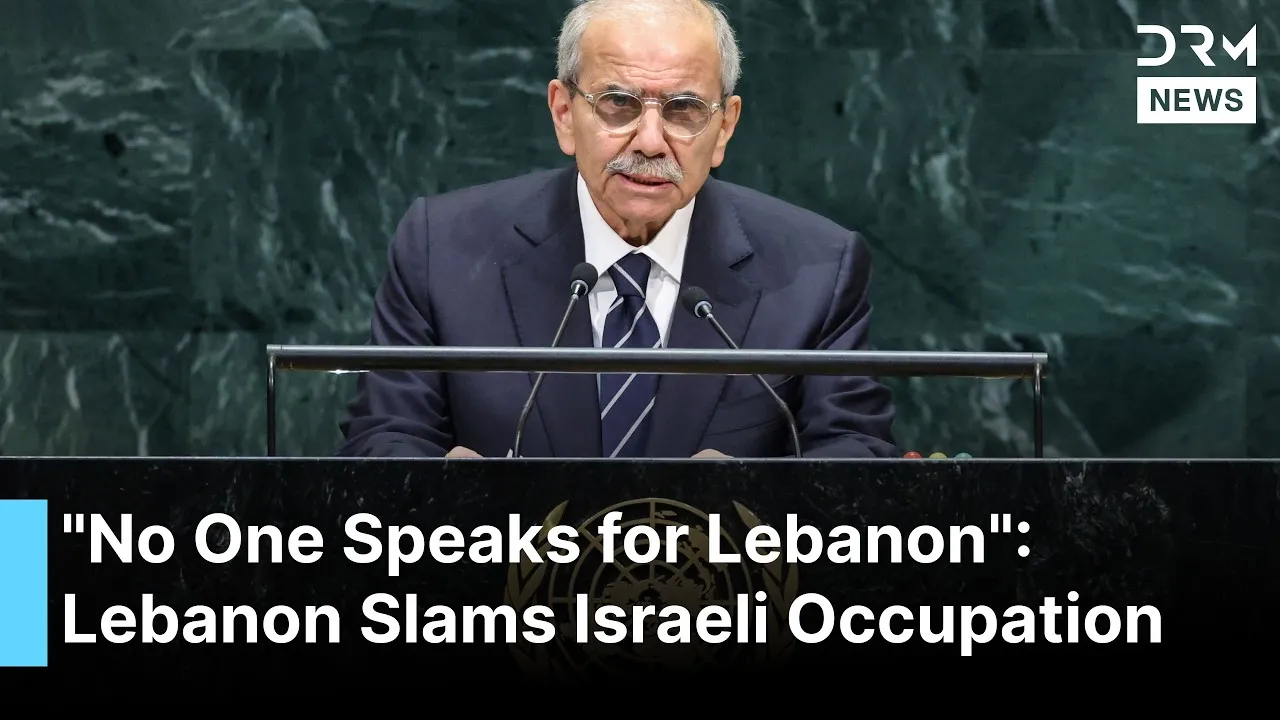
Salam emphasized the need for the war to end and the ceasefire to be consolidated, noting that Israeli artillery shelling continues to cause uncontrollable fires and prevent Lebanese civil defense and firefighters from reaching affected areas.
He also highlighted that more than 60 towns in southern Lebanon remain occupied by Israeli forces, where a systematic campaign of demolitions is ongoing.
Since the start of the Hezbollah-Israel war on March 2, Israeli attacks in southern Lebanon have killed at least 4,386 people and wounded 12,407 others.
Salam stated that his government had entered into negotiations with Israel, mediated by the United States and President Donald Trump, to end the war and restore Lebanon’s sovereignty.
The prime minister demanded a complete withdrawal of Israeli forces from Lebanese territory up to its internationally recognized border and the release of all Lebanese detainees.
Meanwhile, on the ground in Lebanon, Israeli forces carried out a large explosion near Taybeh and Deir Siryan, and an Israeli air strike targeted a valley between Froun and Ghandourieh, triggering a large fire.
A US-brokered framework agreement between Lebanon and Israel in June provides for a gradual Israeli withdrawal from Lebanese territory and the deployment of the Lebanese army in areas vacated by Israeli forces.
What this adds
The ongoing Israeli shelling and demolitions continue despite the framework agreement signed in June.
What's confirmed
- Salam emphasized the need for the war to end and the ceasefire to be consolidated, noting that Israeli artillery shelling continues to cause uncontrollable fires and prevent Lebanese civil defense and firefighters from reaching affected areas.
- He also highlighted that more than 60 towns in southern Lebanon remain occupied by Israeli forces, where a systematic campaign of demolitions is ongoing.
- Since the start of the Hezbollah-Israel war on March 2, Israeli attacks in southern Lebanon have killed at least 4,386 people and wounded 12,407 others.
- Salam stated that his government had entered into negotiations with Israel, mediated by the United States and President Donald Trump, to end the war and restore Lebanon’s sovereignty.
- The prime minister demanded a complete withdrawal of Israeli forces from Lebanese territory up to its internationally recognized border and the release of all Lebanese detainees.
- Meanwhile, on the ground in Lebanon, Israeli forces carried out a large explosion near Taybeh and Deir Siryan, and an Israeli air strike targeted a valley between Froun and Ghandourieh, triggering a large fire.
- A US-brokered framework agreement between Lebanon and Israel in June provides for a gradual Israeli withdrawal from Lebanese territory and the deployment of the Lebanese army in areas vacated by Israeli forces.
What's still developing
- “We want the war to end and we want the ceasefire [with Israel] consolidated,” Salam said in a speech at the United Nations General Assembly in New York on Friday.
- “From the ground here in Froun, we can still see Israeli warplanes and drones flying at low altitudes in the skies above and Israeli artillery shelling is still causing uncontrollable fires. Lebanese civil defence and firefighters are not being allowed by the Israelis to reach these areas and put out the flames,” she said.
- “There can be no lasting stability in Lebanon without lasting stability in our region, and there can be no stability in the region as long as this organisation [the UN] remains unable to enable the Palestinian people to exercise their inalienable right to self-determination, like all other peoples of the world,” Salam said.
- The US military said in February it completed a withdrawal from the Al-Tanf base positioned at the tri-border confluence of Syria, Jordan and Iraq.
- Syria has sought to avoid being drawn into the regional conflict that has engulfed neighboring countries, including Lebanon, where Hezbollah has fought Israeli forces, and Iraq, where Iran-backed armed groups have launched drone and rocket attacks.