
Home · World · Sep 25 archive
Iran Offers US Seven-Day Plan to Reopen Strait of Hormuz
Confirmed
In Short: Iran's Foreign Minister Abbas Araghchi said Tehran has proposed a plan to reopen the Strait of Hormuz within seven days if certain conditions are met.
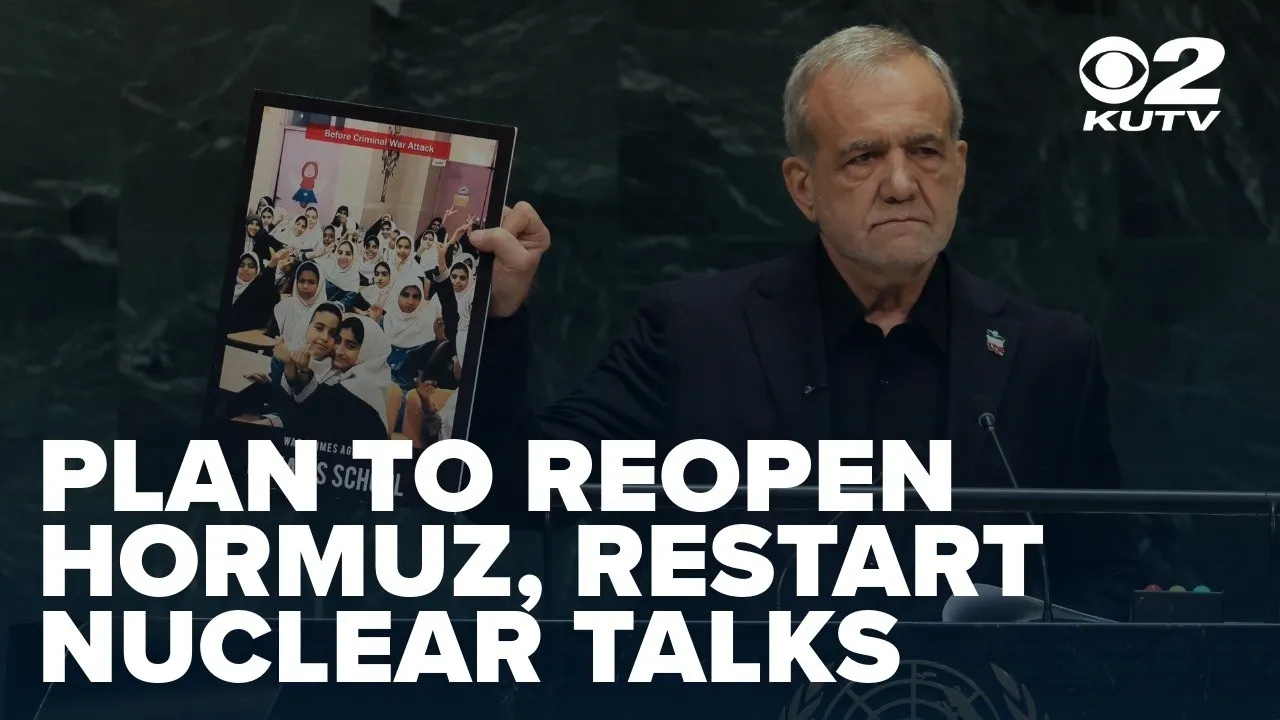
Iran's Foreign Minister Abbas Araghchi said on Thursday that Tehran has proposed a plan to reopen the Strait of Hormuz within seven days if certain conditions are met. Speaking at the United Nations General Assembly in New York, Araghchi outlined the proposal, which would see the strait reopened to maritime navigation once agreed upon.
Araghchi told reporters that the plan, conveyed through intermediaries, resembles a previous memorandum of understanding (MoU) signed in June. The MoU briefly eased tensions but broke down when Iran fired on commercial ships it accused of deviating from approved routes.
The new proposal, according to analysts, would give Iran and Oman a key role in managing the strait before broader peace talks could commence. Iran has previously insisted on lifting US sanctions and ending naval blockades before engaging in broader discussions.
Araghchi emphasized that the Strait of Hormuz is a red line for Iran and that the current offer may be the last chance before the US midterm elections.
The US, which claims to be in control of the strait, wants Iran to address its nuclear program immediately. However, Iran has set conditions, including the release of frozen assets estimated at $12 billion and the lifting of sanctions on Iranian oil.
The proposal also calls for a cessation of hostilities in the Middle East, including in Yemen and Lebanon, for seven days. Iran's Revolutionary Guards spokesman, Hossein Mohebi, confirmed that ending hostilities in Yemen is among Tehran's demands.
Shipping data shows a recent 10-day average of about 18 transits per day through the strait, with daily numbers dropping as low as nine vessels on certain days.
Background
Iran's Revolutionary Guards Navy says it struck a Togo-flagged tanker in the Strait of Hormuz, claiming the vessel was making an illegal passage.
Iran's Islamic Revolutionary Guard Corps (IRGC) says it struck a Togo-flagged tanker attempting an 'illegal passage' through the Strait of Hormuz.
What's confirmed
- “Iran has conveyed to the United States, through Qatar, a concrete seven-day plan. If the necessary conditions are met, the strait can be reopened, and normal maritime passage restored within seven days,” Araghchi said at the UN Friday.
What's still developing
- Analysts have told Al Jazeera a firm peace deal remains unlikely, with Iran still wanting to follow the approach set out in an earlier agreement, which would give it and Oman a main role in managing the strait before moving on to discussing terms for a broader peace deal.
- “By explicitly saying this may be the only chance before the midterms, Iran is putting pressure on Trump over oil and gas prices and the strait,” he said.
- Iran has previously made clear that it will not engage with broader peace talks, including addressing the issue of its nuclear programme, until the US naval blockade of its ports in and around the Hormuz strait is lifted, sanctions are repealed and the US provides a guarantee of an end to strikes, among other conditions.
- Under the June agreement, Iran undertook to allow ships to pass through the strait without paying tolls for 60 days – that was the period of time given for peace talks to take place.
- Iran requires ships to obtain authorization before passage, citing security and sovereignty reasons.
- Araghchi met for talks on Tuesday with US President Donald Trump’s envoy Steve Witkoff, and previously set out conditions for ending the war and reopening the vital energy shipping channel.
- The US and Israel launched air strikes on Iran on 28 February.
- "I can tell you if there is seriousness in the US side to come to a deal and reopen the Strait of Hormuz, everything is now prepared," he added.
- A US official told the BBC that the US was "in a very strong position with control of the Strait of Hormuz, so we are not in a rush".
- Watch: Trump threatens to 'annihilate' Iran if no deal reached The MOU between the US and Iran, signed on 18 June, was designed to bring about a ceasefire and at least partly reopen the Strait of Hormuz.
- The 14-point agreement said Iran would never have a nuclear weapon.
- It noted that the US, Iran and their allies would end military operations on "all fronts" and contained provisions including the end of a US naval blockade and sanctions relief.