
Home · Science · Sep 25 archive
Fossil Feathers Found in Dinosaur Poop Shed Light on Bird Evolution
Confirmed
In Short: The feathers also offer clues about the evolution of feathers in birds, with some resembling primitive feathers found in 100-million-year-old Myanmar amber.
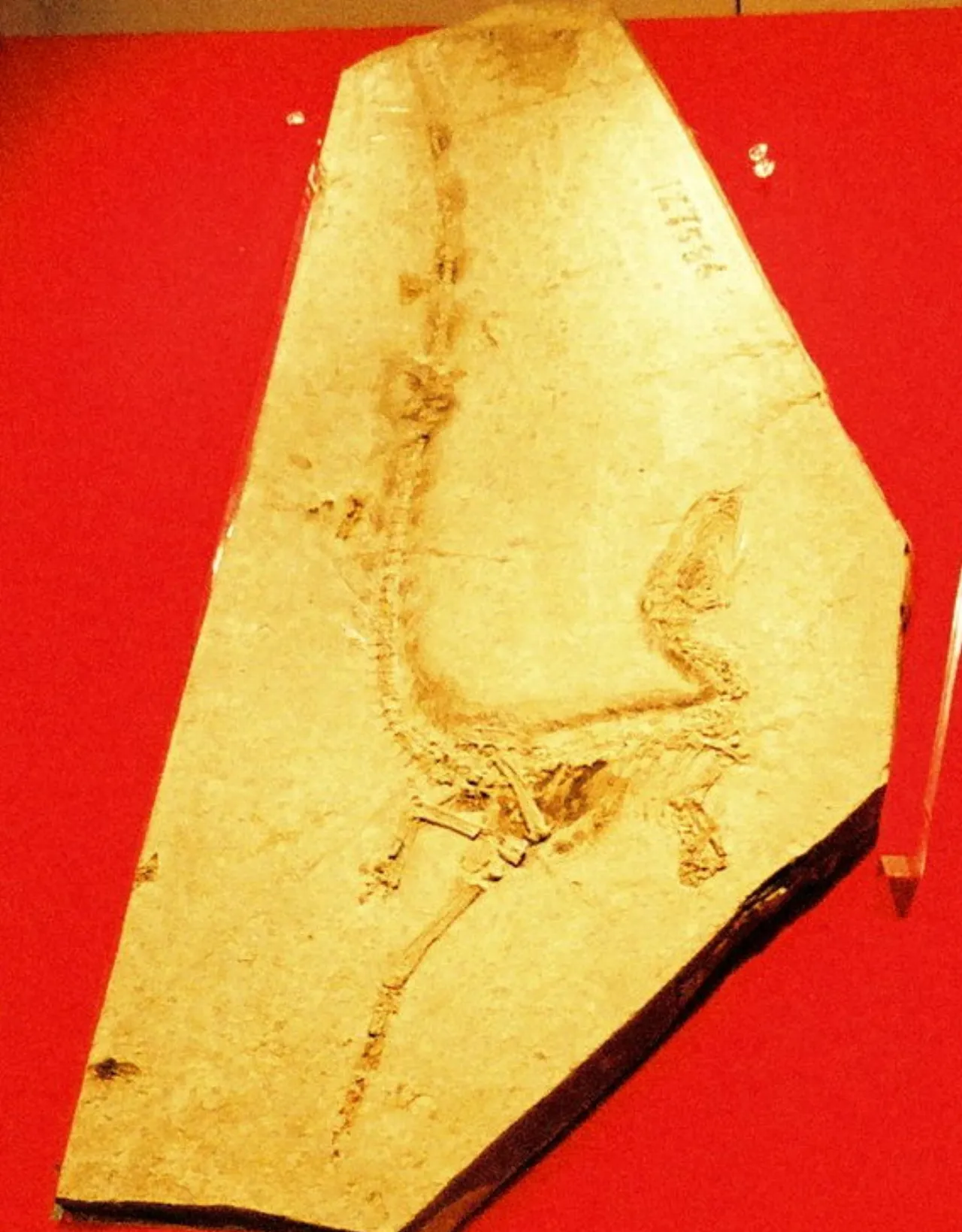
A University of Washington-led research team has discovered the best-preserved fossil feathers from the Mesozoic era inside a fossilized dinosaur poop, also known as a coprolite, in eastern Montana.
The feathers, found in the Hell Creek Formation, are the first hesperornithiform feathers ever discovered, according to a study published in Current Biology.
Co-author Gregory Wilson Mantilla, a UW professor of biology and curator of vertebrate paleontology at the Burke Museum, noted, “We rarely find fossils of birds and even more rarely their feathers, giving us such important insight into the evolution of this key aspect of their biology.”
Lead author Jingmai O’Connor, associate curator of fossil reptiles at the Field Museum, explained, “Two of the feathers, including the one exposed at the surface of the coprolite, have features found only in those of living birds and their immediate ancestors.”
The coprolite contained multiple feathers, tiny fish scales from a gar, and leg bones from a hesperornithiform, an extinct group of birds similar to loons.
The researchers concluded that the feathers must have come from the same bird whose remains were found in the coprolite.
O’Connor noted, “If it weren’t for a ‘lucky break’ on the coprolite’s surface that put one feather on full display, her team might never have known it had feathers inside.”
The feathers found in the coprolite are significant because they may help explain why some birds survived the mass extinction event that ended the dinosaurs’ reign about 66 million years ago.
O’Connor added, “We think the types of feathers that these birds had, and/or the way they molted those feathers, may have been one of the underlying causes of the selectivity of the end-Cretaceous mass extinction.”
The feathers also offer clues about the evolution of feathers in birds, with some resembling primitive feathers found in 100-million-year-old Myanmar amber.
O’Connor said, “What is exciting is to push the occurrence of modern feathers into non-modern birds.”
What this adds
The feathers found in the coprolite are the first of their kind, providing unprecedented insight into ancient bird biology and the mass extinction event.
The discovery highlights the importance of coprolites in paleontological research, as they can preserve delicate structures like feathers that are rarely found in other fossil forms.
What's confirmed
- A University of Washington-led research team has discovered the best-preserved fossil feathers from the Mesozoic era inside a fossilized dinosaur poop, also known as a coprolite, in eastern Montana.
- The feathers, found in the Hell Creek Formation, are the first hesperornithiform feathers ever discovered, according to a study published in Current Biology.
- The coprolite contained multiple feathers, tiny fish scales from a gar, and leg bones from a hesperornithiform, an extinct group of birds similar to loons.
- The researchers concluded that the feathers must have come from the same bird whose remains were found in the coprolite.
- The feathers found in the coprolite are significant because they may help explain why some birds survived the mass extinction event that ended the dinosaurs’ reign about 66 million years ago.
- The feathers also offer clues about the evolution of feathers in birds, with some resembling primitive feathers found in 100-million-year-old Myanmar amber.
What's still developing
- “Every hour processing the data revealed another feather, another scale, another bone — in stunning 3D,” said co-author Nathan Carroll, a paleontologist at the Carter County Museum.
- They share a common ancestor and physical traits — some dinosaurs even had feathers.
- Dense bristles suggest some of the feathers could repel water, possibly as well as those of modern pelicans, researchers report September 10 in Current Biology.
- Two leg-bone fragments, 18 and 12 millimetres long, resembled some previously found at Hell Creek and attributed to hesperornithiformes.
- While the wing and tail feathers might have allowed for successful diving, for example, the less advanced body feathers would have been relatively poor insulators, making the animals more vulnerable to the “winter” that occurred after the asteroid impact.
- But, puzzlingly, only one branch made it through: neornithes, the ancestors of every bird alive today.
- These were flightless, short-winged diving birds, similar to modern loons ( Gaviiformes ) or grebes ( Podicipediformes ), and were related to Neornithes.
- “Bones tell us an enormous amount about these animals, but footprints capture a moment of behavior,” said Dr. Tyler Lyson, senior curator of vertebrate paleontology at the Denver Museum of Nature & Science.
- Other tyrannosaur trackways found in Canada and Wyoming were made by smaller animals — either younger Tyrannosaurus or related, smaller species.