
Home · World · Sep 24 archive
US and China Meet Amid AI Race
Confirmed
In Short: The meeting comes amid a fierce competition between the two nations in the AI domain.
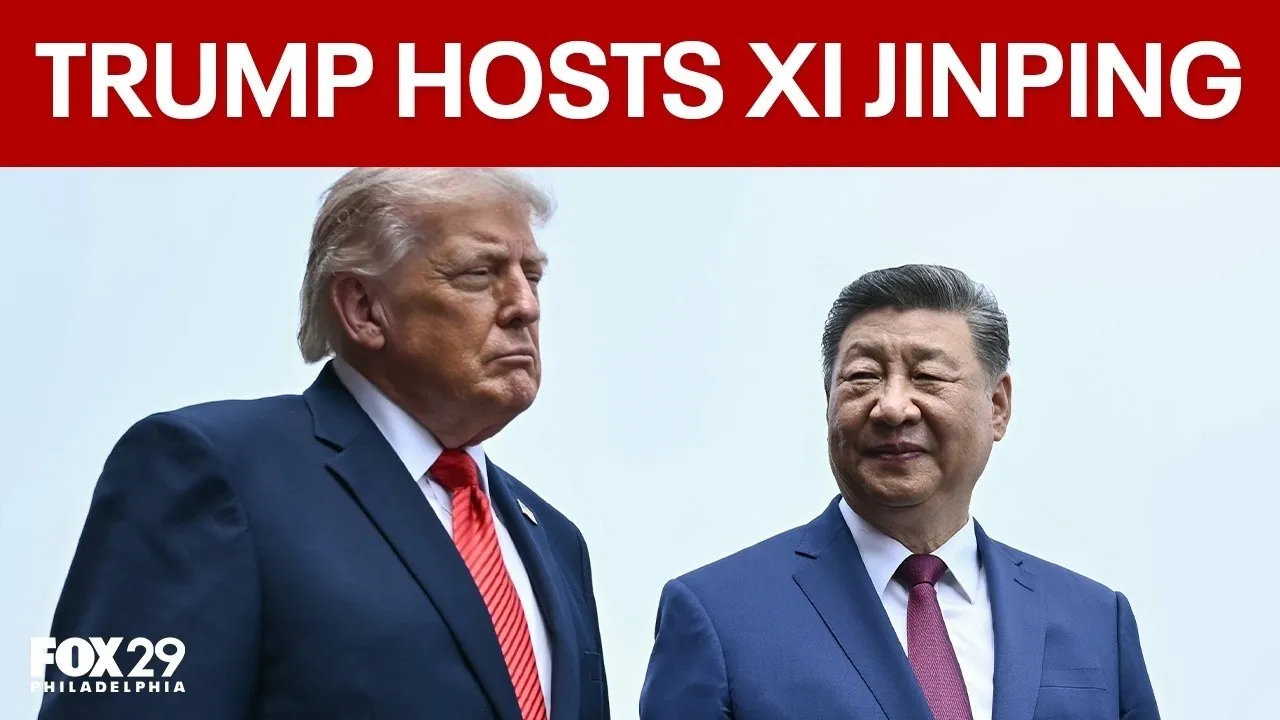
The meeting comes amid a fierce competition between the two nations in the AI domain. US Treasury Secretary Scott Bessent announced that Washington had proposed an AI 'notification mechanism' with China, essentially a hotline to alert each other about potential national security threats.
US company Nvidia dominates the global AI computing capacity among major chip designers, with more than 60 percent of the market, compared to China’s Huawei, which has a smaller but growing share.
The US is also spending significantly more on the infrastructure needed to build AI, giving its tech companies a substantial advantage in the race for computing power.
Despite the US lead in computing power and spending, China is producing more AI research and training more technical talent. China accounted for over 27 percent of global AI publications in 2024, compared to 12 percent from the US.
According to a study by MacroPolo, 47 percent of the world’s top 20 percent of AI researchers completed their undergraduate studies in China in 2022, up from 29 percent in 2019. However, 72 percent of these top researchers educated in China are working in the US.
Rebecca Arcesati from the Mercator Institute for China Studies noted that China sees AI as a means to maximize its power, while Trump views beating China to AI supremacy as paramount, dismissing any risks associated with the technology.
China’s foreign ministry warned against narratives of threat and confrontation, calling for cooperation to ensure AI benefits all.
The meeting reflects the ongoing tension and competition between the US and China in the AI domain, with both nations pushing to accelerate their advancements.
In this visual explainer, Al Jazeera compares the US and China’s AI strength in computing power, AI models, spending, and research, highlighting the complex dynamics of the AI race.
What this adds
The summit's discussions on AI reflect the broader geopolitical tensions between the US and China, with both nations emphasizing their respective strengths and ambitions in the field.
What's confirmed
- The meeting comes amid a fierce competition between the two nations in the AI domain. US Treasury Secretary Scott Bessent announced that Washington had proposed an AI 'notification mechanism' with China, essentially a hotline to alert each other about potential national security threats.
- US company Nvidia dominates the global AI computing capacity among major chip designers, with more than 60 percent of the market, compared to China’s Huawei, which has a smaller but growing share.
- The US is also spending significantly more on the infrastructure needed to build AI, giving its tech companies a substantial advantage in the race for computing power.
- Despite the US lead in computing power and spending, China is producing more AI research and training more technical talent. China accounted for over 27 percent of global AI publications in 2024, compared to 12 percent from the US.
- According to a study by MacroPolo, 47 percent of the world’s top 20 percent of AI researchers completed their undergraduate studies in China in 2022, up from 29 percent in 2019. However, 72 percent of these top researchers educated in China are working in the US.
- Rebecca Arcesati from the Mercator Institute for China Studies noted that China sees AI as a means to maximize its power, while Trump views beating China to AI supremacy as paramount, dismissing any risks associated with the technology.
- China’s foreign ministry warned against narratives of threat and confrontation, calling for cooperation to ensure AI benefits all.
- The meeting reflects the ongoing tension and competition between the US and China in the AI domain, with both nations pushing to accelerate their advancements.
- In this visual explainer, Al Jazeera compares the US and China’s AI strength in computing power, AI models, spending, and research, highlighting the complex dynamics of the AI race.
What's still developing
- TrendForce, a market research firm, expects China’s four hyperscalers’ capital expenditure to rise by more than 80 percent in 2026, compared with a projected growth of 76 percent for US hyperscalers.
- United States President Donald Trump and China’s President Xi Jinping are set to meet in Washington, DC on Thursday for a summit that is expected to cover trade, artificial intelligence (AI), Taiwan and the US-Israel war on Iran.
- The more powerful chips and computers a country has, the faster it can build and improve AI models, making computing power one of the biggest advantages in the AI race.
- The US lead comes largely from its access to the most advanced chips.
- A red carpet and military flyover - How Trump welcomed Xi US President Donald Trump has been blunt about his AI ambitions, as well as about who he considers the US's main rival to be: China.
- You can look beyond the rhetoric for evidence of this: AI has been a cornerstone of China's technological ambitions for more than a decade, whether Xi emphasises it publicly or not.
- The US and China are locked in a race to develop AI There's no doubt the US and China are global leaders in AI but who is ahead depends on how success is measured.
- In February 2025, an AI model by China's DeepSeek "briefly matched the top US model" and as of March 2026, Anthropic's top model led the pack "by just 2.7%", according to researchers at Stanford University, external.
- Joanna Wietrzyk, Hyrox women's world record holder, soiled herself during the event in Beijing on Saturday but was controversially allowed to continue and win the race.
- Read more: ‘This is what women in sport look like’: Team GB athlete Amy Hunt hits back at Sydney Sweeney over nude betting ad Read more: Human remains unearthed after summer wildfires identified as mum-of-three who went missing seven years ago Following the backlash, Hyrox China said the area was decontaminated after the race finished.
- "If the United States stops developing advanced AI, China is unlikely to follow. Surrendering the lead in a potentially transformative technology would carry serious economic and national security costs," Daniel Castro, president of the Information Technology and Innovation Foundation (ITIF), a leading nonpartisan tech-innovation policy think tank, said in response to Sanders' proposal.
- Bridget Bean, former CISA executive director, warns that China is rapidly closing the A.I.