
Home · Science · Sep 24 archive
NASA to Study Astronaut Health and Performance During Crew-13 Mission
Confirmed
In Short: NASA is set to study the effects of long-duration spaceflight on astronauts' health and performance during the Crew-13 mission, which will involve a series of biomedical and human performance investigations.
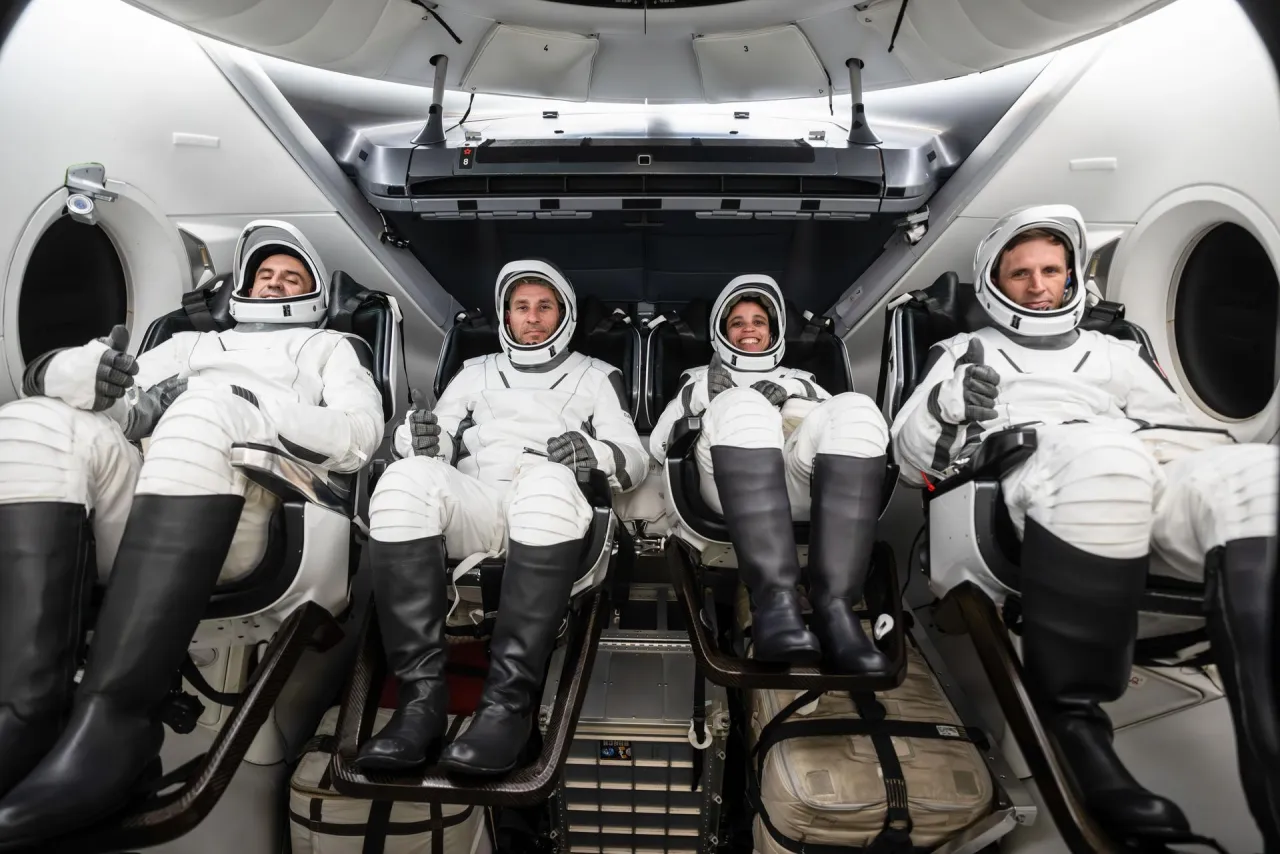
Jason Lytle, a cardiovascular researcher at NASA's Johnson Space Center, noted that weightlessness in space can disrupt normal blood flow in astronauts' veins, highlighting the importance of these studies.
Michael Stenger, Human Research Program chief scientist at NASA Johnson, emphasized that these investigations will help NASA better understand how the human body responds to spaceflight and whether specific strategies can effectively protect astronaut health and performance.
The Crew-13 mission will also support a new collaborative effort to study how spaceflight affects blood flow and clotting, which will inform preventative measures for at-risk crew members and improve health and safety on future missions.
In addition, researchers will continue the B-Complex study, which investigates if a daily B-vitamin supplement can reduce or prevent Spaceflight-Associated Neuro-ocular Syndrome (SANS), a condition that can change astronauts' eye structure during long-duration missions.
According to Icarus Robotics, Joy's testing demonstrated the performance of its flight controller, sensor suite, and manipulation capabilities, a step toward a robotic workforce that can maintain orbital data centers, assemble lunar infrastructure, and support sustained human presence in space.
What this adds
The Space Geodesy Project has shown that Earth's center of mass shifts due to seasonal changes, water redistribution, and snow accumulation, but this does not directly impact the current NASA studies on astronaut health and performance.
Background
NASA's Space Geodesy Project has revealed that Earth's center of mass moves significantly each year due to seasonal changes, water redistribution, and snow accumulation.
What's confirmed
- Jason Lytle, a cardiovascular researcher at NASA's Johnson Space Center, noted that weightlessness in space can disrupt normal blood flow in astronauts' veins, highlighting the importance of these studies.
- Michael Stenger, Human Research Program chief scientist at NASA Johnson, emphasized that these investigations will help NASA better understand how the human body responds to spaceflight and whether specific strategies can effectively protect astronaut health and performance.
- The Crew-13 mission will also support a new collaborative effort to study how spaceflight affects blood flow and clotting, which will inform preventative measures for at-risk crew members and improve health and safety on future missions.
- In addition, researchers will continue the B-Complex study, which investigates if a daily B-vitamin supplement can reduce or prevent Spaceflight-Associated Neuro-ocular Syndrome (SANS), a condition that can change astronauts' eye structure during long-duration missions.
- According to Icarus Robotics, Joy's testing demonstrated the performance of its flight controller, sensor suite, and manipulation capabilities, a step toward a robotic workforce that can maintain orbital data centers, assemble lunar infrastructure, and support sustained human presence in space.
What's still developing
- NASA also is testing crew members’ manual piloting skills, evaluating methods to counter vision and brain changes, gathering essential health data to inform future missions, and measuring forces astronauts experience during return‑to‑Earth to help refine re-entry hardware and procedures.
- A performance study, called Manual Piloting, uses lunar-landing simulations to test how well astronauts can handle challenging landings after spending extended time in microgravity.
- Because long-duration spaceflight can affect sensory systems, orientation, and motion control during shifts between gravity environments, researchers are evaluating how those changes influence piloting performance and whether refresher training shortly before landing can strengthen capabilities and decision-making.
- PARIS — Icarus Robotics, the New York startup developing dexterous mobile robots for space missions, conducted tests of its free-flying platform ahead of a 2027 demonstration on the International Space Station.