
Home · Health · Sep 24 archive
FDA Approves Once-Weekly Basal Insulin Injection Efsitora
Developing
In Short: The FDA has approved Eli Lilly's once-weekly basal insulin injection, efsitora, for use in adults with type 2 diabetes.
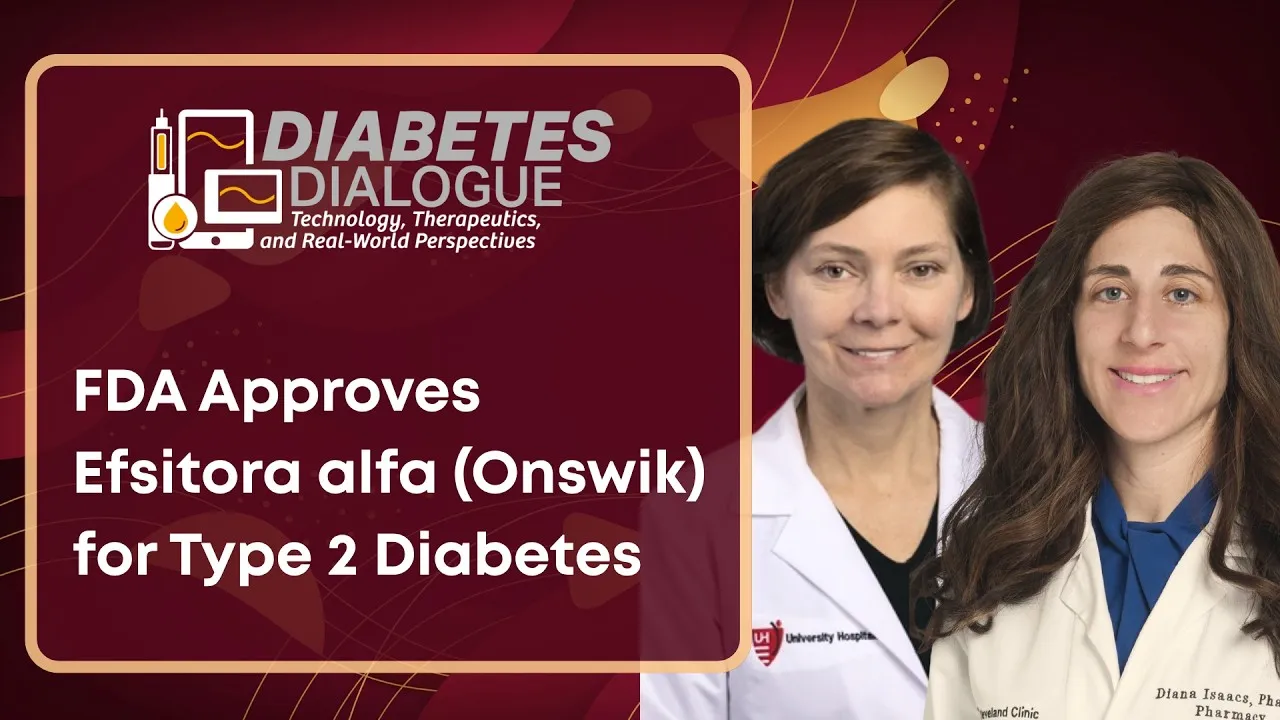
The U.S. Food and Drug Administration (FDA) has approved the once-weekly injectable basal insulin drug efsitora alfa-gobe (Onswik) for use as an adjunct with diet and exercise to help control blood sugar in adults with type 2 diabetes (T2D).
Efsitora, developed by Eli Lilly, is designed to reduce the number of injections by over 300 per year compared to once-daily basal insulin regimens, according to the company's news release.
The approval is based on evidence from the phase 3 QWINT clinical trial program, which involved more than 3400 adults with T2D across four international trials. These trials showed that efsitora was noninferior to once-daily insulin glargine U-100 and insulin degludec U-100 in reducing A1c levels from baseline.
In the most recent QWINT-1 trial, published in the New England Journal of Medicine, efsitora demonstrated comparable efficacy to once-daily glargine in patients with T2D who had not previously been treated with insulin, with notable reductions in clinically significant or severe hypoglycemia.
Efsitora will be available in the U.S. in prefilled pens with two concentrations: U-500 (delivering a maximum of 400 units per single injection) and U-1000 (delivering a maximum of 800 units per injection).
The approval marks the second such FDA approval for a long-acting, once-weekly insulin, following the March approval of Novo Nordisk's insulin icodec-abae (Awiqli).
Efsitora has received previous approvals from the European Medicines Agency, the Federal Commission for the Protection against Sanitary Risks in Mexico, and Japan's Pharmaceuticals and Medical Devices Agency.
What's still developing
- "This straightforward fixed-dose regimen of once-weekly efsitora, which mimics the approach used for once-weekly incretin-based therapies, may simplify treatment and lead to a lower injection burden than that with the traditional sliding-scale dose adjustments of once-daily insulin therapies," the authors wrote.
- That being said, "there is still a niche for long-acting insulin, particularly in those individuals who have little or no residual insulin secretion and have longstanding T2D," he concluded.