
Home · World · Sep 23 archive
US Drafted Memo Condemning UK Over West Bank Sanctions
Confirmed
In Short: The draft document accused the UK and other countries of using tactics that draw from the playbook of the antisemitic boycott, divestment, and sanctions movement.
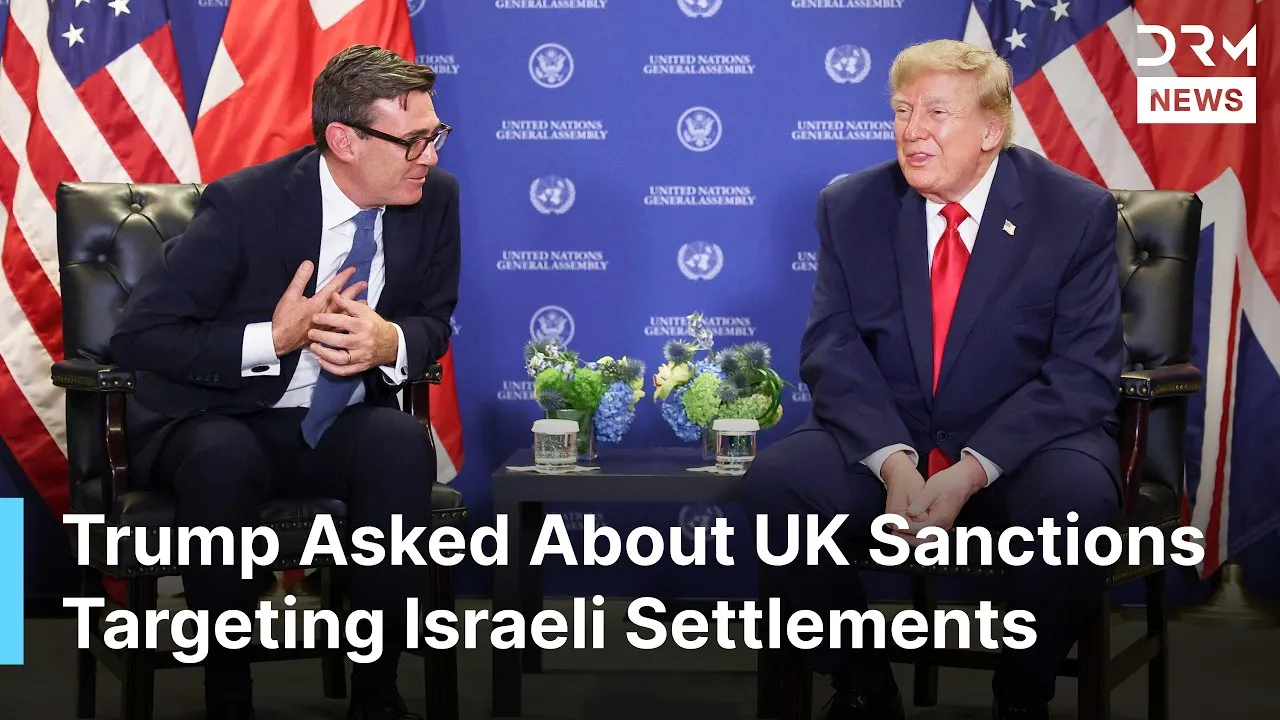
US officials in Jerusalem and Washington drafted a statement in early September, attributed to Secretary of State Marco Rubio, condemning the UK, France, and Canada's plans to block imports from Israeli settlements in the occupied West Bank. The draft, reviewed by Reuters, was never released.
The draft document accused the UK and other countries of using tactics that draw from the playbook of the antisemitic boycott, divestment, and sanctions movement. It came after UK Foreign Minister Ed Miliband called the Israeli E1 settlement project an “unacceptable and destructive act.”
The E1 project, which would completely sever East Jerusalem from the West Bank and effectively cleave the overall territory in two, has drawn condemnation from lawmakers in the US Senate. More than 20 Democrats recently introduced a resolution calling for an investigation into surging West Bank violence.
In response to the UK's sanctions, Israeli Foreign Minister Gideon Sa’ar announced that Israel would close the British Consulate in Jerusalem and impose a series of countermeasures. These include removing British representatives from the International Gaza Support Center and ending British activities training Palestinian Authority forces in the West Bank.
The UK government plans to set out new restrictions on buying goods made in Jewish settlements in the Israeli-occupied West Bank. Miliband emphasized that the sanctions regime would target illegal settlement and settlement expansion, not Israel itself.
Mike Huckabee, Trump's ambassador to Israel, warned of a “huge economic impact on British businesses” if the UK proceeds with the sanctions. He told the BBC that the US would “without a doubt” respond to the expected sanctions.
The West Bank, captured by Israel in the 1967 Six-Day War, remains under Israeli control. Recent months have seen a rise in violence towards Palestinians in the West Bank by settlers, prompting calls for action from international partners.
A senior US official told Reuters that the draft statement was not prepared in consultation with the State Department or White House, indicating a potential rift within the US administration over how to respond to the UK's sanctions.
What this adds
The draft statement was not officially released, leaving the US position on the UK's sanctions ambiguous.
The UK's move is part of a coordinated push with France and Canada amid what they describe as 'unprecedented levels of settler violence and settlement expansion' in the West Bank.
Background
The West Bank is the larger of the two Palestinian territories that make up Palestine. A landlocked territory located on the western bank of the Jordan River near the coast of the Mediterranean Sea in West Asia's Levant region, it is bordered by Jordan and the Dead Sea to the east, and by Israel to the south, west, and north.
What's confirmed
- "These tactics unacceptably draw from the playbook of the antisemitic boycotts, divestments and sanctions movement," the draft document, reviewed by Reuters, said.
- In December last year, Trump said that he and Netanyahu, whose government has overseen a rapid expansion of settlements, did not fully agree on the West Bank following a meeting with the Israeli leader. That September, Trump said he would not allow, opens new tab Israel to annex the territory.
- WASHINGTON/JERUSALEM, Sept 23 - In early September, US officials in Jerusalem and Washington prepared a draft statement attributed to Secretary of State Marco Rubio condemning plans by the UK, France and Canada to block imports from Israeli settlements in the occupied West Bank.
- That has at times put him at odds with Huckabee, a Baptist minister who is a staunch supporter of settlements and who refers to the West Bank by its biblical name, Judea and Samaria, a term used by the Israeli government but not formally adopted by the US.
- Huckabee's aide Milstein last year advocated that the US impose sanctions on the entire International Criminal Court to convince it to drop war crimes charges against Israeli leaders over the Gaza war - a measure the Trump administration has yet to deploy.
What's still developing
- A group of lawmakers in the United States Senate are seeking sanctions against facilitators of Israel’s controversial “E1” settlement programme.
- The bill will impose sanctions “on any foreign person that the Secretary of the Treasury determines to have been responsible for or complicit in the construction of any Israeli settlements or related structures in the E1 area of the West Bank, including by submitting a bid for E1 tenders”, according to a statement from the lawmakers.
- “It would also impose sanctions on those who attempt to organise, direct, finance, or facilitate the transfer of Israeli civilians into E1 settlements,” the statement said.
- However, a Western official told The Times of Israel earlier this month that the US president was briefed by Burnham ahead of London’s announcement of the sanctions regime, but refrained from pushing back on the initiative.
- He reaffirmed Israel’s right to defend itself against terrorism, called for Hamas to disarm and dismantle its terrorist infrastructure under the U.S. -led 20-point Gaza plan, and announced sanctions against Hezbollah financing institution Al-Qard Al-Hassan.
- He also said Britain was reimposing major economic sanctions on Iran and would continue security cooperation with Israel against shared threats.
- The move is part of a coordinated push with France, Canada and other European partners amid what the governments described Tuesday as "unprecedented levels of settler violence and settlement expansion" in the West Bank, including Israel’s E1 project, which they argue threatens the viability of a future Palestinian state.
- Speaking in his first address to Parliament as foreign secretary last week, Miliband said those plans were illegal under international law, and called them "the crossing of a red line, as it cuts through the heart of the West Bank and risks making a Palestinian state unviable".