
Home · World · Sep 23 archive
U.N. Live Updates: Iran’s President Accuses U.S. and Israel of Lawless Attacks in a Defiant Address
Confirmed
In Short: A UN-commissioned panel found reasonable grounds to believe the U.S. committed war crimes during strikes on Iran, including an attack on a school.
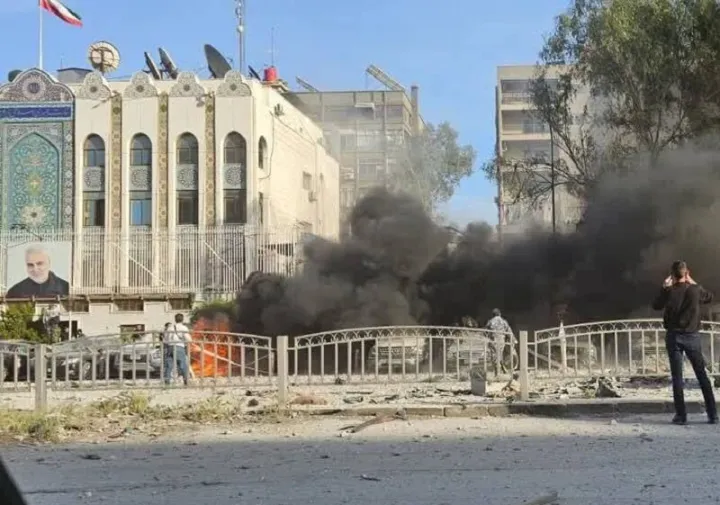
A United Nations-commissioned panel of human rights experts said Thursday there are reasonable grounds to believe the U.S. committed war crimes when launching strikes against Iran, including an attack on a school in the southern city of Inab.
The panel stated, “Following the United States and Israeli attacks on 28 February, the mission found reasonable grounds to believe the United States committed the war crime of launching indiscriminate attacks resulting in the loss of life or injury to civilians or damage to civilian objects.”
The fact-finding team’s determination carries significant legal and diplomatic weight, officially characterizing the conflict as involving war crimes. The panel claims the school building was the intended point of impact, not collateral damage from attacks on a military compound.
The strikes drew fierce backlash in the early days of the conflict, but the U.S. response has been muted. Meanwhile, Iran has escalated its rhetoric and actions, including firing the Qassem Basir missile at U.S. vessels and expanding its maritime exclusion zone across the Persian Gulf.
Iran’s Supreme National Security Council secretary, Mohsen Rezaei, warned that economic warfare would be met with a maritime exclusion zone, fundamentally recalibrating Iran’s operational posture toward U.S. warships and bases.
Oil prices continued to rise early Tuesday, rallying by 1.7% in Asian trade, amid concerns about additional disruptions to oil supply from the Middle East due to Iran-backed Houthi attacks on Saudi energy infrastructure.
A meeting scheduled to involve Iran and other Persian Gulf states in Oman was postponed, further complicating diplomatic efforts to resolve the conflict.
Despite Trump’s claims that the U.S. is winning the war against Iran, none of the administration’s goals have been fully achieved, and the conflict remains unresolved.
Iran’s President Masoud Pezeshkian reiterated that Iran is not at war with Saudi Arabia and remains open to negotiations with the U.S.
The U.S. military remains vigilant to threats from Iran, as evidenced by the Pentagon’s remarks on the 25th anniversary of the 9/11 attacks.
Background
Iran's President Masoud Pezeshkian stated that Iran is not at war with Saudi Arabia and reiterated that the country's demands for negotiations with the US remain unchanged.
What's confirmed
- A United Nations-commissioned panel of human rights experts said Thursday there are reasonable grounds to believe the U.S. committed war crimes when launching strikes against Iran, including an attack on a school in the southern city of Inab.
- The fact-finding team’s determination carries significant legal and diplomatic weight, officially characterizing the conflict as involving war crimes. The panel claims the school building was the intended point of impact, not collateral damage from attacks on a military compound.
- The strikes drew fierce backlash in the early days of the conflict, but the U.S. response has been muted. Meanwhile, Iran has escalated its rhetoric and actions, including firing the Qassem Basir missile at U.S. vessels and expanding its maritime exclusion zone across the Persian Gulf.
- Iran’s Supreme National Security Council secretary, Mohsen Rezaei, warned that economic warfare would be met with a maritime exclusion zone, fundamentally recalibrating Iran’s operational posture toward U.S. warships and bases.
- Oil prices continued to rise early Tuesday, rallying by 1.7% in Asian trade, amid concerns about additional disruptions to oil supply from the Middle East due to Iran-backed Houthi attacks on Saudi energy infrastructure.
- A meeting scheduled to involve Iran and other Persian Gulf states in Oman was postponed, further complicating diplomatic efforts to resolve the conflict.
- Despite Trump’s claims that the U.S. is winning the war against Iran, none of the administration’s goals have been fully achieved, and the conflict remains unresolved.
- Iran’s President Masoud Pezeshkian reiterated that Iran is not at war with Saudi Arabia and remains open to negotiations with the U.S.
- The U.S. military remains vigilant to threats from Iran, as evidenced by the Pentagon’s remarks on the 25th anniversary of the 9/11 attacks.
What's still developing
- The market is now fully braced for Brent crude to trade above $100/barrel on a sustained basis." "Saudi Arabia has halted operations at several southern energy facilities after attacks triggered fires and caused injuries, escalating risks to regional oil supply.
- The strikes follow repeated Houthi attacks on Saudi energy infrastructure, including the 400,000 barrel/day Jazan refinery, which had already been offline since July." "The disruption comes as shipments through the Strait of Hormuz remain constrained by the U.S.-Iranian conflict, increasing the risk of simultaneous supply losses across key Middle East export routes.
- LNG Tankers Push Through Hormuz Again as Qatar, UAE Fight Supply Crunch What I Cover Tsvetana Paraskova is an energy and commodities journalist who has contributed to Oilprice.com for nearly a decade, covering global energy markets, commodities,… Oil prices continued to rise early on Tuesday, rallying by 1.7% in Asian trade, as the Iran-backed Houthis in Yemen are expanding their control over the west coast along the Red Sea, while the attacks on a key Saudi onshore oil pipeline triggered concerns about additional disruptions to already severely disrupted oil supply from the Middle East.
- Iran-backed Houthi militia attacked several cities in Saudi Arabia, wounding 73 people, a spokesperson for the Saudi-led coalition in Yemen said on Tuesday, a further sign that the conflict risks spreading into a wider regional war as diplomatic progress stalls.
- The new restricted zone would begin from where the U.S. blockade of Iran begins and extend into areas of the Gulf, Mohsen Rezaei, the secretary of Iran’s Supreme National Security Council, told state television on Sunday, adding that any vessel entering the area would be placed on an Iranian sanctions list.
- Rezaei was likely referring to the Qassem Basir ballistic missile that Iranian media reported was fired at U.S. warships near the Strait of Hormuz. The U.S. military said its warships evaded any missile attacks.
- The Fars news agency reported its first combat use came in June 2025 against Israel.
- Some analysts conjecture Iran’s leverage of the Strait of Hormuz may be dwindling while harsh new U.S. economic sanctions are becoming increasingly difficult for Iran to withstand.
- “Oil prices will drop precipitously, like everything else is dropping (but more!), when we WIN the war with Iran. Three Dollars a gallon, but ultimately, below Two Dollars a gallon. It will all happen quickly, and Iran will never have a Nuclear Weapon,” Trump said on social media.
- Trump has yet to achieve the aims he set out when he launched “Operation Epic Fury” in February: to end Iran’s nuclear programme, halt its ability to attack its neighbours and create conditions for Iranians to topple their leadership.
- Iran and the US agreed to a ceasefire in April and subsequently signed a memorandum of understanding in June aimed at ending their military conflict and reaching a lasting peace agreement. The deal, however, collapsed last month with Tehran and Washington exchanging attacks for nearly two weeks before US President Donald Trump abruptly halted the bombardment amid reports of talks to resolve the conflict. READ: Iran security chief says Strait of Hormuz to remain closed until US meets Tehran’s demands This site is protected by reCAPTCHA and the Google Privacy Policy and Terms of Service apply.
- Billboards featuring the late former Iranian leader Ali Khamenei and his son Mojtaba Khamenei, who were killed in U.S.