
Home · Science · Sep 21 archive
NASA Rover Finds Multiple Water Episodes on Mars
Developing
In Short: NASA's Perseverance rover reached the inner edge of Mars' Jezero Crater in September 2023, where it encountered a geologic area called the 'Margin Unit,' stretching along the ancient Martian lake's shoreline.
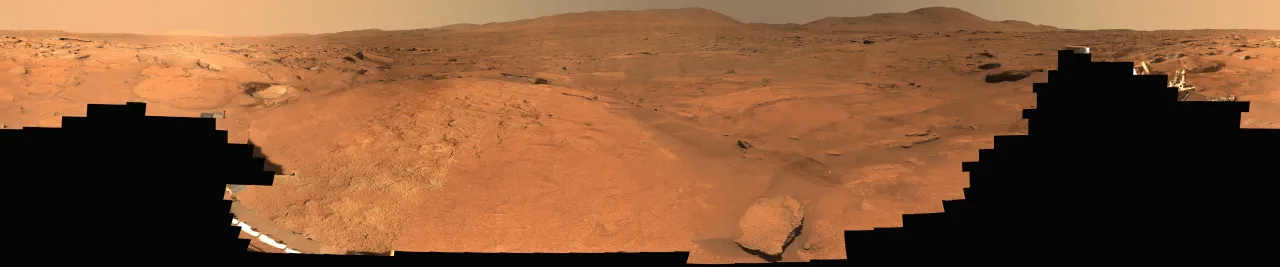
Mission scientists were surprised to find that the rocks in this area showed signs of having interacted with water on at least three separate occasions, altering their chemistry and appearance.
The rocks included coarse-grained and crystalline formations, indicative of the mineral olivine, with little evidence of water interaction, as well as sedimentary rocks composed of clay and silt.
Planetary scientist Eleni Ravanis noted that some Margin Unit rocks also contain silica, a finding that adds to the complexity of the water history on Mars.
The findings suggest that Mars had a more complex and varied water history than previously thought, with water playing a significant role in shaping the planet's geology.
NASA scientist Bedford commented, 'Mars constantly throws surprises at you,' highlighting the unexpected nature of these discoveries.
What this adds
The exact timing and duration of these water episodes remain unclear, and further analysis is needed to fully understand their implications for Mars' geological and potential biological history.
What's still developing
- When NASA’s Perseverance rover reached the inner edge of Mars’ Jezero Crater in September 2023, mission scientists were surprised by what they found.
- Called the “Margin Unit,” the geologic area stretches along the shoreline of an ancient Martian lake, so they expected sedimentary rocks, which would have formed as layers of sand piled on top of each other over millennia.
- The scientists were especially intrigued by strong signals of carbonate minerals detected by Mars orbiters.
- At higher elevations, it found rock that was coarse-grained and crystalline — hallmarks of the mineral olivine — with almost no sign that water had ever touched it.
- “If there is one thing I have learned after 10 years working with Mars rovers, it is that Mars constantly throws surprises at you,” said Bedford.
- Igneous rocks are excellent record-keepers, particularly because mineral crystals within them preserve details about the precise moment they formed.
- In this case, they preserved an astonishingly complex record of water activity on early Mars.