
Home · Business · Sep 21 archive
Flights at major US airports delayed after cable cut by construction workers
Confirmed
In Short: The Federal Aviation Administration (FAA) halted flights at major airports in the Northeast on Monday after construction workers accidentally cut a fiber-optic cable, causing widespread delays and cancellations.
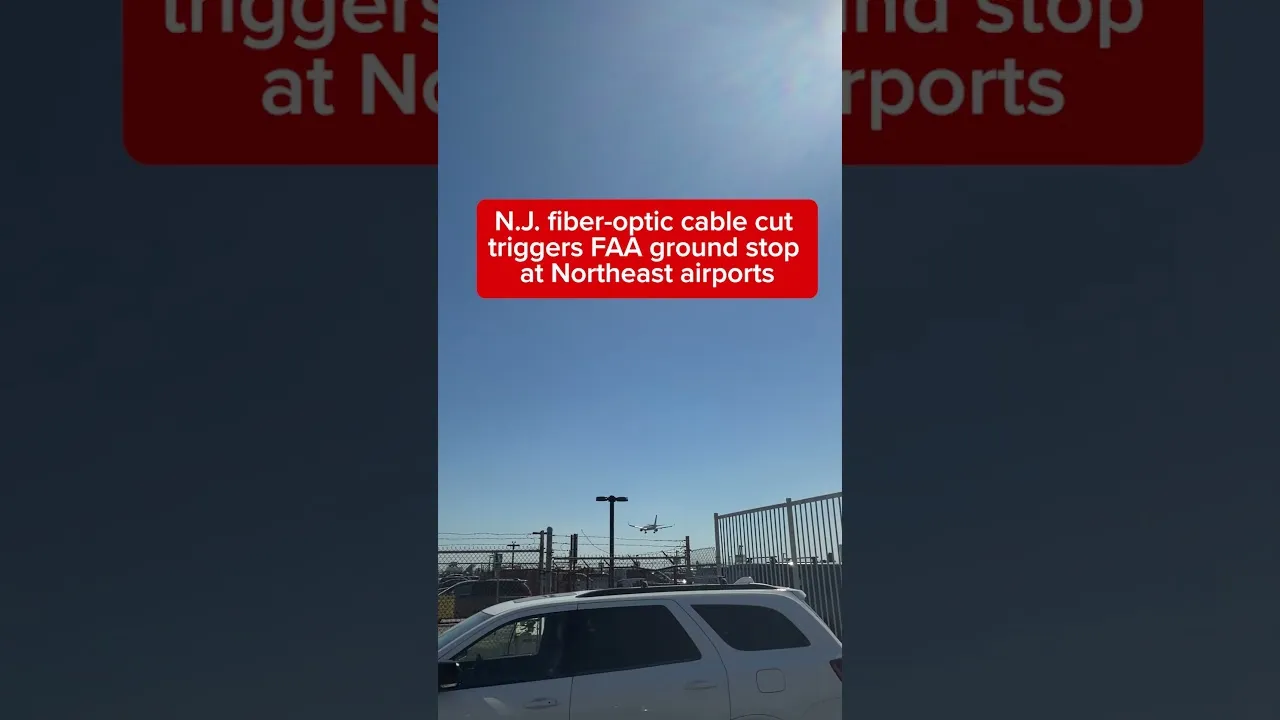
According to US Transportation Secretary Sean Duffy, an Amtrak construction crew cut into a fiber line in New Jersey, leading to a telecommunications outage that forced the FAA to pause flights in the busy northeast US airspace.
Bedford explained that when controllers switched to a backup system, they discovered a broken fiber-optic cable. The severed cable was actually a backup network, and the error was only discovered after the primary circuit failed.
At Newark Liberty International Airport alone, more than 1,000 flights had been delayed or cancelled. Throughout the US, there were nearly 4,000 delayed flights and 500 cancelled.
United Airlines issued a statement saying that flights destined for Newark had either been held at their departure airport or diverted to alternative airports. The airline said it would work to safely get customers to their destinations and had issued a travel waiver to give customers flexibility to manage their travel plans.
Verizon, which owns the cable, said it was working to repair it as quickly as possible and that it bore no responsibility for the incident. An NJ Transit spokesman said the cable served as a backup to a primary circuit system that failed.
The severed cable appeared to have knocked out all communications between New York’s metro area air traffic control and its counterpart in Philadelphia, which controls much of northern New Jersey’s airspace.
All flights into and out of the region were grounded for a time, though flights had resumed with heavy delays at LaGuardia Airport and Philadelphia International Airport, though flights were again stopped at LaGuardia early Monday evening.
What's confirmed
- “An Amtrak construction crew accidentally cut into a fiber line in New Jersey which caused a telecom outage and forced FAA to pause flights in the Northeast,” Duffy said in a post on X.
- “Flights that had been destined for Newark have either been held at their departure airport or diverted to alternative airports. Once the FAA outage is resolved, we will work to safely get our customers to their destinations and have issued a travel waiver to give our customers flexibility to manage their travel plans,” a representative for United Airlines said in a statement provided to Al Jazeera.
What's still developing
- The flights were halted on the day that 130 world leaders and dozens of ministers were arriving in New York for the annual high-level meeting of the United Nations General Assembly.
- The United States Federal Aviation Administration (FAA) has halted flights to several busy East Coast airports amid an equipment outage, snarling more than 1,000 flights.
- This "caused a telecom outage" which forced the Federal Aviation Administration (FAA) to ground flights, Duffy posted on X.
- The major east coast disruption comes ahead of the UN General Assembly (UNGA) in New York City on Tuesday, which is expected to be attended by scores of world leaders arriving into New York-area airports.
- The transportation secretary spoke to FOX Business' Connor Hansen about what caused the Northeast airport disruptions and why he says similar outages could continue without major infrastructure upgrades.
- As previously reported by the News, flights taking off and landing at Newark and Teterboro are handled by the air traffic controllers at Philadelphia’s “terminal radar approach control” — or TRACON — who are responsible for the skies over North Jersey.
- The radar information they use to guide those flights, however, is routed through New York TRACON — which handles takeoff and landing control for LaGuardia and Kennedy.
- The FAA told Newsweek that the technology failure, involving a fiberoptic cable, was affecting flights across the Northeast United States.
- "When the controllers lose access to essential communication and surveillance systems, the FAA may need to temporarily halt flights in the affected airspace until the systems are restored. This ensures passenger and aircraft safety, which is always the primary goal of the FAA," Rich Davis, Senior Security Advisor at International SOS, told Newsweek.