
Home · Business · Sep 20 archive
India Faces New Fertiliser Crisis Due to Energy Attacks
Confirmed
In Short: India is grappling with a new fertiliser crisis due to soaring sulphur prices, which are linked to escalating conflicts in West Asia and the Russia-Ukraine war.
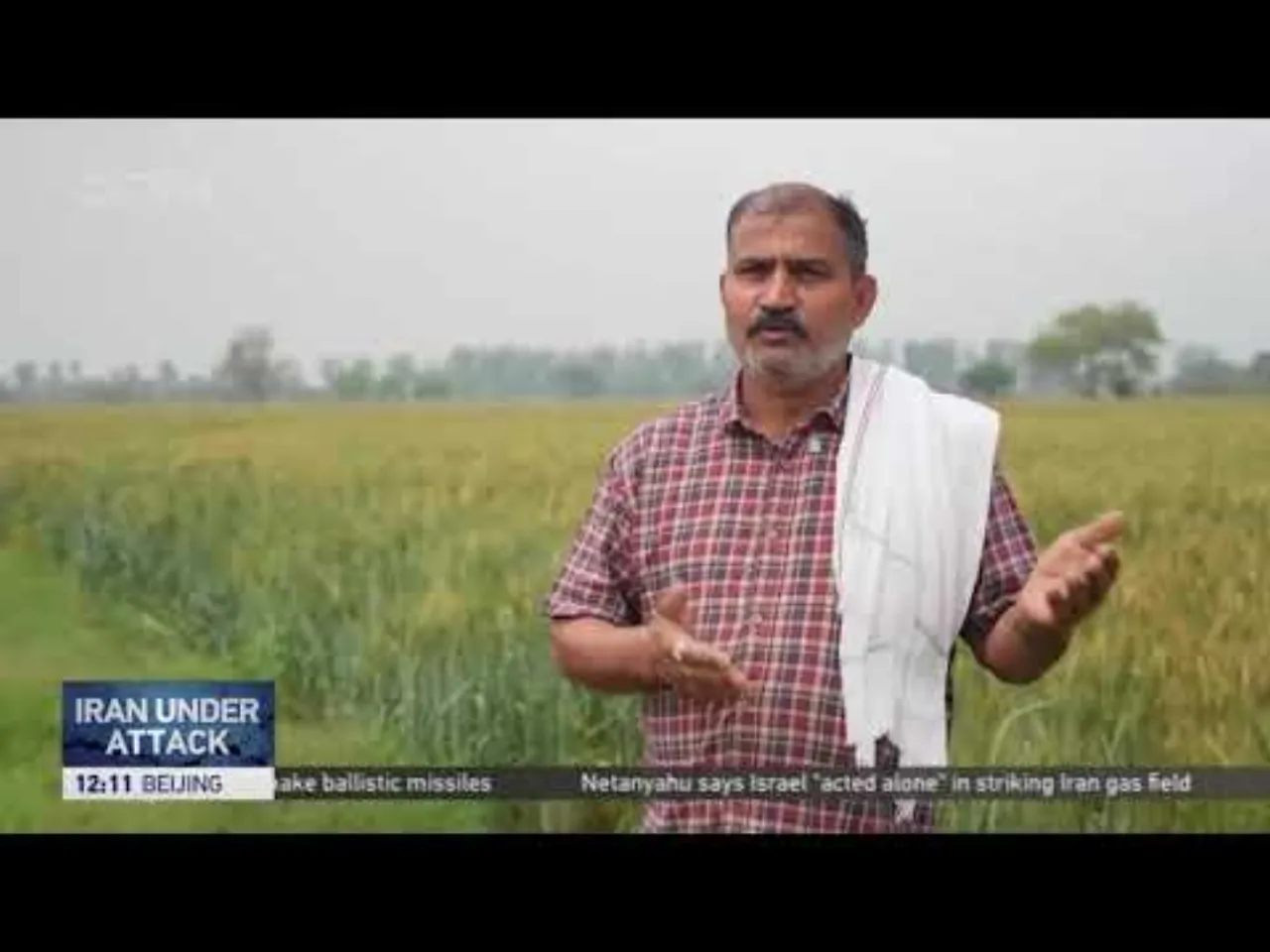
India is grappling with a new fertiliser crisis due to soaring sulphur prices, which are linked to escalating conflicts in West Asia and the Russia-Ukraine war.
Since the beginning of the year, the landed prices of sulphur imported into India have doubled to $1,050-1,100 per tonne, impacting the availability of key fertilisers such as di-ammonium phosphate (DAP) and single super phosphate (SSP).
According to an industry official quoted by The Indian Express, rock phosphate, the primary source of phosphorus, cannot be used for fertiliser without reacting with sulphuric acid. This means that without sulphur and sulphuric acid, the production of DAP, SSP, and other complex fertilisers is impossible.
These attacks have disrupted the supply of sulphur, which is crucial for the production of fertilisers. Most of the world’s sulphur is converted into sulphuric acid, a core chemical for manufacturing fertilisers containing phosphorous.
India’s yearly sulphur consumption is 3.8-3.9 million tonnes, with the fertiliser industry’s share at 2-2.1 million tonnes.
India has managed to stave off a potential food crisis by importing enough urea and liquefied natural gas to enable domestic production of high-nitrogen fertiliser.
During a joint press conference with Sikorski, Jaishankar discussed supply chain resilience and food, fuel, and fertiliser security.
Jaishankar emphasized that the war would not end because countries decided to buy or not buy oil, alumina, fertilisers, metals, or minerals. He stressed that the solution lies in diplomacy, dialogue, and negotiation.
India and Poland have a longstanding strategic partnership, and Jaishankar called on Polish President Karol Nawrocki to discuss bilateral relations and the Ukraine conflict.
India remains committed to finding ways to mitigate or cease the conflict, emphasizing the need for an end to endless wars.
Background
West Asia is the westernmost region of Asia. As defined by most academics, UN bodies and other institutions, the subregion consists of Anatolia, the Arabian Peninsula, Iran, Mesopotamia, the Armenian highlands, the Levant, the Sinai Peninsula and the South Caucasus.
What's confirmed
- Speaking at a joint press conference with Sikorski, Jaishankar said the two sides discussed a range of global challenges, including supply chain resilience and food, fuel and fertiliser security.
- A day earlier, during his visit to Ukraine, Jaishankar had said India was prepared to provide “any help in any manner” that could contribute to ending the Russia-Ukraine war.
- “Each of us must do what we can in whichever way we believe could be most effective and support the efforts of others to bring this conflict to an end,” he said, adding that this remained India's “strong conviction”.
What's still developing
- The real problems started with a substantial increase in Ukraine’s targeted strikes on Russian oil refineries from around August 2025.
- “Iffco, Coromandel and Paradeep Phosphates have secured their supplies of rock phosphate through joint ventures or strategic tie-ups in Jordan, Senegal and Morocco. But rock phosphate cannot be used for making fertiliser without sulphur,” the official noted.
- The main reason: Ukrainian long-range drone and missile attacks on Russian oil refineries and gas complexes and Iran, likewise, targeting the energy infrastructure of Saudi Aramco, QatarEnergy and Abu Dhabi National Oil Company.
- The rest comes as a byproduct of petroleum oil refining (56%) and natural gas processing (34%).
- India has remained in continuous contact with both Russia and Ukraine and is exploring possible ideas that could contribute to reducing tensions and eventually ending the ongoing conflict, External Affairs Minister S Jaishankar said on Friday.
- Responding to a question on India's role in efforts to resolve the conflict, he said New Delhi had maintained communication with both Moscow and Kyiv.
- India, he said, was examining whether ideas and suggestions could be developed that might contribute to mitigating the conflict and, ideally, bringing the war to an end.
- Zelenskyy said peace was necessary and noted that ending the war was India's clear position.
- Reiterating India's position in Warsaw, Jaishankar said the international community should work towards ending wars rather than allowing them to continue indefinitely.
- On India's continued purchase of Russian oil, Jaishankar argued that trade should not be viewed as the means to resolve the conflict.
- Following his meeting with Jaishankar, Zelenskyy thanked India for its stated commitment to ending the conflict.
- India has been in continuous touch with both Ukraine and Russia and is trying to see if there are ideas and suggestions that will contribute to the mitigation or the cessation of the conflict, External Affairs Minister (EAM) S Jaishankar said on Friday.