
Home · Politics · Sep 19 archive
Obama's Brother-in-Law Rejects Civil Rights Claims Against College Sports Bill
Developing
In Short: Former President Barack Obama's brother-in-law, Craig Robinson, who is the executive director of the National Association of Basketball Coaches, has rejected claims that a bipartisan college sports bill is a civil rights issue.
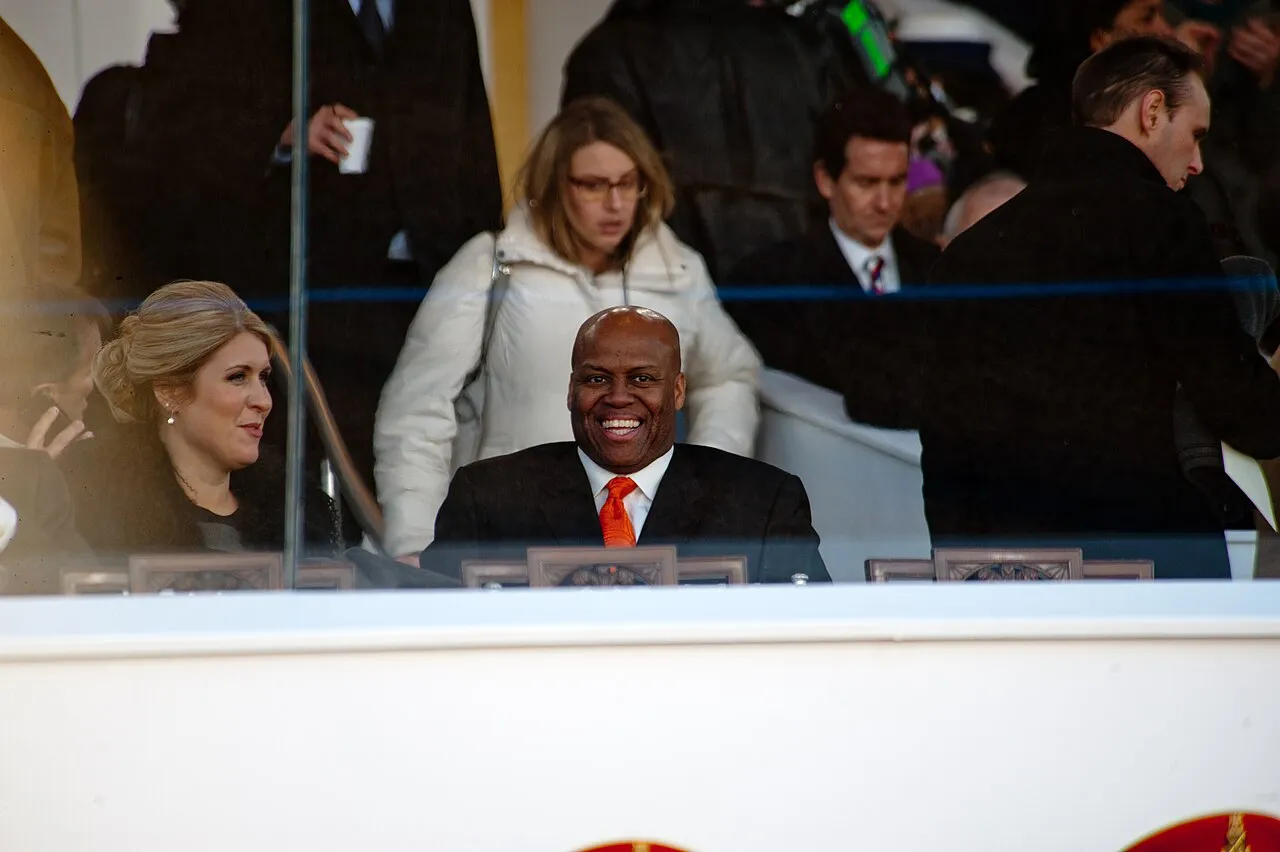
Opponents of the bill argue it would disproportionately affect Black student-athletes and undermine their newfound agency in decision-making through name, image, and likeness (NIL) rights.
NAACP President Derrick Johnson, the Congressional Black Caucus, and Sen. Chris Murphy, D-Conn., have raised concerns that the bill would put decision-making power back into the hands of predominantly White coaches and college executives.
Robinson, however, contends that the bill does not disenfranchise Black athletes and is aimed at addressing the current chaos in college athletics, such as unlimited transfers and declining graduation rates.
Sen. Eric Schmitt, R-Mo., one of the bill's co-leads, acknowledged that the bill does not address redistricting issues but emphasized its focus on regulating college sports.
Critics argue that the bill's passage would prioritize commercial interests over academic and moral development, viewing sports as a distraction from the university's core mission.
During a fundraiser, former President Obama warned Democrats about the rapid development of AI technology, urging them to focus on a comprehensive AI agenda to ensure safety and prevent corruption.
Obama's remarks reflect a shift in his stance on technology, moving away from the tech-friendly approach of his presidency and towards a more cautious regulatory stance.
The bill's supporters and opponents are locked in a debate over its impact on student-athletes and the broader implications for college sports and academic integrity.
What this adds
The bill's supporters argue it will address current issues in college sports, while opponents fear it will undermine the progress made by Black athletes in NIL rights.
The debate over the bill highlights the tension between commercial interests and academic integrity in college sports.
What's still developing
- Opponents of the bipartisan college sports bill argue that the legislation is a civil rights issue, but former President Barack Obama’s brother-in-law and others say that position is ‘misguided.’ While a bill to add a new swath of regulations to college sports is generating a swell of bipartisan support, some opponents are suggesting that the bill itself is racist.
- The Congressional Black Caucus has argued against the bill for months and charged that its members would not support the legislation after the Supreme Court’s decision on the Voting Rights Act earlier this year.
- "We're just trying to address the chaos that exists right now in college athletics, where 27-year-olds are playing against 17-year-olds, unlimited transfers, graduation rates are plummeting." Alex Miller is a writer for Fox News Digital covering the U.S.
- Robinson was one of several former coaches who made the trip to Washington, D.C., this week to promote and support the bill.
- "Honestly, some of those concerns initially were over redistricting, and, you know, I'm not solving that problem with this bill," Sen. Eric Schmitt, R-Mo., one of the co-leads of the bill, told Fox News Digital.
- During the same period, the university announced the construction of a brand-new football stadium that would be the most expensive ever built for a college team.
- We have a start-up incubator that has raised more than $1.6 billion in capital.
- But as I considered the mission of our university—helping students decide what they want to do after college, cultivating the knowledge and skills they need to achieve their goals, supporting faculty research, and raising capital to ensure that we can continue to do that work—I became less certain that oboists are more desirable, and more qualified for admission, than athletes.
- Critics are right to lament the increased professionalization of college sports, but they also believe that most student athletes care more about their sport than their classes.
- Many academics see sports as frivolous and corrupting, as a distraction from the higher purpose of moral and intellectual formation—and as the most visible sign of the commercialization and corporatization of the modern university.
- “This is something that is moving very fast in private hands, and if we don’t get on top of it, I think can be dangerous,” Obama said at the fundraiser Thursday, according to a partial transcript of his remarks provided by his office.
- Obama said AI development would be “one of my central agendas” if he were running for president, throwing down a gauntlet as the shadow 2028 Democratic primary debate responded to the AI leaders’ calls.