
Home · Science · Sep 18 archive
Lake Powell Hits Record-Low Water Levels
Confirmed
In Short: Lake Powell has reached a historic low, dropping below its previous record set in 2022, due to record-breaking heat and sparse precipitation.
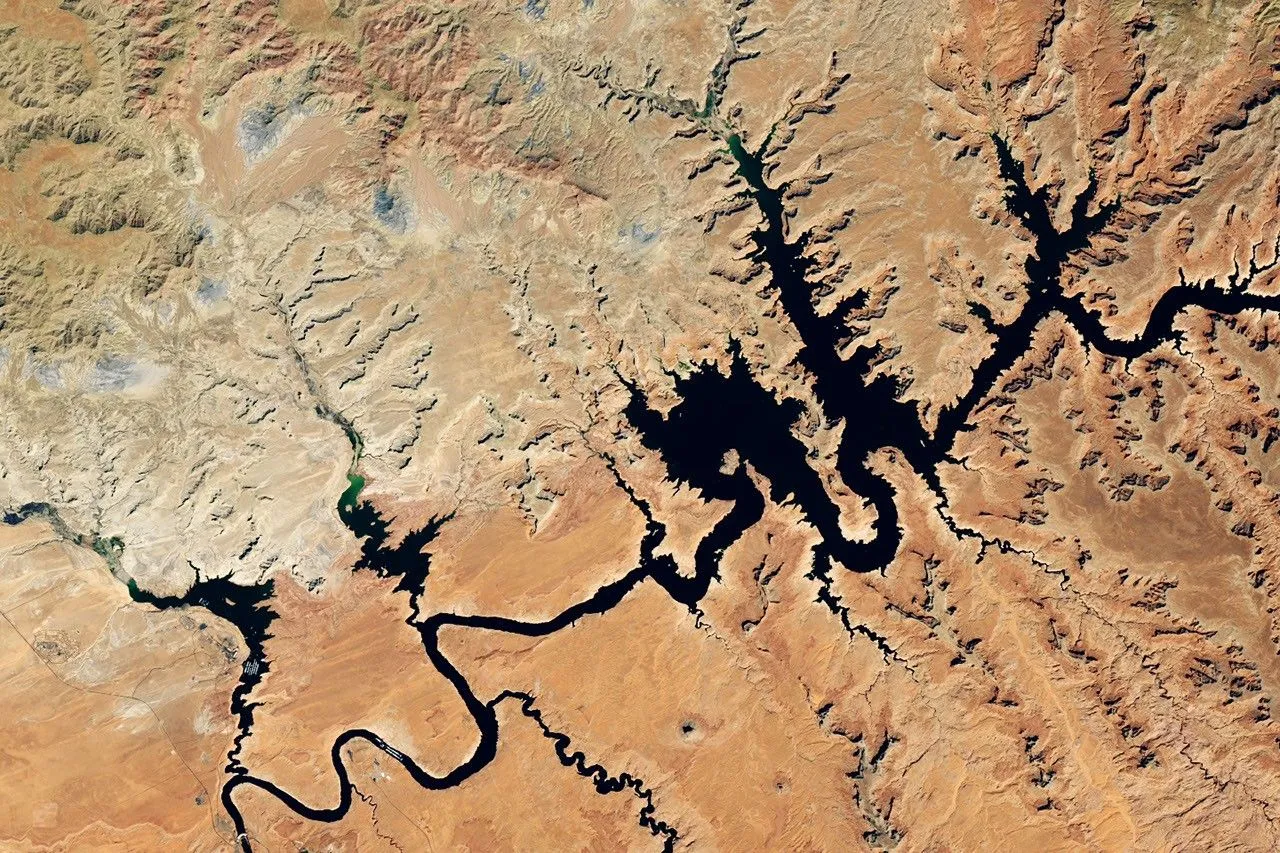
Lake Powell, the nation's largest reservoir by storage capacity, has hit a record-low water level, dropping below the previous record set in 2022. As of September 16, 2026, Lake Mead stood at 1,038.50 feet above sea level, with projections showing it could drop even lower by year-end.
The relentless heat and sparse precipitation following a meager winter snowpack have put significant pressure on lakes and reservoirs across the western United States. Lake Mead, located on the Nevada-Arizona border southeast of Las Vegas, is also experiencing record-low levels.
NASA satellite images comparing September 1, 2017, to September 10, 2026, show the stark contrast in water levels. The 2017 image represents one of the highest water levels of the past decade, while the 2026 image highlights the dramatic drop.
The Colorado River, which feeds both Lake Powell and Lake Mead, has been severely impacted by the drought. The effects of the meager mountain snowpack in the Upper Colorado Basin in winter 2025-2026 have made their way downstream, contributing to the current crisis.
While the immediate concern is the water levels in Lake Powell and Lake Mead, the broader impact of the drought extends to other water bodies and ecosystems. The Great Salt Lake in Utah, for instance, has been experiencing increasingly critical low water levels for several years, prompting conservation efforts by local organizations and religious groups.
What's confirmed
- FILE - Boats sit on dry ground as water levels have dropped on the Danube River in Petrovaradin, Serbia, Aug.
What's still developing
- A butte illuminated by the setting sun is reflected in a remnant of water where land and geologic formations that have been underwater since the 1960s, when Lake Powell was created, are reemerging for the first time while record low water levels continue to drop on September 3, 2026 near Page, Arizona.
- The lake’s projected end-of-year elevation is even lower: 1,034.74 feet, according to the Bureau of Reclamation’s latest 24-month study.
- These images show a portion of Lake Powell just above Glen Canyon Dam as observed by the OLI (Operational Land Imager) on the NASA-USGS Landsat 8 satellite on September 1, 2017 (left), and September 10, 2026 (right).
- USBR began releasing water from Flaming Gorge Reservoir in northern Utah and southern Wyoming into Lake Powell.
- Relentless rains are threatening a lake in Kenya's Great Rift Valley that has become a key hub in the global… Drought in the Rio Grande basin contributed to New Mexico’s largest reservoir dwindling to its lowest level in decades.
- About a month prior, it had dipped below the previous record-low level of 3,519.92 feet, set on April 13, 2023, and continued to tick downward in early September.
- "After a slight drop in the first quarter of 2026, the average 401(k) and 403(b) account balances rebounded to record levels in Q2 2026," the report noted.
- Since 2015, The Church of Jesus Christ of Latter-day Saints has undertaken substantial conservation efforts to help address conditions in the Great Salt Lake Basin and beyond.