
Home · Science · Sep 18 archive
Company Aims to Beam Solar Power From Space by 2028
Confirmed
In Short: A company plans to beam solar power from space to the grid as early as January 2028, aiming to address energy intermittency.
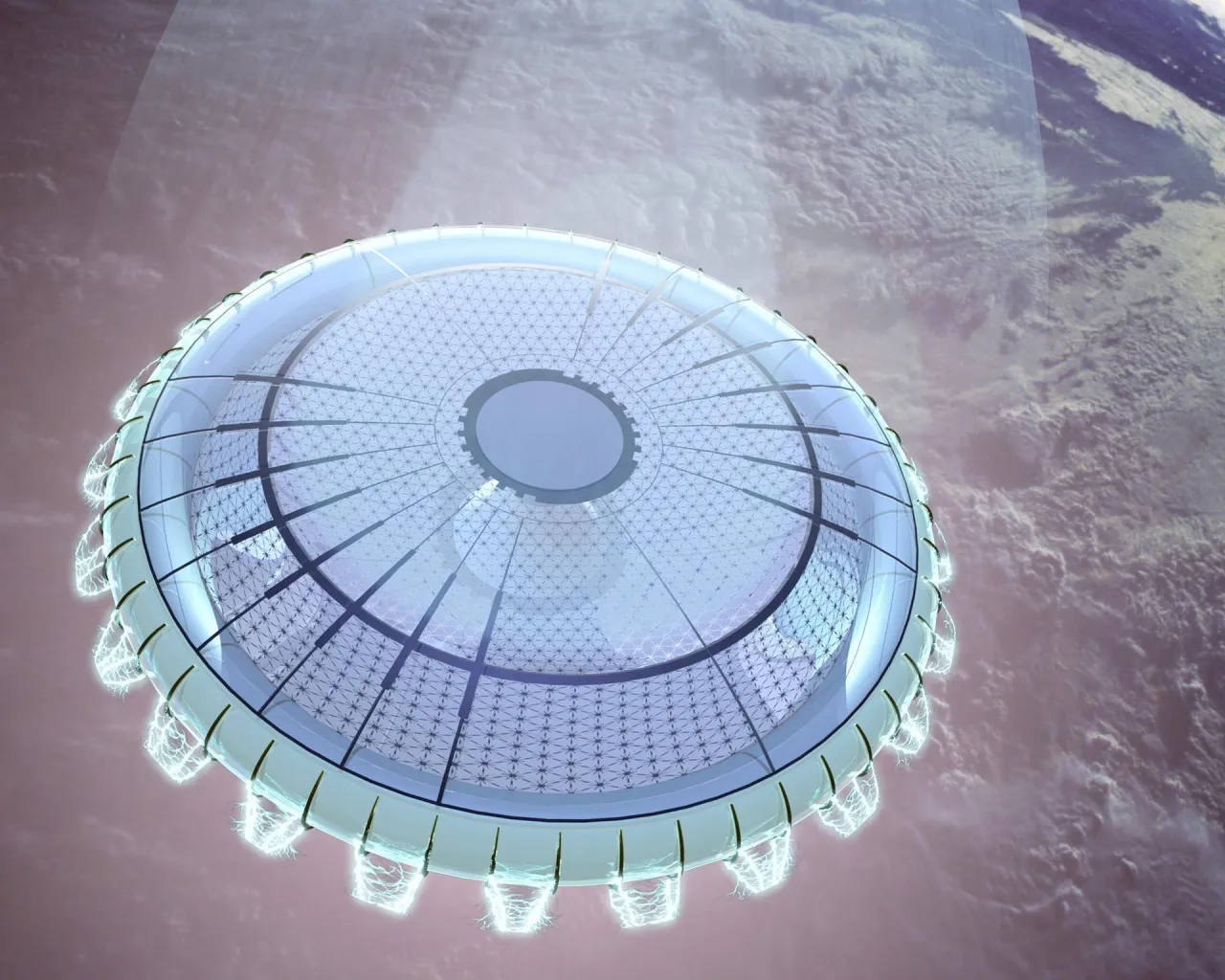
A company is aiming to beam solar power from space to the grid as early as January 2028, addressing the intermittency issues associated with traditional solar energy.
The company, which is setting up operations in a state struggling with energy price hikes driven by sprawling data center campuses, believes it can provide utility-scale power through this technology.
Co-CEO Darko Filipi recently told the Washington Post, 'We really believe that we are able to provide utility-scale power with this technology.
The energy captured by the solar satellites would be beamed back down to Earth through powerful lasers or microwave beams, depending on the technology used.
Space-based solar is not a new idea; scientists have been working on developing a logistically and commercially feasible model for decades.
The idea is to put solar panels into orbit, where they can access sunlight 24 hours a day, thereby solving the biggest problem associated with solar energy – its intermittency.
Solar power has undergone a staggering price transformation over the past 25 years, driven largely by manufacturing scale, technological improvements, and China's enormous expansion of solar production.
Wood Mackenzie estimates that China's solar manufacturing capacity has reached roughly 1.36 terawatts, creating an enormous supply base for panels deployed worldwide.
Global solar generation continues to expand rapidly, with the Energy Institute reporting that solar generation grew by 30% worldwide in 2025.
Renewables were the largest contributor to growth in total energy supply during the year, with solar accounting for 71% of the increase in renewable energy.
Businesses have strong incentives to install panels because their electricity consumption often peaks during daylight hours, when solar production is highest.
What this adds
The company's ambitious timeline of providing space-based solar power by 2028 is a significant step forward in the development of this technology.
While the concept of space-based solar power is not new, the company's specific plans and timeline add new urgency to the development of this technology.
Background
A company believes it can beam solar power from space to the grid as early as January 2028, addressing energy intermittency.
What's confirmed
- A company is aiming to beam solar power from space to the grid as early as January 2028, addressing the intermittency issues associated with traditional solar energy.
- The company, which is setting up operations in a state struggling with energy price hikes driven by sprawling data center campuses, believes it can provide utility-scale power through this technology.
- Co-CEO Darko Filipi recently told the Washington Post, 'We really believe that we are able to provide utility-scale power with this technology.
- The energy captured by the solar satellites would be beamed back down to Earth through powerful lasers or microwave beams, depending on the technology used.
- Space-based solar is not a new idea; scientists have been working on developing a logistically and commercially feasible model for decades.
- The idea is to put solar panels into orbit, where they can access sunlight 24 hours a day, thereby solving the biggest problem associated with solar energy – its intermittency.
- Solar power has undergone a staggering price transformation over the past 25 years, driven largely by manufacturing scale, technological improvements, and China's enormous expansion of solar production.
- Wood Mackenzie estimates that China's solar manufacturing capacity has reached roughly 1.36 terawatts, creating an enormous supply base for panels deployed worldwide.
- Global solar generation continues to expand rapidly, with the Energy Institute reporting that solar generation grew by 30% worldwide in 2025.
- Renewables were the largest contributor to growth in total energy supply during the year, with solar accounting for 71% of the increase in renewable energy.
- Businesses have strong incentives to install panels because their electricity consumption often peaks during daylight hours, when solar production is highest.
What's still developing
- Macron Calls for Another Emergency Oil Release as Europe Loses Supply Haley Zaremba is an energy journalist and researcher with more than a decade of professional experience covering global energy systems, land and natural resources, and… The artificial intelligence energy crisis is catalyzing the development pipeline for space-based solar energy.
- As the world rushes to build up more energy production capacity in a scramble to keep up with skyrocketing demand from data center hyperscalers, the public and private sectors alike are increasingly adopting an all-of-the-above approach to energy investing, including next-gen and emerging technologies like putting solar panels into space, where they can access sunlight 24 hours a day.
- That does not mean solar is becoming less useful.
- The collapse has helped turn rooftop and commercial solar from a niche technology into a mainstream source of electricity.
- The result is visible far beyond traditional solar markets.
- In Pakistan, for example, Bestway Cement's plant in Chakwal already gets more than a quarter of its electricity from a 26MW solar installation and plans to add another 6.34MW.
- Rooftop solar is also spreading rapidly among households.
- India has installed panels on more than five million homes through its national rooftop-solar subsidy program, while rooftop capacity in the Philippines has reportedly nearly doubled over 12 months.
- During the mission's fourth flyby in September 2024, this instrument detected how particles from a solar eruption penetrated Mercury's magnetic field and impacted the surface.
- In a new study published in Nature Astronomy, a team led by researchers from the University of Helsinki showed how these results could inform predictions of space weather.
- Said co-author Rami Vainio, the co-Principal Investigator of SIXS and a professor of space physics at the University of Turku: Mercury's magnetic field is weaker than Earth's, and its magnetosphere is much smaller than Earth's.
- Matt Williams is a space journalist, science communicator, and author with several published titles and studies.
Sources
- Crude Oil Prices Today | OilPrice.comlink
- Universe Todaylink
- Techlink
- BBClink
- Sciencedailylink
- Techspotlink
- Oilpricelink
- Scitechdailylink
- Scientific Americanlink
- Ipmnewsroomlink
- The Indian Expresslink
- Iflsciencelink
- Zmesciencelink
- Notebookchecklink
- WarpBeat — background on Space-Based Solar Power Could Reach Grid by 2028 link