
Home · Science · Sep 15 archive
Venus Moon Would Have Been Doomed From The Start, Says New Paper
Confirmed
In Short: In a groundbreaking study, researchers at the University of California, Riverside, have shown that a moon around Venus would have faced certain doom from the start due to the planet's gravitational pull.
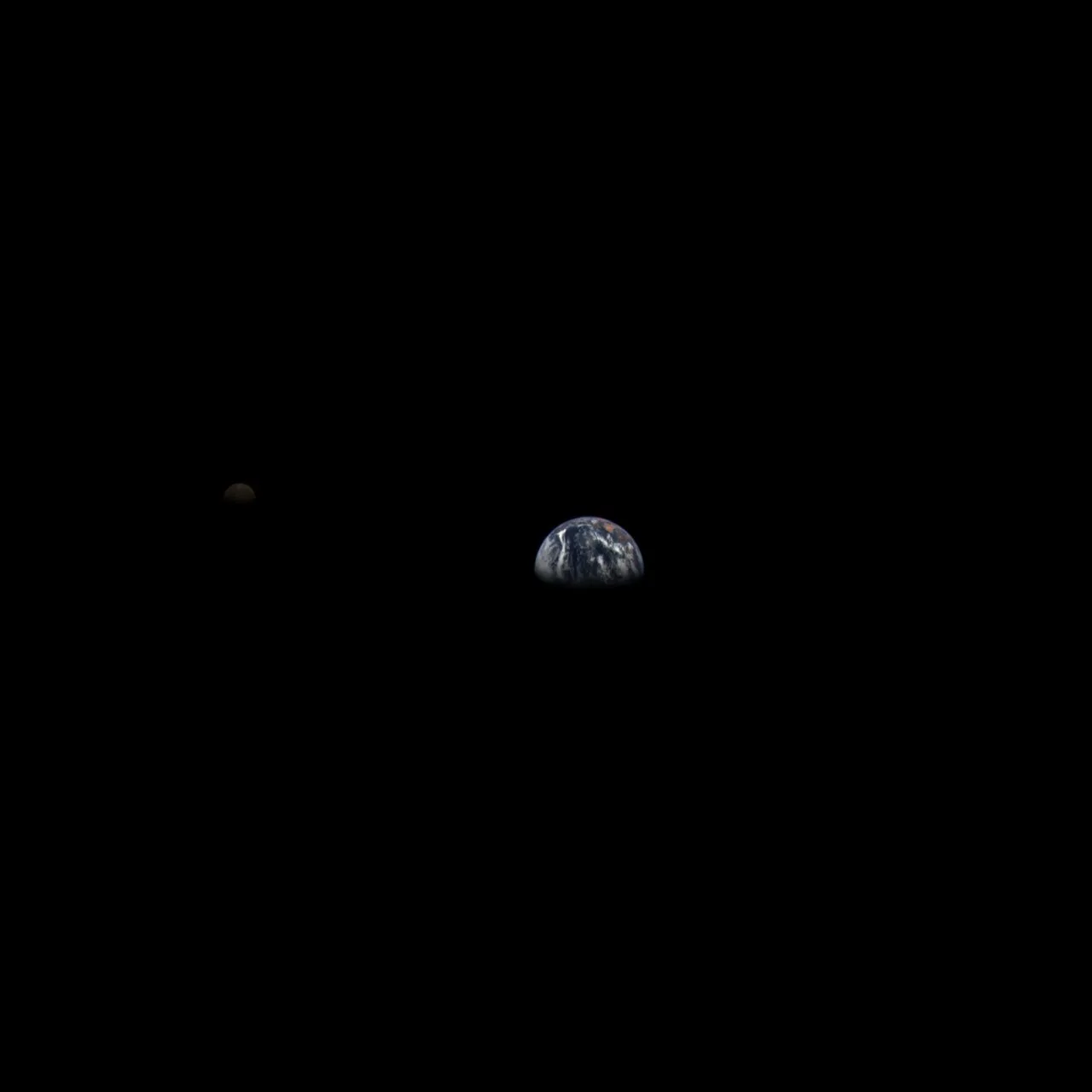
In a groundbreaking study, researchers at the University of California, Riverside, have shown that a moon around Venus would have faced certain doom from the start due to the planet's gravitational pull. According to Stephen Kane, the lead author of the paper, 'In most plausible scenarios, any moon Venus once had would spiral inward and be torn apart by the planet's own gravity.
The team used a model that tracks the gravitational tides between Venus, a hypothetical moon, and the Sun over billions of years. They found that a moon could only survive under a narrow set of conditions: a fast-spinning early Venus and a moon no heavier than Earth's. However, the Roche limit, a critical distance within which a celestial body can be torn apart by another's gravity, poses a significant challenge.
This finding challenges previous theories that suggested Venus's lack of a moon might be evidence of some exotic catastrophe. Kane explains, 'The so-called Roche limit is a Venus moon deal breaker.' The study suggests that Venus's current state is a natural outcome of ordinary tidal physics rather than the result of a catastrophic event.
The implications of this research extend beyond Venus. It provides insights into the formation and evolution of moons in our solar system and beyond. Dr. Pinault, a co-author of the study, notes, 'The Moon has been quietly accumulating material from space for billions of years, much of it likely billions of years older than the Moon itself.
What's confirmed
- In a groundbreaking study, researchers at the University of California, Riverside, have shown that a moon around Venus would have faced certain doom from the start due to the planet's gravitational pull. According to Stephen Kane, the lead author of the paper, 'In most plausible scenarios, any moon Venus once had would spiral inward and be torn apart by the planet's own gravity.
- The team used a model that tracks the gravitational tides between Venus, a hypothetical moon, and the Sun over billions of years. They found that a moon could only survive under a narrow set of conditions: a fast-spinning early Venus and a moon no heavier than Earth's. However, the Roche limit, a critical distance within which a celestial body can be torn apart by another's gravity, poses a significant challenge.
- This finding challenges previous theories that suggested Venus's lack of a moon might be evidence of some exotic catastrophe. Kane explains, 'The so-called Roche limit is a Venus moon deal breaker.' The study suggests that Venus's current state is a natural outcome of ordinary tidal physics rather than the result of a catastrophic event.
- The implications of this research extend beyond Venus. It provides insights into the formation and evolution of moons in our solar system and beyond. Dr. Pinault, a co-author of the study, notes, 'The Moon has been quietly accumulating material from space for billions of years, much of it likely billions of years older than the Moon itself.
What's still developing
- The European Space Agency is moving “full steam ahead” with development of a robotic mission to Venus after NASA officials determined they were unlikely to fulfill a commitment to provide a US-built radar instrument for the spacecraft, the mission’s project scientist said.
- That saved several key science missions from the chopping block, including one of NASA’s own Venus missions, called DAVINCI, designed to send an entry probe into the planet’s crushing atmosphere.
- The European orbiter, named Envision, will map the Venusian surface at 10 times higher resolution than the last radar mission sent to Venus by NASA in the 1990s.
- Radar is the most effective way to penetrate the clouds of Venus to reveal the terrain below, and scientists will use Envision to look for signs of active volcanism.
- NASA agreed to supply a US-made synthetic aperture radar instrument, Envision’s primary means of mapping the surface of Venus, along with providing tracking and communications support through NASA’s Deep Space Network.
- A cubic meter of lunar soil might be one of our best bets for finding physical proof that another advanced civilization once existed somewhere in the Milky Way, according to a new paper to be published in the International Journal of Astrobiology.
- In the 1990s, the Ukrainian astronomer Oleksiy Arkhipov proposed that microscopic debris from alien spacecraft, probes or industrial activity could drift across interstellar space and quietly pile up on stable, ancient surfaces like the Moon.
- They found that sufficiently tough, refractory particles could travel thousands of light-years over hundreds of millions to billions of years, occasionally arriving at the Earth-Moon system slowly enough — thanks to solar radiation pressure and the Sun’s magnetic ‘bubble,’ the heliosphere — to survive impact rather than vaporize.