
Home · Science · Sep 15 archive
CubeSat Instrument Extends Solar Storm Warnings 10x
Confirmed
In Short: A new CubeSat, HENON, is set to orbit 10 times farther from Earth than current spacecraft to enhance space weather forecasting.
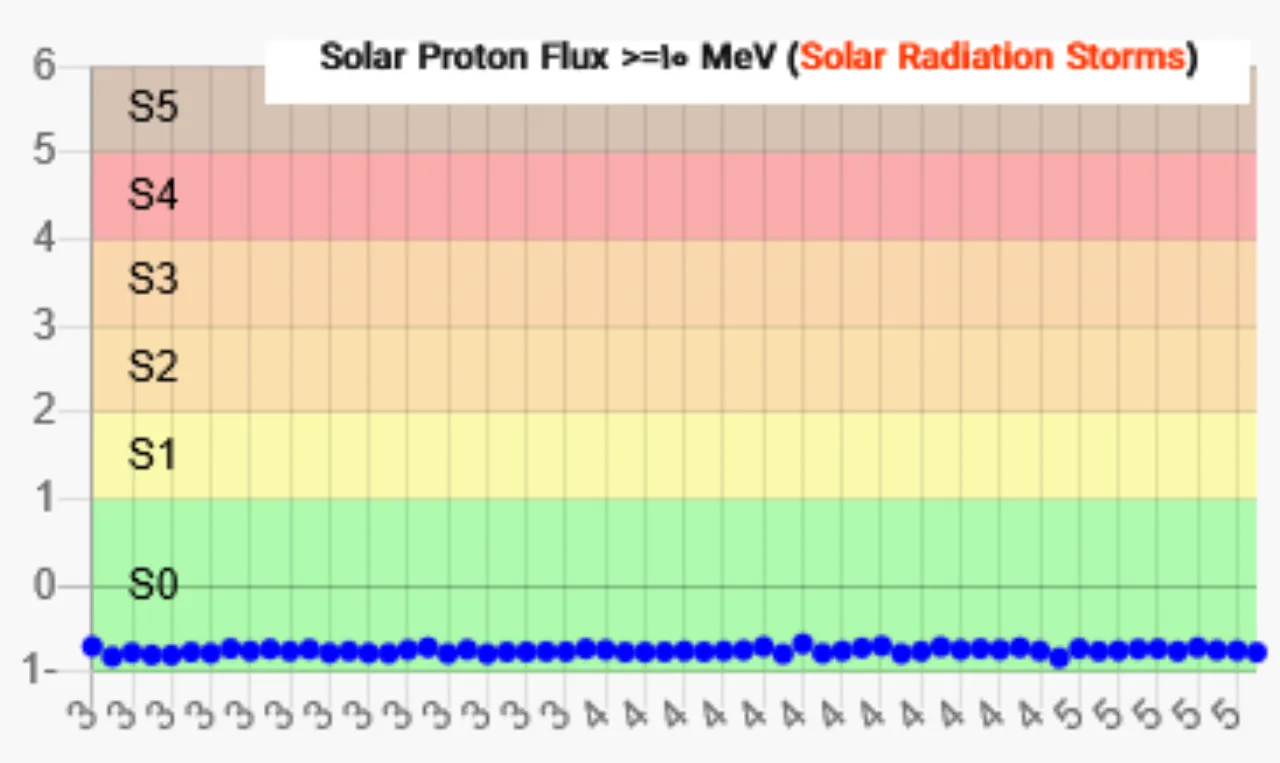
For context, the National Oceanic and Atmospheric Administration (NOAA) has a rating system called the Space Weather Scales, which includes categories for Geomagnetic Storms, Solar Radiation Storms, and Radio Blackouts, all rated from 1 (Minor) to 5 (Extreme).
Now, a team of researchers from Imperial College London has introduced the HENON (Heliospheric pioneer for solar and interplanetary threats defence) CubeSat, which aims to improve space weather forecasting by measuring the solar magnetic field from an orbit 15 million kilometers from Earth, 10 times farther than current spacecraft.
HENON’s key instrument, MAGIC (MAGnetometer from Imperial College), will help in identifying the severity of incoming space weather events, potentially extending solar storm warnings by a factor of 10.
The CubeSat was introduced during the Royal Astronomical Society's National Astronomy Meeting, which took place from July 20-24, 2026.
What's confirmed
- For context, the National Oceanic and Atmospheric Administration (NOAA) has a rating system called the Space Weather Scales, which includes categories for Geomagnetic Storms, Solar Radiation Storms, and Radio Blackouts, all rated from 1 (Minor) to 5 (Extreme).
- Now, a team of researchers from Imperial College London has introduced the HENON (Heliospheric pioneer for solar and interplanetary threats defence) CubeSat, which aims to improve space weather forecasting by measuring the solar magnetic field from an orbit 15 million kilometers from Earth, 10 times farther than current spacecraft.
- HENON’s key instrument, MAGIC (MAGnetometer from Imperial College), will help in identifying the severity of incoming space weather events, potentially extending solar storm warnings by a factor of 10.
- The CubeSat was introduced during the Royal Astronomical Society's National Astronomy Meeting, which took place from July 20-24, 2026.
What's still developing
- It provides solar radiation that warms the planet and ignites the intricate biochemical processes like photosynthesis producing oxygen for life to breathe.
- However, while the Sun is known for giving life, it can also potentially take it away with its solar flares, geomagnetic storms, and solar radiation storms, all of which are referred to as space weather.
- Treasury Secretary Scott Bessent’s warnings against testing the authorities’ resolve on JPY intervention appear to be resonating." "USD/JPY moved below 153 again overnight, albeit with limited follow-through.
- Ahead of the storm, residents in Lihue, a town of 8,000 with Kauai’s primary airport, were stocking up on food and water as supermarket shelves emptied.
- El Niño is helping fuel increased storm potential in the central Pacific this year, warming ocean temperatures in the region and weakening storm-killing upper-level winds, on top of an ocean already warming from climate change.
- (CNN) — Tropical storm warnings and hurricane watches are in effect for the Hawaiian islands of Kauai and Niihau as powerful Hurricane Lowell takes aim at the state.
- It’s the third storm in just over three weeks to target Hawaii, as El Niño supercharges the Pacific hurricane season.
- Tropical-storm-force winds of over 39 mph are expected late Monday into Tuesday local time, but will be confined to the western islands.