
Home · Science · Sep 14 archive
2024 Solar Superstorm Drained Earth's Radiation Belt, Revealing New Dynamics
Confirmed
In Short: Satellite observations have shown that a recent solar superstorm dramatically depleted Earth's outer Van Allen radiation belt, challenging current models of space weather forecasting.
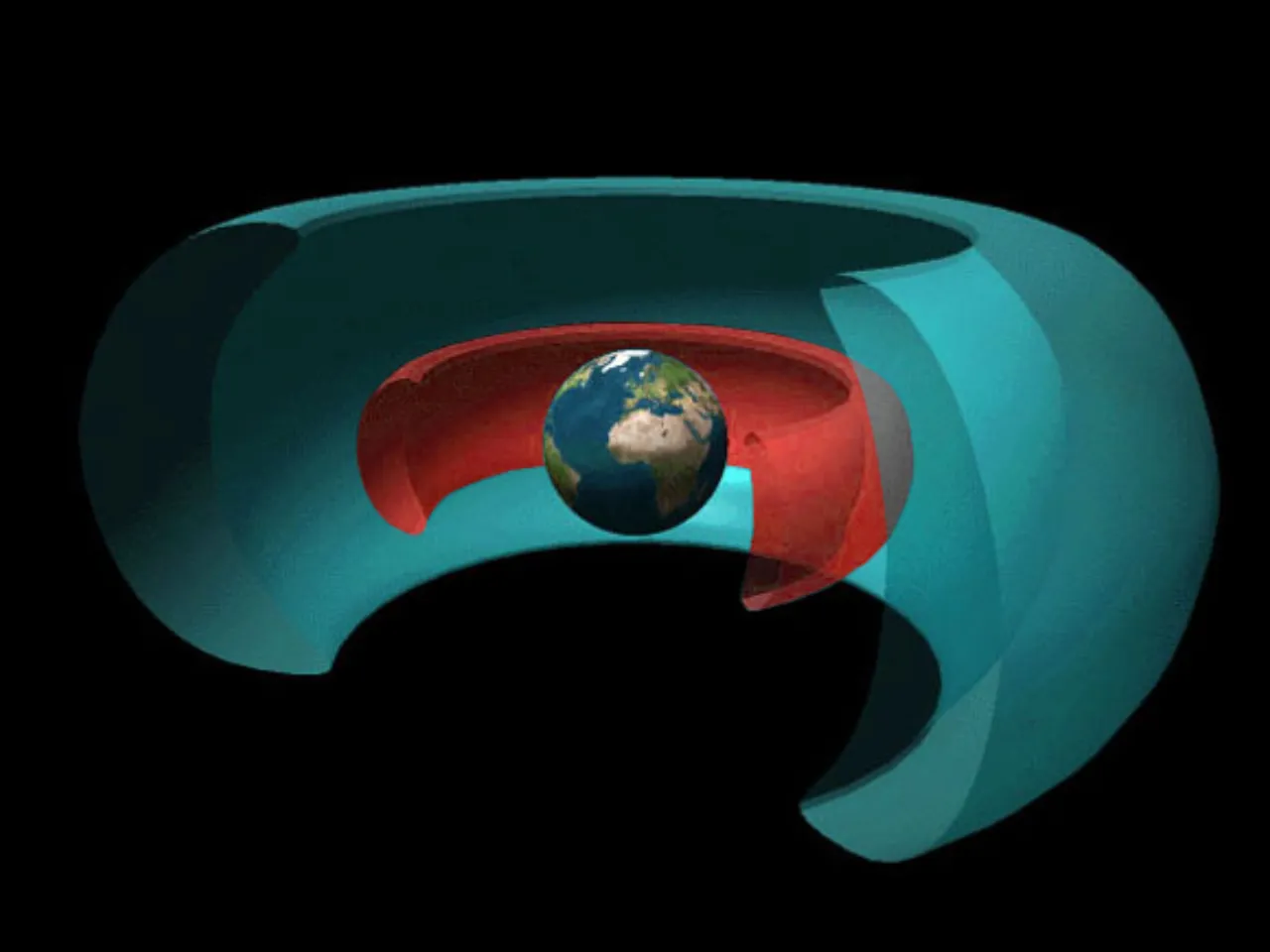
Satellite observations revealed that during the 2024 solar superstorm, Earth’s outer Van Allen radiation belt underwent a sudden, dramatic loss of highly energetic electrons, according to a new study by eos.org. Standard models of electron transport do not accurately capture the tightly coupled timing of superstorm dynamics and electron transport processes, highlighting the need for improved forecasting.
The Van Allen radiation belts are donut-shaped rings that encircle our planet and harbor energetic electrons and protons—mostly from the solar wind—trapped by Earth’s magnetosphere. Geomagnetic storms can reconfigure the magnetosphere, causing sudden changes to electron dynamics in the outer radiation belt, which may be hazardous to satellites, as noted by eos.org.
Researchers analyzed data from the Japan Aerospace Exploration Agency’s (JAXA) Arase satellite, quantifying the dramatic depletion of electrons from the outer radiation belt during the superstorm. To explore the physical processes behind the rapid loss, they simulated the event using the Versatile Electron Radiation Belt (VERB) model, which is designed to reproduce radiation belt dynamics.
This rare opportunity to study the phenomenon presented a significant challenge to current understanding, as highlighted by eos.org. The study underscores the importance of monitoring solar activity, geomagnetic storms, radiation events, and near-Earth space conditions, as emphasized by Watchers.
What's confirmed
- Satellite observations revealed that during the 2024 solar superstorm, Earth’s outer Van Allen radiation belt underwent a sudden, dramatic loss of highly energetic electrons, according to a new study by eos.org. Standard models of electron transport do not accurately capture the tightly coupled timing of superstorm dynamics and electron transport processes, highlighting the need for improved forecasting.
- The Van Allen radiation belts are donut-shaped rings that encircle our planet and harbor energetic electrons and protons—mostly from the solar wind—trapped by Earth’s magnetosphere. Geomagnetic storms can reconfigure the magnetosphere, causing sudden changes to electron dynamics in the outer radiation belt, which may be hazardous to satellites, as noted by eos.org.
- Researchers analyzed data from the Japan Aerospace Exploration Agency’s (JAXA) Arase satellite, quantifying the dramatic depletion of electrons from the outer radiation belt during the superstorm. To explore the physical processes behind the rapid loss, they simulated the event using the Versatile Electron Radiation Belt (VERB) model, which is designed to reproduce radiation belt dynamics.
- This rare opportunity to study the phenomenon presented a significant challenge to current understanding, as highlighted by eos.org. The study underscores the importance of monitoring solar activity, geomagnetic storms, radiation events, and near-Earth space conditions, as emphasized by Watchers.
What's still developing
- This “superstorm” filled night skies in many parts of the world with colorful aurorae, and it disrupted some infrastructure, such as GPS signals used by agricultural equipment.
- Despite decades of research on these risks, the dynamics of rapid electron transport in the radiation belts during particularly extreme storms has so far been unclear.
- This is when Mars had a much warmer interior than it does today, resulting in active volcanism that replenished its atmosphere, a magnetic field that protected the planet from harmful solar and cosmic radiation, and a surface of flowing liquid water.
- It's important to note that germanium has many civilian applications such as semiconductors, solar energy, autonomous vehicles, scientific instruments, battery technology, and a variety of health care applications.
- Researchers developed a model showing how lava-covered planets close to their stars can hold onto their atmospheres, which could help guide the search for life beyond our solar system.
- Some planets orbit so close to their stars that intense radiation should strip away their atmospheres.
- By slowing that release, lava can allow atmospheric replenishment to keep pace with losses caused by stellar radiation, preserving an atmosphere for billions of years.
- Researchers in the United States said a solar superstorm on Nov. 11, 2025 caused coast-to-coast disruption across the United States, knocking GPS accuracy off by as much as 10 meters and interrupting satellite communications.