
Home · Science · Sep 13 archive
NASA Launches Fourth Balloon for Scientific Campaign
Developing
In Short: NASA successfully launched the fourth balloon of its Scientific Balloon Campaign from Fort Sumner, New Mexico.
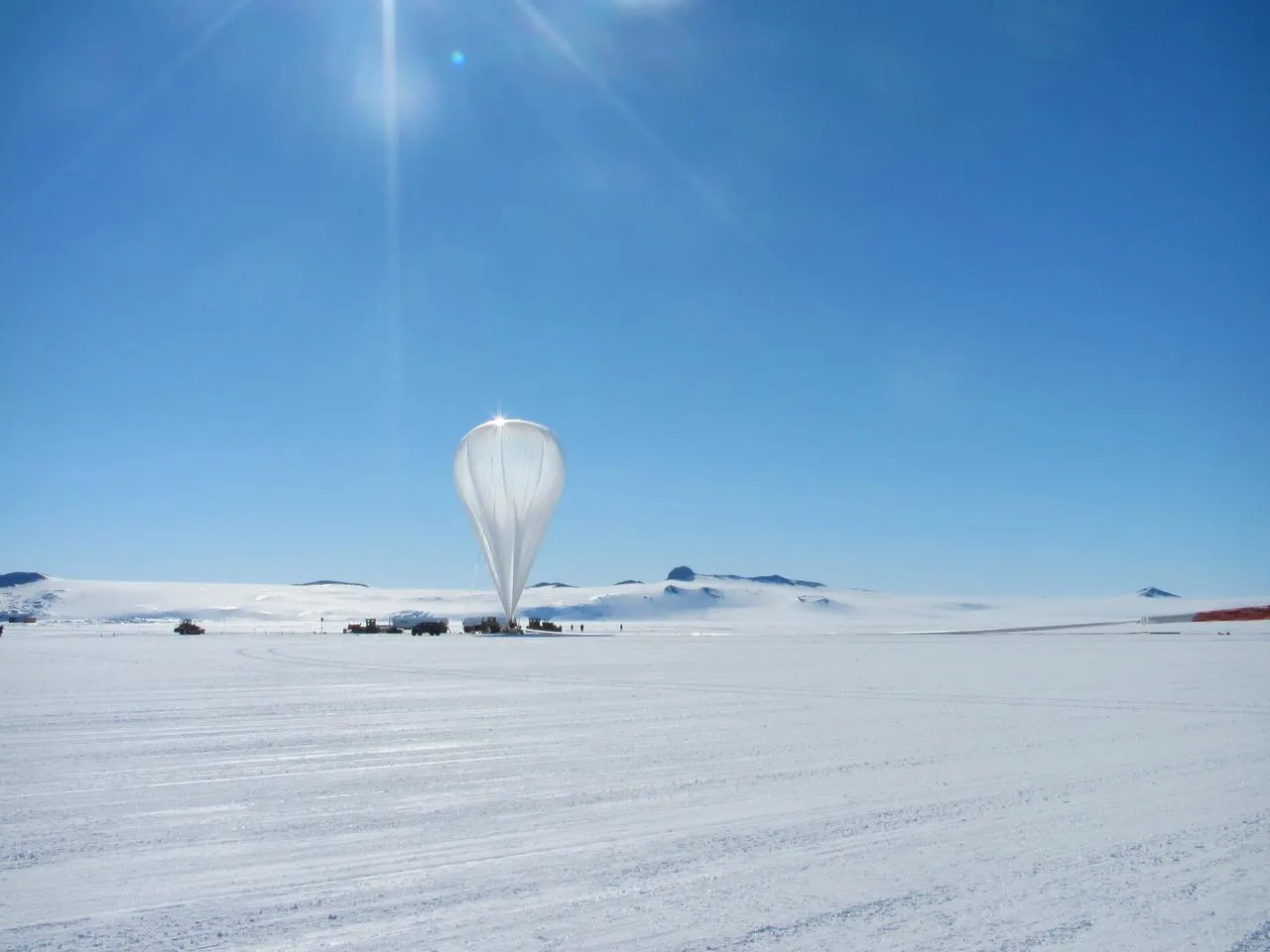
NASA launched the fourth balloon of its Scientific Balloon Campaign from Fort Sumner, New Mexico, on September 13, 2026, at 8:03 a.m. The mission, known as BOOP! (Balloon Optimization Opportunity Payload), aims to test multiple technology instruments for future space missions.
The BOOP! mission is part of NASA’s Balloon Program Office’s ongoing efforts to test and optimize technology for future space missions. This year’s campaign also includes the second flight for the Compact Large-sensor Imaging Camera mission, which carries a small camera system designed to help determine safe landing spots for rovers on the Moon or Mars.
According to reports, the balloon and payload reached a float altitude of around 123,000 feet and flew for a total of 4 hours and 29 minutes. The mission is part of a broader partnership among the Louisiana Space Grant Consortium, the Astrophysics Division in the Science Mission Directorate at NASA Headquarters, and the agency’s Balloon Program Office and Columbia Scientific Balloon Facility in Palestine, Texas.
Prior to the launches of the fifth and sixth satellites, an electrical issue was discovered that impacted both the broadband capacity and the estimated operational life of those satellites. This issue highlights the ongoing challenges and technical hurdles faced in space technology development.
What's still developing
- This year’s campaign marks the 20th flight for the High-Altitude Student Platform carrying payloads developed by student teams.
- Over the course of two decades, more than 1,900 students from about 25 institutions across the United States have participated in flying experiments on the balloon platform.
- The first two satellites were launched on a SpaceX Falcon 9 rocket back on Dec. 16, 2022, with subsequent launches in pairs in April 2023, November 2023, December 2024, and July 2025.
Sources
- NASA Science (.gov)link