
Home · Science · Sep 13 archive
Masked tectonic structures suggest Mercury contracted 40% more than its visible scars alone indicate
Developing
In Short: Scientists are reevaluating Mercury's contraction rate, finding it may have shrunk by up to 23 kilometers more than previously thought.
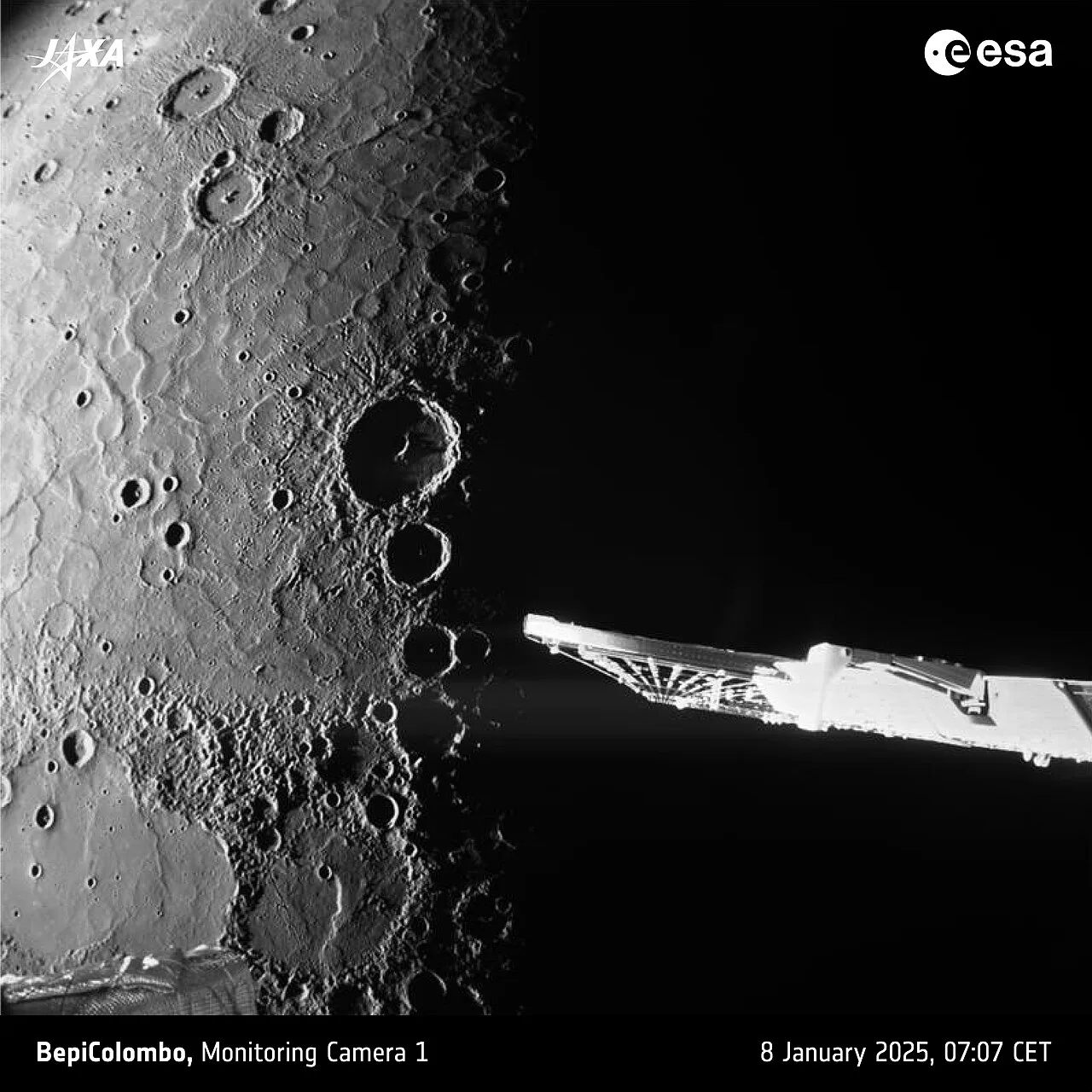
The surface of Mercury, the closest planet to the Sun, is marked by hills and ridges, known as shortening structures, which are evidence of the planet's cooling and shrinking process. These features, visible across the planet's surface, suggest that Mercury has been undergoing significant changes over billions of years. Scientists have long known that Mercury's interior was shrinking as it cooled from its fiery origins, but the extent of this contraction has now been revised.
In a recent study, presented by Dr. Byrne at a 2013 conference, it was initially estimated that Mercury had shrunk by about 11 kilometers. However, new findings suggest that the planet may have contracted by up to 23 kilometers, or approximately 14 miles. This revised estimate provides a different scenario of Mercury's thermal evolution, according to Dr. Nishiyama, a leading researcher in the field.
The planet Mercury is particularly enigmatic due to its proximity to the Sun. It is challenging to send spacecraft there, with only one mission, MESSENGER, having successfully entered orbit. Another mission is currently attempting to orbit Mercury, but the planet's proximity to the Sun makes observation from Earth difficult. The intense sunlight makes it challenging to study Mercury's surface and internal processes from Earth-based telescopes.
What's still developing
- The planet Mercury is shrinking far faster than we thought The planet’s “wrinkles” give scientists a clue into how the world is contracting in size Everyone gets wrinkles eventually—even planets.
- And the light from our home star is so bright that it is hard to observe Mercury from Earth.
Sources
- Scientific Americanlink